








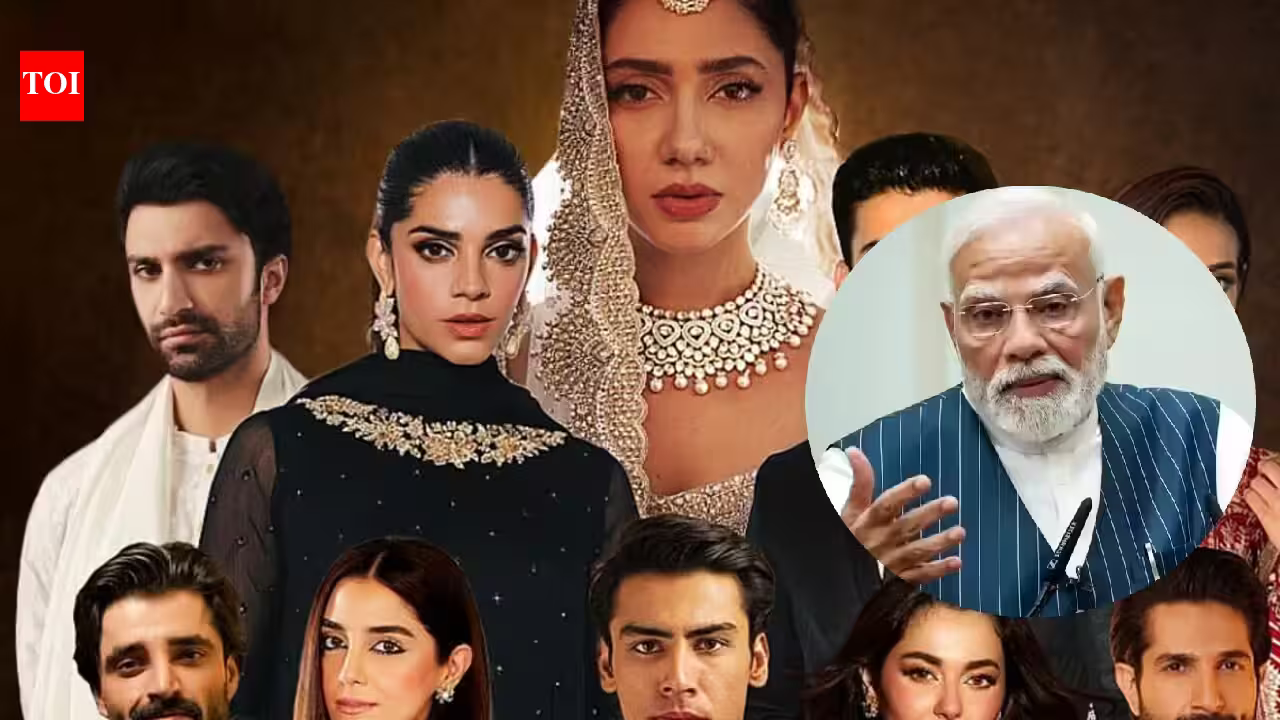
The digital borders of the entertainment world are once again being drawn into the fray of geopolitical tension. As Netflix prepares to launch its first-ever Pakistani original series, Jo Bachay Hain Sang Samait Lo, the project has become the epicenter of a heated cultural confrontation. With the All India Cine Workers Association (AICWA) formally petitioning Prime Minister Narendra Modi to intervene, the streaming giant finds itself in a precarious position, balancing global creative expansion against the volatile realities of cross-border relations.
The Call for a Digital Embargo
In a move that mirrors the historical friction between New Delhi and Islamabad, the AICWA—the body representing the collective voice of the Indian film fraternity—has officially requested that the Indian government impose a total ban on the upcoming series. Dated November 24, the letter sent by AICWA President Suresh Shyamlal Gupta to the Prime Minister’s Office is unambiguous: the association argues that national security and sovereignty take precedence over the consumption of international entertainment.
The association hasn’t merely aimed its crosshairs at this specific title; it is advocating for a sweeping, long-term legal blockade on all Pakistani films, television shows, and the participation of Pakistani talent within the Indian market. By taking their grievances directly to the Prime Minister, the AICWA has signaled that they are not looking for a compromise but a definitive policy reinforcement that effectively walls off Indian screens from Pakistani creative output.
Tracing the Roots of the Advisory
The rationale behind the AICWA’s demand is deeply rooted in the memory of recent security challenges. Central to their argument is the Ministry of Information and Broadcasting’s advisory issued on May 8, 2025. Following the tragic Pahalgam terror attack, the government urged OTT platforms and digital intermediaries to practice “extreme caution” and, in effect, refrain from streaming content that could be perceived as promoting or hosting talent from across the border.
The AICWA contends that Jo Bachay Hain Sang Samait Lo is a direct challenge to the spirit of that 2025 directive. For the association, the issue is not just about a television series; it is about the consistency of a stance that has been evolving since the 2019 Pulwama terror attack. Following that event, the Indian film industry largely shuttered its doors to Pakistani artists, an unofficial moratorium that the AICWA is now pushing to codify into a permanent, ironclad rule for the streaming era.
The Star Power Behind the Controversy
The intensity of this pushback is, in many ways, a testament to the immense popularity of the cast involved. Jo Bachay Hain Sang Samait Lo is not a minor production; it is a high-profile, star-studded affair based on the bestselling novel by Farhat Ishtiaq. The series features heavyweights such as Fawad Khan and Mahira Khan—names that were once household staples in Indian cinema during a more collaborative, albeit brief, era of artistic exchange.
Rounding out this ensemble are Ahad Raza Mir, Hamza Ali Abbasi, Hania Aamir, and others—a virtual “who’s who” of Pakistani entertainment. With filming locations spanning the romantic vistas of Italy, the urban landscapes of the United Kingdom, and the heart of Pakistan, the series was positioned by Netflix as a prestige global offering. However, the very star power that makes the show a commercial juggernaut internationally is precisely what makes it a flashpoint for nationalist groups in India. The association is essentially arguing that by platforming these faces, Netflix is bypassing the sentiment of the Indian public and the gravity of the government’s security-first mandates.
Netflix’s Uncharted Waters
As the December 4, 2026, release date approaches, Netflix finds itself in a classic corporate quandary. The streaming platform has spent years diversifying its global library to capture regional audiences, and Jo Bachay Hain Sang Samait Lo was intended to be a milestone—the company’s first original series produced out of Pakistan.
Currently, there has been no official confirmation regarding the series’ availability in the Indian market. Given the legal threats and the pressure being applied by the AICWA, Netflix is likely conducting a quiet cost-benefit analysis. While the Indian market is one of the most lucrative subscriber bases for the streamer, the potential for a localized boycott or a regulatory crackdown creates a high-stakes scenario. If Netflix decides to block the series in India, it maintains its adherence to local advisory trends but risks alienating fans of the genre. If they decide to stream it, they risk an escalation of the rhetoric and potential legal repercussions from organizations that have clearly demonstrated they are prepared to fight on a national stage.
Entertainment as a Political Battlefield
What this controversy underscores is that in the modern era, entertainment is never just “just entertainment.” Content produced in one country is now globally accessible with the click of a button, turning every streaming platform into an unintentional geopolitical actor.
The AICWA’s stance represents a segment of the Indian population that believes cultural engagement is a luxury that cannot be afforded when territorial security is in question. On the other side, proponents of free media argue that art should remain a bridge, not a barrier. As the countdown to December 4 begins, the eyes of the industry are fixed on New Delhi. Will the government step in, or will the digital landscape remain as divided as the real-world borders? Regardless of the outcome, the Jo Bachay Hain Sang Samait Lo saga serves as a sharp reminder that when art and statecraft collide, it is the platform that is caught in the middle, trying to navigate a world that is becoming increasingly fragmented.
Disclaimer: This content is auto-generated for informational purposes only.
Source: Read Original News