








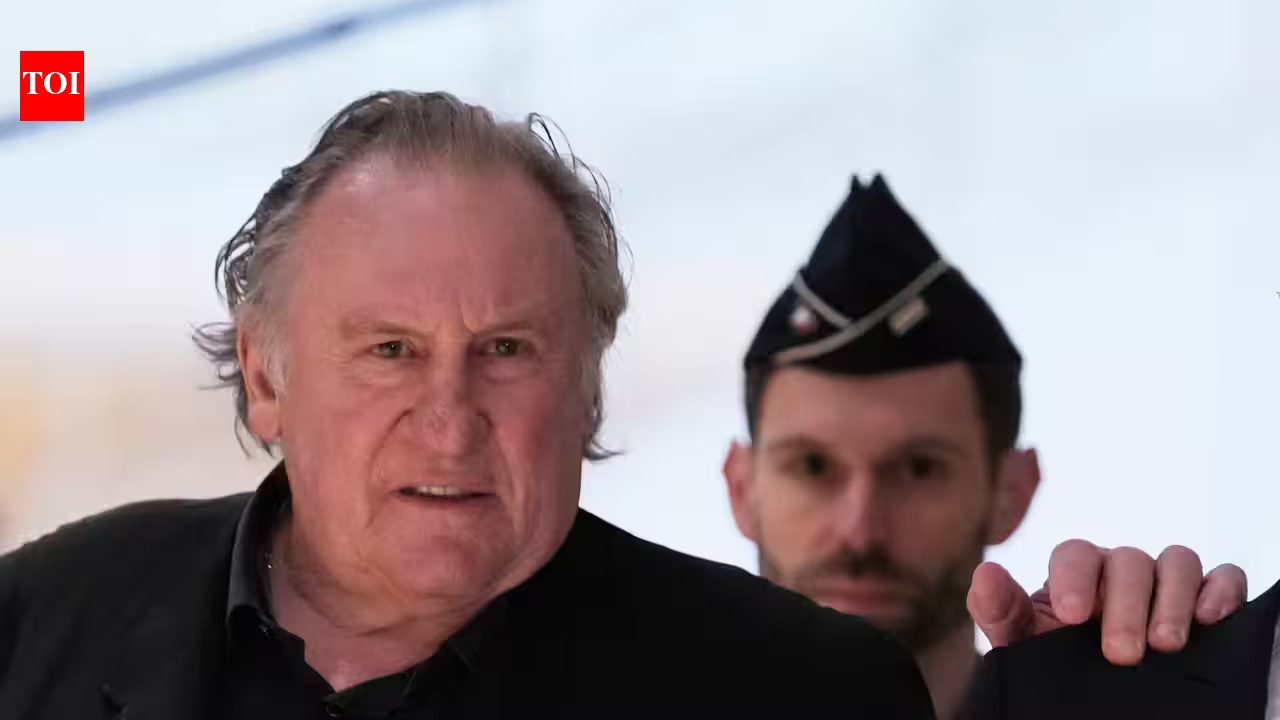
For decades, the name Gérard Depardieu was synonymous with the very soul of French cinema. With a physicality as imposing as his talent, the man who brought Cyrano de Bergerac to life became an inescapable fixture of European culture—a rugged, unfiltered force who seemed to embody the contradictions of the French spirit. But as of this week, that towering legacy has been irrevocably eclipsed by the shadow of a criminal courtroom.
In a development that serves as a sobering bookend to years of mounting allegations, the 77-year-old actor has been ordered to stand trial on a charge of raping actress Charlotte Arnould at his Paris residence in 2018. This legal mandate, confirmed by his defense attorney Delphine Meillet, marks a seismic shift in the public and judicial reckoning with one of France’s most powerful artistic figures.
A Legacy Overshadowed by Allegation
The decision by the Paris Court of Appeal to uphold the mandate to proceed with the 2018 rape trial comes on the heels of a separate, high-profile legal blow. Less than two weeks ago, Depardieu abruptly dropped his appeal against a sexual assault conviction, effectively accepting an 18-month suspended prison sentence. That particular case, involving incidents on the 2021 film set of Les Volets Verts, saw the actor found guilty of groping a set decorator and an assistant.
For many, his subsequent public apology was long overdue. “On film sets, I have long hidden behind provocation and crude humor,” Depardieu wrote in a statement released on November 16. “I believed my words and some of my actions had no consequences. But they did, particularly coming from someone who held as much power as I once did.”
However, for critics and survivors, these words ring hollow against the backdrop of the multiple, more severe allegations that have piled up over the years. The transition from the untouchable titan of the screen to a defendant facing a potential prison sentence for sexual violence is a stark reminder that even the most celebrated cultural icons are no longer immune to the shifting tides of accountability.
The #MeToo Movement’s Toughest Battleground
France has long viewed itself as a nation where the #MeToo movement’s American-style, uncompromising trajectory was at odds with its own cultural traditions. The “French way”—a distinct brand of libertinism and a high tolerance for what some define as “seduction”—has frequently been cited by defenders of the status quo to deflect from systemic patterns of abuse.
The accusations against Depardieu have served as a lightning rod in this national debate. In December 2023, a television documentary exposed the actor making obscene remarks and gestures during a 2018 visit to North Korea, an incident that prompted a level of public disgust that could no longer be brushed aside by his stature alone.
Yet, even at the height of the controversy, the actor found protection in the highest echelons of French power. President Emmanuel Macron’s defense of Depardieu, where he famously declared that the actor “makes France proud,” triggered a firestorm of criticism. By invoking the presumption of innocence and characterizing the backlash as a “manhunt,” Macron arguably highlighted the very divide that keeps the French film industry—and the country at large—locked in a difficult struggle to define where art ends and personal accountability begins.
The Long Road to the Courthouse
The case of Charlotte Arnould, who first filed her complaint in 2018 when she was just 22, has become the focal point of this national tension. While the defense is currently litigating the specifics—specifically that the trial will cover only one of the two alleged rape charges initially reported—the impact remains unchanged. Depardieu’s legal team has made it clear that he “disputes the decision,” and while further appeals are possible, the momentum of the French judicial system suggests that the curtain is finally falling on his ability to evade the courtroom.
The contrast between the man who once famously embodied the dashing, romantic lead and the man currently navigating a series of sexual violence trials is jarring. Born into a working-class family in Chateauroux and possessing an uncanny ability to overcome a childhood speech impediment to dominate the screen, Depardieu was always a man of excesses. Whether it was his well-documented public brawls, his tax-motivated decision to accept a Russian passport from Vladimir Putin in 2013, or his documented behavior on set, he often lived as though the rules of society simply didn’t apply to him.
The Final Act for an Icon
As we look toward the upcoming trial, the conversation within the French arts community has shifted from whether Depardieu is a “great actor” to how the industry enabled such behavior for so long. The #MeToo movement in France has been criticized for being slower to gain traction than in other countries, and for years, Depardieu was the poster boy for that resistance—the “untouchable” artist who could not be toppled.
The trial will undoubtedly be a grueling experience for all involved, but it is also a necessary one. If the French film industry is to move toward a more equitable and safe environment, it cannot continue to offer shelter to its legends behind the thin veil of “artistic temperament.”
For now, the world waits to see how the court handles the specific charges brought by Arnould. But regardless of the verdict, the narrative of Gérard Depardieu has fundamentally changed. The man who once held the gaze of millions is now, at last, being forced to face his victims, and in doing so, he is facing a reckoning that is decades in the making. The era of the “unaccountable icon” is coming to a quiet, painful, and necessary close.
Disclaimer: This content is auto-generated for informational purposes only.
Source: Read Original News