








RBI Strengthens Domestic Gold Storage as Overseas Holdings Shrink
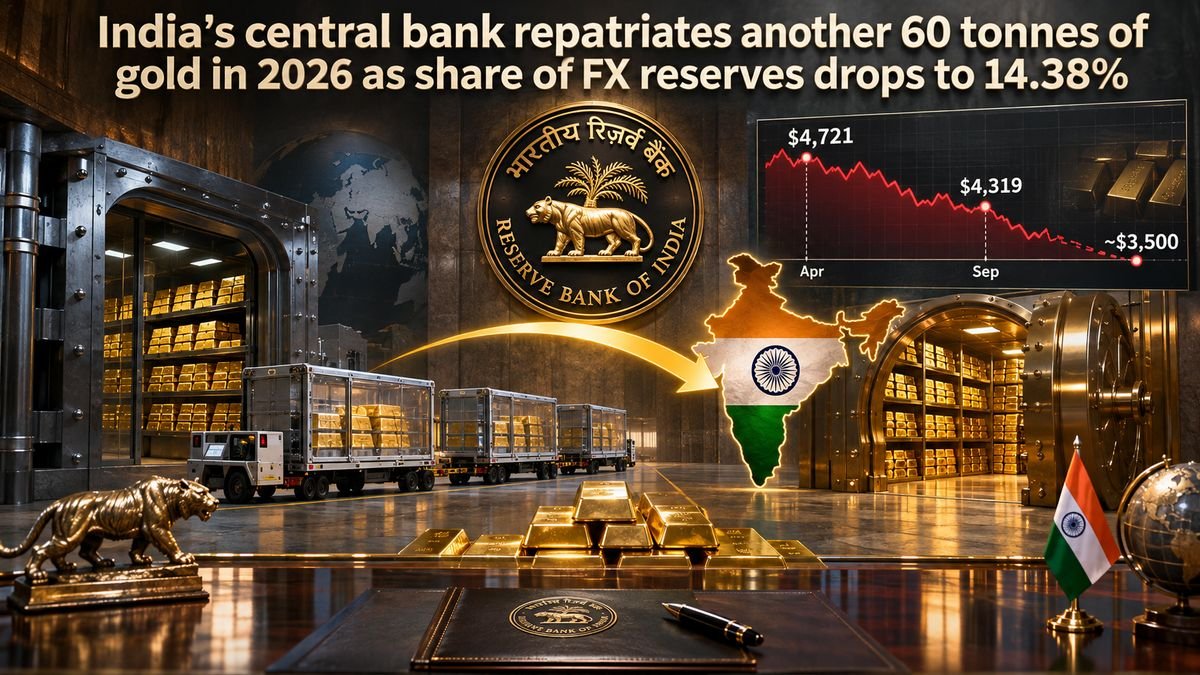
In a significant move to consolidate its physical assets, the Reserve Bank of India (RBI) has accelerated the repatriation of its gold reserves. According to the central bank’s latest Half-Yearly Report on the Management of Foreign Exchange Reserves, covering the period from April to September 2026, the RBI successfully transferred 60.08 tonnes of bullion from international vaults to its secure facilities within India.
Shifting Assets to Domestic Vaults
As of September 30, 2026, the RBI held a total of 880.52 tonnes of gold. While the total volume remained consistent with the figures reported at the end of March, the distribution of these holdings shifted dramatically. By the close of the September quarter, 740.13 tonnes—roughly 84.05% of the total reserves—were stored domestically. This represents a sharp increase from the 680.05 tonnes (77.2%) kept in India just six months prior.
The remaining 140.39 tonnes are currently held in custody by the Bank of England and the Bank for International Settlements (BIS). This strategic relocation underscores the RBI’s ongoing efforts to enhance sovereign control over its physical wealth, reducing reliance on overseas custodians.
Market Volatility Impacts Valuation
While the volume of the gold stash remained unchanged over the six-month period, the fluctuating international price of the yellow metal led to a decline in its overall valuation. Between April and September, global gold prices dropped by approximately 9%, falling from $4,721 per troy ounce to $4,319. Financial analysts attribute this downward pressure to a combination of rising U.S. Treasury yields, a robust dollar, and market expectations regarding Federal Reserve interest rate hikes.
Consequently, the value of India’s sovereign gold reserves dipped from $115.40 billion in March to $106.08 billion by the end of September. This price sensitivity highlights the challenges central banks face when balancing their portfolios against global macroeconomic shifts.
Changing Composition of Forex Reserves
The landscape of India’s foreign exchange reserves also underwent notable changes during this period. While gold values fell, the RBI’s total foreign exchange reserves climbed from $691.11 billion in March to $737.78 billion in September. Due to the appreciation in other components of the reserves alongside the drop in gold prices, the share of gold within India’s total forex holdings contracted from 16.70% to 14.38%.
The market volatility for precious metals has persisted beyond the reporting period. Spot gold prices experienced further turbulence post-September, dipping as low as $3,426.40 per ounce recently before staging a modest recovery toward the $3,500 level.
Despite the recent price depreciation, the RBI’s focus remains firmly set on maintaining a secure, domestic-centric repository for its gold holdings. By continuing to move bullion to domestic vaults, the central bank is prioritizing physical security and sovereignty, ensuring that the bulk of the nation’s strategic gold reserves remains accessible within its own borders. As the global economic environment remains fluid, these custodial decisions continue to be a focal point for India’s long-term financial management strategy.
Disclaimer: This content is auto-generated for informational purposes only.
Source: Read Original News