







The Evolution of Smartphone Optical Architecture
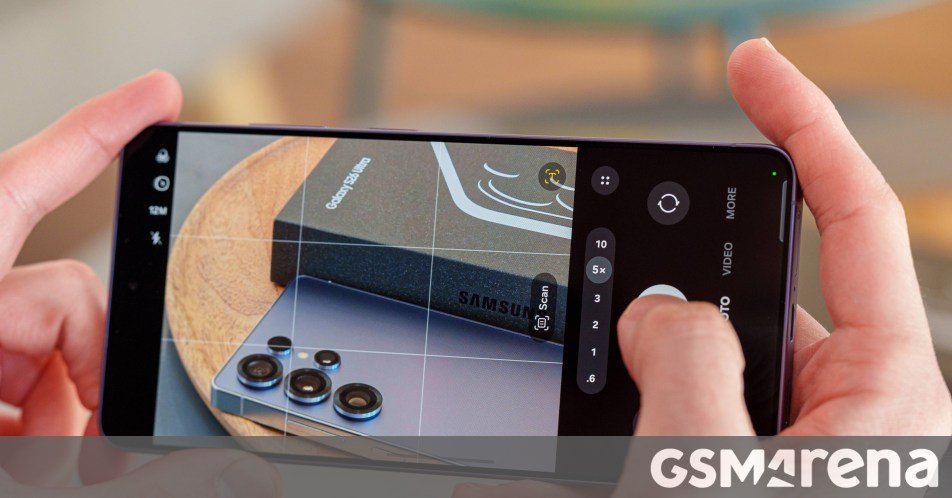
The mobile industry is currently observing a significant shift in how flagship devices approach camera hardware. As manufacturers push the boundaries of computational photography, the traditional multi-lens arrays that have defined the Ultra-tier flagship market are undergoing a strategic refinement. Recent intelligence regarding the upcoming Samsung Galaxy S27 Ultra suggests that the brand is moving toward a streamlined camera configuration, departing from the four-lens setup that characterized its predecessor. By removing the dedicated 3x telephoto lens and the standalone laser autofocus module, Samsung appears to be prioritizing hardware efficiency and sensor performance over sheer lens volume.
This reduction in lens count does not necessarily imply a reduction in capability. Instead, it points to a transition where high-resolution sensors and advanced image signal processing (ISP) perform the heavy lifting that was previously delegated to specialized optical hardware. By streamlining the physical footprint of the camera array, engineers may be creating space for larger sensor formats or improved thermal management, both of which are critical for maintaining peak image quality during intensive computational tasks.
Advancements in Sensor Technology and Low-Light Performance
The core of the reported upgrades for the Galaxy S27 Ultra centers on the primary camera module. Despite the removal of auxiliary sensors, the main 200MP sensor is expected to deliver a marked improvement in low-light sensitivity and image detail. In traditional mobile photography, low-light environments often force sensors to rely heavily on pixel binning and aggressive noise reduction algorithms, which can sometimes degrade texture. New reports suggest that the S27 Ultra will leverage refined signal processing to achieve greater brightness and clarity in night photography without sacrificing natural textures or introducing the “watercolor effect” often seen in over-processed mobile imagery.
Improved low-light performance is generally achieved through a combination of wider apertures, larger individual pixel sizes, and improved pixel-binning algorithms. If Samsung has optimized the sensor readout and data processing pipeline, the device will likely exhibit less luminance noise in shadows while retaining high dynamic range. This is particularly relevant for users who shoot frequently in indoor or twilight conditions, as the sensor will be able to capture more photons per frame, resulting in a cleaner signal that requires less corrective software interference.
The Impact of Removing Dedicated Hardware
The decision to omit the 3x telephoto camera is a notable departure from current industry standards. Historically, a dedicated 3x lens provided superior portraits and mid-range zoom clarity compared to digital crop methods. However, with 200MP main sensors capable of providing high-quality “in-sensor zoom,” the need for a physical lens at that specific focal length diminishes. By utilizing the central portion of a high-resolution sensor, the device can effectively simulate a 3x zoom with high fidelity, theoretically matching the sharpness of an optical lens while maintaining a more consistent color science across the focal range.
The removal of the laser autofocus module similarly suggests an evolution in phase-detection autofocus (PDAF) technologies. Modern dual-pixel or quad-pixel autofocus systems integrated directly onto the primary sensor have become remarkably fast and accurate. If the internal camera logic has reached a level of sophistication where it can track subjects and acquire focus via the main sensor data alone, the laser hardware becomes redundant. This consolidation allows for a more compact mainboard design and reduces the complexity of the camera bump, potentially offering a more durable and streamlined chassis.
Software-Driven Enhancements and Video Capabilities
Beyond still photography, the S27 Ultra is reportedly positioning itself as a leader in mobile video capture. The transition away from dedicated hardware components often signals a greater reliance on the platform’s Neural Processing Unit (NPU) and enhanced image signal processors. Video quality is highly sensitive to sensor readout speeds and thermal constraints; by simplifying the array, Samsung may have improved the thermal overhead, allowing the device to sustain higher bitrates and frame rates for extended recording durations.
The current industry trend emphasizes AI-driven video optimization, such as real-time noise reduction, stabilization, and dynamic range expansion. By focusing on a refined sensor stack, the S27 Ultra will likely offer video with lower latency and improved color accuracy. Users can expect improvements in exposure transitions—where the camera adjusts to changing lighting conditions—and better stabilization during handheld movements. These changes cater specifically to content creators who require professional-grade output from a handheld device, effectively turning the phone into a comprehensive production tool.
Market Expectations and Long-Term Implications
As we look toward the early 2027 release date, the Galaxy S27 Ultra represents a broader industry shift toward “computational-first” photography. The market is moving away from the “more lenses is better” philosophy, which dominated the early 2020s, and toward an era of integrated, highly efficient imaging systems. This strategy reduces mechanical complexity and potential points of failure while potentially lowering production costs. However, the ultimate success of this approach depends on whether the software processing can convincingly bridge the gap left by the discarded optical components.
If Samsung successfully executes this transition, it could set a new benchmark for other manufacturers to follow, favoring larger, more capable primary sensors over a clutter of secondary lenses. The upcoming months will undoubtedly provide more clarity through benchmark leaks and additional technical disclosures. For now, the prospect of an Ultra-tier device that emphasizes a cohesive, high-performance primary imaging system over redundant hardware marks a mature turn in smartphone development. The promise of cleaner low-light images and superior video processing remains a compelling proposition for those looking to upgrade their mobile creative capabilities.
Disclaimer: This content is auto-generated for informational purposes only.
Source: Read Original News