








The Evolution of India’s Road Infrastructure and Toll Collection
The Indian logistics and transportation sector is undergoing a profound transformation. As the nation expands its national highway network, the challenge of managing traffic throughput at toll plazas has become a primary bottleneck. Historically, physical toll booths have functioned as significant points of congestion, resulting in idling vehicles, increased fuel consumption, and higher greenhouse gas emissions. The Ministry of Road Transport and Highways (MoRTH) has sought to address these inefficiencies by transitioning toward the Multi-Lane Free Flow (MLFF) tolling system.
This move marks a significant departure from legacy toll collection. By utilizing overhead gantries equipped with advanced sensors and Automatic Number Plate Recognition (ANPR) cameras, the MLFF system enables vehicles to transit through toll points at highway speeds without needing to stop. This technology-driven approach not only optimizes travel time but also aligns with the government’s broader goals of modernizing national infrastructure. However, the success of a fully automated system relies heavily on total compliance, which is why the recent mandate regarding stiff penalties for toll evasion is a critical development in the maturity of India’s digital toll collection ecosystem.
Mechanics of the Multi-Lane Free Flow System
The MLFF system is a sophisticated integration of hardware and software designed for seamless financial transactions on the move. When a vehicle passes under an MLFF gantry, the infrastructure performs two primary functions. First, it identifies the vehicle via the RFID-based FASTag, which is the cornerstone of India’s electronic toll collection framework. Second, it uses high-definition ANPR cameras to capture the vehicle’s registration number. This dual-verification method ensures that toll charges are accurately debited from the user’s linked account.
The transition to MLFF is not merely an administrative upgrade; it is a structural change that necessitates high-speed data processing and real-time connectivity. By removing physical barriers, the system reduces the likelihood of human error or intervention, which previously plagued manual toll collection. For the average commuter and the commercial trucking industry, the benefit lies in consistent travel times and reduced operational costs linked to fuel waste. As these systems scale, the data generated will provide authorities with invaluable insights into traffic density, vehicle classification, and peak usage patterns, further facilitating data-backed infrastructure planning across the country.
Addressing Intentional Evasion and Regulatory Enforcement
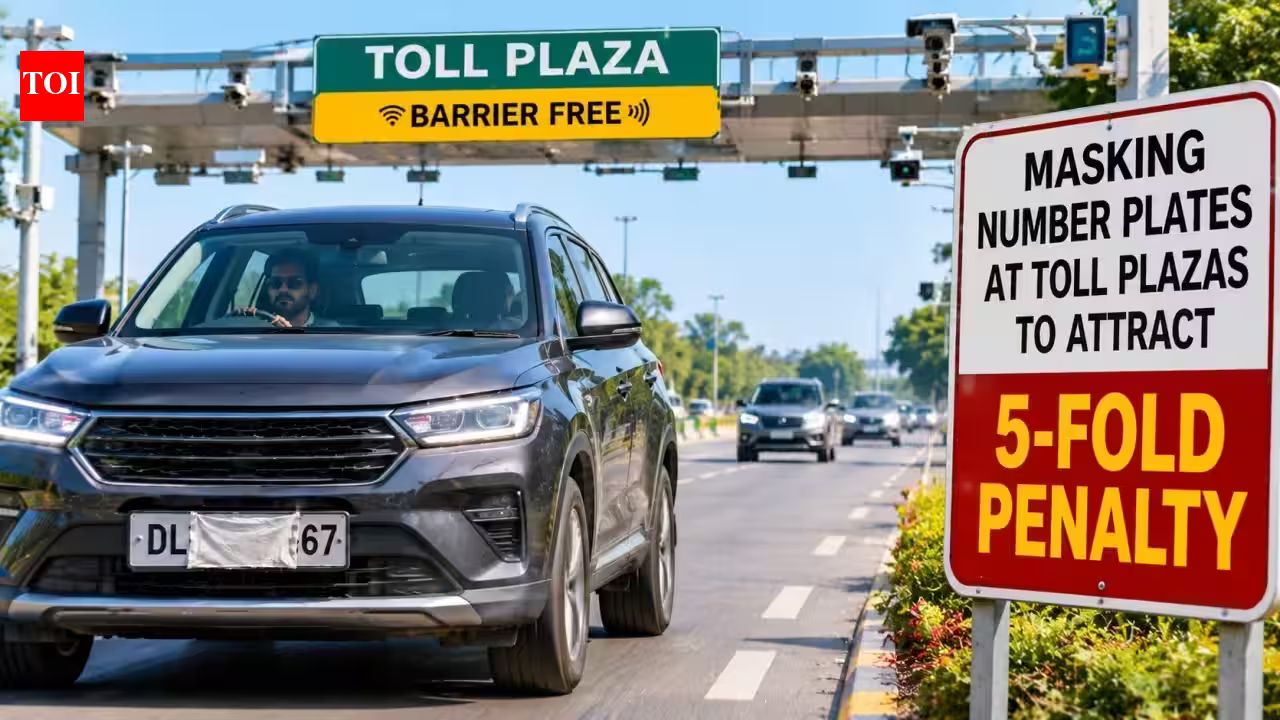
Despite the efficiency of the MLFF framework, the shift toward automated collection presents new challenges regarding compliance. The Ministry has observed instances where users attempt to circumvent the system by deliberately masking or tampering with their registration plates or by failing to maintain an active, readable FASTag. To safeguard the integrity of the revenue model and ensure fairness, the government has announced a strict penalty structure: offenders found intentionally evading tolls will be charged five times the applicable user fee.
This penalty is significant because it shifts the burden of proof toward the offender while maintaining a standard of “intentionality.” The Ministry has clarified that the penalty is not meant for accidental technical failures; rather, it is reserved for clear-cut cases where evidence suggests a deliberate attempt to hide the vehicle’s identity. By enforcing this five-fold levy, the NHAI is establishing a strong deterrent against toll fraud. This regulatory stance is vital in a country where the scale of national highway operations is massive, and individual cases of evasion, if left unchecked, could cumulatively erode the financial viability of private concessions and public-funded highway projects.
Financial Implications and Revenue Growth
The economic performance of the early MLFF implementations provides a compelling argument for rapid nationwide adoption. Recent data from the National Highways Authority of India (NHAI) highlights that between May and October 2026, net toll revenue at seven operational MLFF plazas reached Rs 538.95 crore. This represents a 19.84 percent increase compared to the revenue recorded during the same period in the previous year under the traditional barrier-based system.
This revenue growth suggests that the MLFF system is not only improving traffic flow but also closing the leakages that historically occurred due to physical booth inefficiencies. When the toll collection process is automated and digitized, the precision of transaction recording improves. The increased revenue allows the NHAI to reinvest capital into further road expansion, maintenance, and the integration of newer technologies. For stakeholders in the infrastructure sector, these figures demonstrate that digital tolling is a sustainable path toward financial efficiency. As the government continues to phase out manual collection, the cumulative revenue gain is expected to play a crucial role in reducing the fiscal burden of maintaining India’s vast arterial road network.
The Future of Digital Infrastructure in India
The shift toward MLFF is a central component of India’s long-term infrastructure strategy. As the ministry expands this technology to more plazas across the national highway network, the focus will increasingly shift toward interoperability and system-wide reliability. The success of the current seven pilot locations—including Choryasi, Mundka, and Daulatpura—serves as a blueprint for future deployments in states like Haryana, Gujarat, and Tamil Nadu.
Looking ahead, the integration of MLFF with broader Intelligent Transport Systems (ITS) will likely revolutionize how highways are managed. This could include dynamic pricing models based on congestion levels or real-time traffic alerts delivered directly to vehicle systems. However, the cornerstone of this evolution remains public compliance. The implementation of the penalty system serves as a reminder that the benefits of high-speed, frictionless travel depend on a mutual commitment to transparent and honest participation in the digital ecosystem. As India moves toward a more digitized logistics and mobility landscape, the MLFF system stands as a clear indicator that technology is no longer just an add-on but the foundation of efficient national development. By combining strict enforcement with cutting-edge engineering, the government is building a more resilient, transparent, and profitable highway system that serves the needs of a modern, fast-growing economy.
Disclaimer: This content is auto-generated for informational purposes only.
Source: Read Original News