








Evolving the Foldable Blueprint
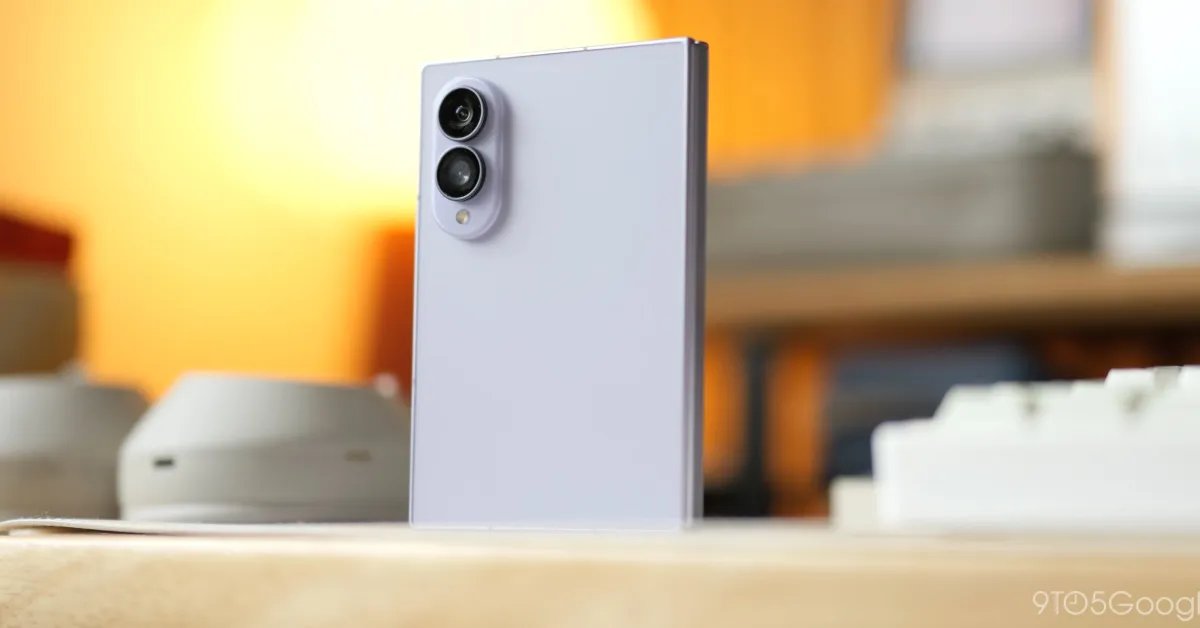
The launch of the Samsung Galaxy Z Fold 8 brought significant anticipation, signaling a shift in how consumers interact with foldable hardware. While the market often highlights “Ultra” branding for top-tier specifications, the standard Galaxy Z Fold 8 has demonstrated that a change in physical dimensions can provide a superior daily experience. The device moves away from the tall, narrow aspect ratio that defined previous generations, opting instead for a squared-up, compact profile. This design change requires a departure from long-standing muscle memory, as the front display offers less vertical space than typical smartphone users expect. Despite initial friction during the adaptation period, the device has proven itself as a highly functional tool that balances portability with expansive screen real estate.
Redefining User Interaction
Transitioning to the Galaxy Z Fold 8 necessitates a recalibration of how one navigates mobile applications. The wider front display serves as more than just a notification center; it acts as a capable interface for quick tasks, social media interaction, and content consumption. By increasing the width of the outer screen, Samsung has provided enough room for content to expand naturally, minimizing the necessity to unfold the device for every interaction.
The inner display also benefits from this updated geometry. While users of the larger Ultra model might default to a horizontal orientation, the Z Fold 8 performs optimally when held in a relative portrait orientation for most productivity tasks. This specific alignment ensures that apps optimized for Android 17 and One UI 9 retain their intended layout, preventing the visual distortions that often occur when mobile software is stretched across overly wide displays.
Performance and Longevity
Beyond the physical architecture, the Galaxy Z Fold 8 delivers robust performance metrics that rival non-foldable flagships. In real-world testing, the device maintains consistent speed across productivity suites and high-intensity gaming, showing no signs of thermal throttling or stuttering under heavy loads. Perhaps most impressive is the power efficiency. Several months into daily use, the battery life remains consistent, regularly providing over a full day of usage. This reliability is a notable improvement over the Galaxy Z Fold 7, suggesting that internal optimizations and power management software have matured significantly.
Addressing Limitations
While the Galaxy Z Fold 8 offers a refined physical form factor, it is not without compromises. The most notable limitation lies in the camera hardware. Compared to the Ultra variant, the Z Fold 8 lacks the same sophisticated telephoto array, which may deter users who prioritize long-range zoom capabilities or professional-grade mobile photography. Additionally, the multitasking capabilities, while excellent for the average user, do not reach the ceiling of the Ultra’s performance, particularly when running more than three split-screen applications simultaneously.
These trade-offs define the device’s identity. The Z Fold 8 is positioned as a balanced, everyday driver rather than a specialized imaging tool. For users who prioritize ergonomic design and pocketability over the inclusion of advanced optical zoom sensors, the device presents a compelling case for choosing the standard model over its larger, more expensive counterpart.
The Future of Compact Foldables
The success of the Galaxy Z Fold 8 indicates that the industry is moving toward a more mature understanding of what a foldable should be. By prioritizing a more natural, usable aspect ratio on the front screen, Samsung has addressed one of the primary complaints regarding the usability of early foldables. If future iterations, such as a potential Galaxy Z Fold 9, can integrate the premium camera loadout of an Ultra model into this refined, compact chassis, it would likely set a new industry standard. Until such a device arrives, the Galaxy Z Fold 8 remains an ideal option for users seeking a refined balance between a compact smartphone and a tablet-sized experience. It serves as a successful proof of concept, demonstrating that hardware constraints can often lead to more deliberate and efficient design choices.
Disclaimer: This content is auto-generated for informational purposes only.
Source: Read Original News