







Understanding the M5 Silicon Architecture
The latest iteration of Apple’s M-series silicon, the M5 chip, represents a significant refinement in the company’s mobile computing strategy. Designed to balance thermal efficiency with substantial computational throughput, the M5 is built on an advanced lithography process that enhances transistor density. For the average user, this translates to improved responsiveness when launching demanding applications, faster data processing in background tasks, and superior energy management compared to previous generations.
The inclusion of a 10-core CPU and an 8-core or 10-core GPU (depending on the screen size configuration) provides the necessary headroom for users who frequently toggle between multiple intensive applications. This hardware configuration is specifically calibrated to handle tasks that require sustained performance, such as managing large high-resolution image libraries in Photoshop or exporting moderate-length video files in editing suites like Premiere. Unlike entry-level laptops, which may throttle performance under heavy loads, the M5 MacBook Air leverages its unified memory architecture to maintain a fluid user experience even when navigating complex project timelines or dense spreadsheets.
The Significance of the 16GB Memory Baseline
One of the most notable technical shifts in this generation of MacBook Air is the transition to a 16GB RAM baseline as the standard configuration. In prior years, 8GB was the entry point, which often created a bottleneck for power users or those who maintain dozens of browser tabs simultaneously. By doubling the memory, Apple has effectively increased the ceiling for multitasking.
Unified memory architecture allows both the CPU and GPU to access the same data pool, which drastically reduces latency. With 16GB available, the system can allocate more resources to the operating system’s background processes while leaving a substantial portion dedicated to the active application. This improvement is critical for professionals who rely on real-time previewing in creative software. Furthermore, the 512GB solid-state drive (SSD) included with these discounted units provides the read and write speeds necessary to keep pace with the processor, ensuring that moving large files or opening software is nearly instantaneous.
Comparative Performance in the Current Apple Ecosystem
When evaluating where the M5 MacBook Air fits into the broader 2026 laptop market, it serves as a robust middle ground. It sits comfortably above the MacBook Neo—an entry-level machine designed primarily for light productivity and web-based tasks—but below the sophisticated tiers of the MacBook Pro line. While the Neo is capable for general administrative work, the M5 Air offers significant quality-of-life hardware upgrades that impact long-term usability.
The distinction between the Air and the Pro becomes clear when considering display technology and sustained cooling. The MacBook Pro variants, particularly those equipped with PROLED XDR displays or M6-class chips, are designed for specialized color grading, complex 3D rendering, and long-duration high-bitrate video editing. These systems feature active cooling, which allows the chips to run at peak capacity for longer intervals. In contrast, the MacBook Air uses a fanless design, which makes it silent but less suited for sustained, multi-hour renders. For the vast majority of office workers, students, and light creative professionals, the Air provides more than enough performance without the weight and cost penalties of a dedicated Pro machine.
Enhanced Features for Remote and Hybrid Work
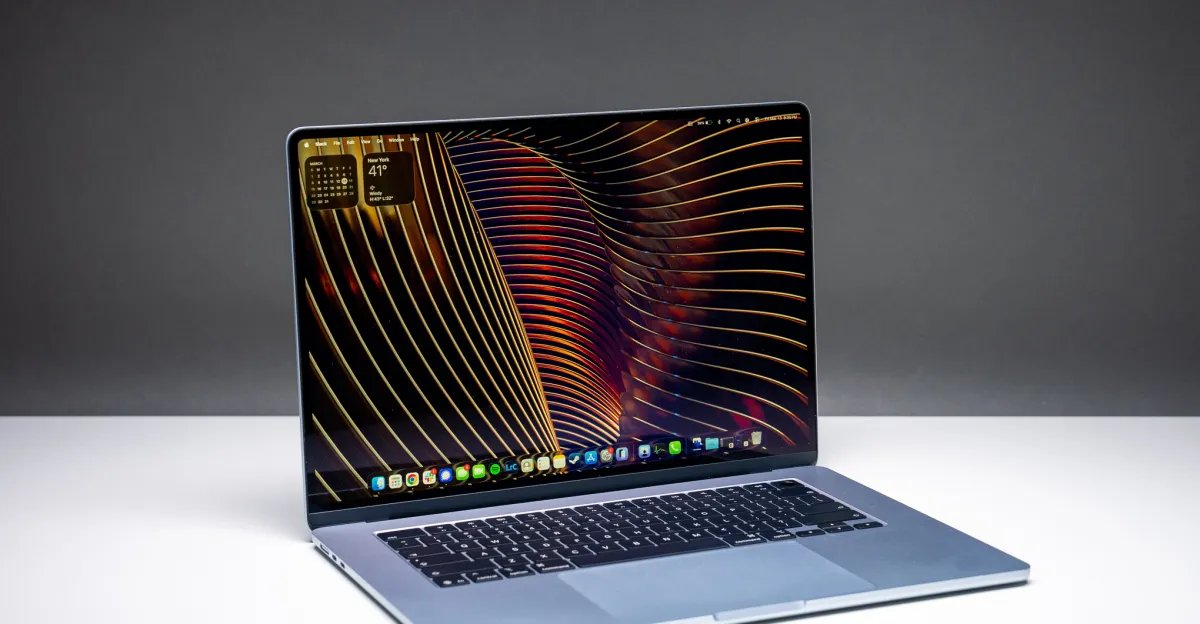
Apple has integrated several functional improvements into the M5 MacBook Air to address the requirements of modern digital communication. The display on these models provides higher resolution and superior color accuracy compared to the Neo, which is vital for professional communication and media consumption. Complementing this is the updated internal webcam, which features integrated Center Stage technology.
Center Stage utilizes machine learning to adjust the camera field-of-view during video calls, ensuring the user remains centered in the frame even as they move. This is a practical improvement for individuals who participate in frequent virtual meetings, as it provides a more professional appearance without the need for manual camera adjustments or external tracking devices. Furthermore, the hardware includes improved speakers and a backlit keyboard, both of which contribute to a refined interface for users working in diverse environments, from dimly lit home offices to brightly lit commute settings.
The Impact of Current Market Pricing
The current retail landscape, featuring a $300 discount on the 16GB/512GB configurations, fundamentally changes the value proposition of the MacBook Air. Since the price adjustment in June, many consumers have viewed these machines through the lens of cost-to-performance ratio. By bringing the price of the 13-inch model down to $999 and the 15-inch version to $1,199, retailers are effectively making high-end technical specifications accessible to a wider demographic.
This pricing strategy serves as an invitation for users who previously relied on older, Intel-based hardware to transition to modern ARM-based silicon. The longevity of the M5 chip, combined with the 16GB of memory, ensures that these machines will remain relevant for several years of future software updates. By selecting this mid-tier configuration, users are opting for a device that balances immediate productivity needs with the architectural headroom required to handle the evolving demands of software updates and digital workloads throughout the next half-decade.
Disclaimer: This content is auto-generated for informational purposes only.
Source: Read Original News