






As the climate crisis intensifies, global food security faces a convergence of compounding risks, according to Dr. Paul Behrens, a professor at the University of Oxford and a contributor to Britain’s National Emergency Briefing. Speaking on the precarious state of global supply chains, Behrens warned that we are entering a period of “tremendous risk” regarding food access and pricing.
Central to these concerns is the recurring, yet increasingly unpredictable, phenomenon of El Niño. While historically a natural cycle occurring every two to seven years, Behrens suggests that the current, intense manifestation of El Niño is likely amplified by global warming. The massive redistribution of energy across the Pacific Ocean threatens to disrupt weather systems globally, exacerbating the instability of agricultural output.
“It’s extremely uncertain,” Behrens noted. “But I think given all the other pressures, I wouldn’t be surprised to see food price inflation next year higher than the estimates.”
These meteorological threats are compounded by geopolitical volatility and structural weaknesses within the UK’s food system. Recent disruptions in the Red Sea and the closure of the Strait of Hormuz, alongside the ongoing uncertainty surrounding grain exports from Ukraine, have exposed the fragility of the “just-in-time” supply chain upon which Britain relies.
Domestically, the system is highly centralized. Approximately 90 percent of the food market is controlled by a few major supermarket chains, supported by a relatively small network of four primary import ports and 131 distribution centers. Behrens highlighted that this concentration is a major vulnerability, noting that even minor interruptions can lead to significant price spikes. He cited the recent cyberattacks on French refrigeration infrastructure—which resulted in the destruction of significant food stocks—as a stark example of the dangers inherent in such a centralized system.
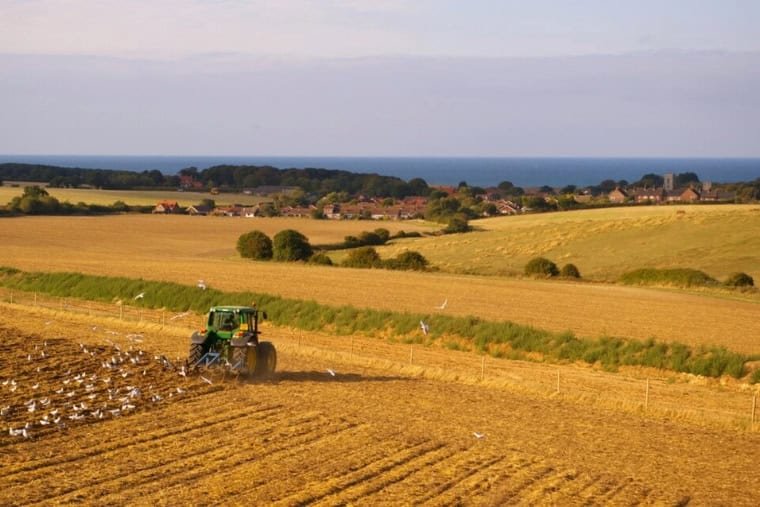
Current agricultural practices further increase these risks. The reduction in crop diversity and a heavy reliance on a few global “breadbaskets” mean that when environmental or geopolitical shocks hit, the impact is magnified. For instance, rice production—heavily dependent on major exporters like India—is particularly vulnerable to sudden export embargos.
Addressing the government’s recent focus on encouraging individual preparedness, Behrens expressed skepticism about the efficacy of this approach. “What I’m less excited about is this whole focus on the individual rather than a national, more systemic and regional resilience,” he said. He argued that it is unrealistic to expect residents, particularly those in small urban dwellings, to store large amounts of food. Instead, he advocates for an investment in community-level resilience forums, which could provide better nutrition and local support networks.
“The very worst thing that could happen from the point of view of investing in this is nothing happens,” Behrens stated. “But even in that case, you’ve built community, networks and relationships which could be really helpful for the future.”
He noted that the UK’s current policy-making often adheres too strictly to treasury-based cost-benefit analyses, which fail to account for the social value of fostering community cohesion.
Looking forward, the National Emergency Briefing remains focused on pushing for a government-led communication strategy. Despite a parliamentary debate regarding a televised emergency briefing on the climate crisis, little has been done to implement large-scale public information campaigns. Behrens emphasized that regardless of government action, the movement to educate the public—evidenced by the thousands of screenings of the “People’s Emergency Briefing” film—is vital. “People are actually meeting one another in real life rather than on social media and discussing the huge problems that we have,” he said.
As climate patterns become increasingly erratic, the consensus from experts like Behrens is clear: the current food system is inadequately prepared for the shocks on the horizon, and the path to security lies in systemic resilience rather than individual burden.
Disclaimer: This content is auto-generated for informational purposes only.
Source: Read Original News