






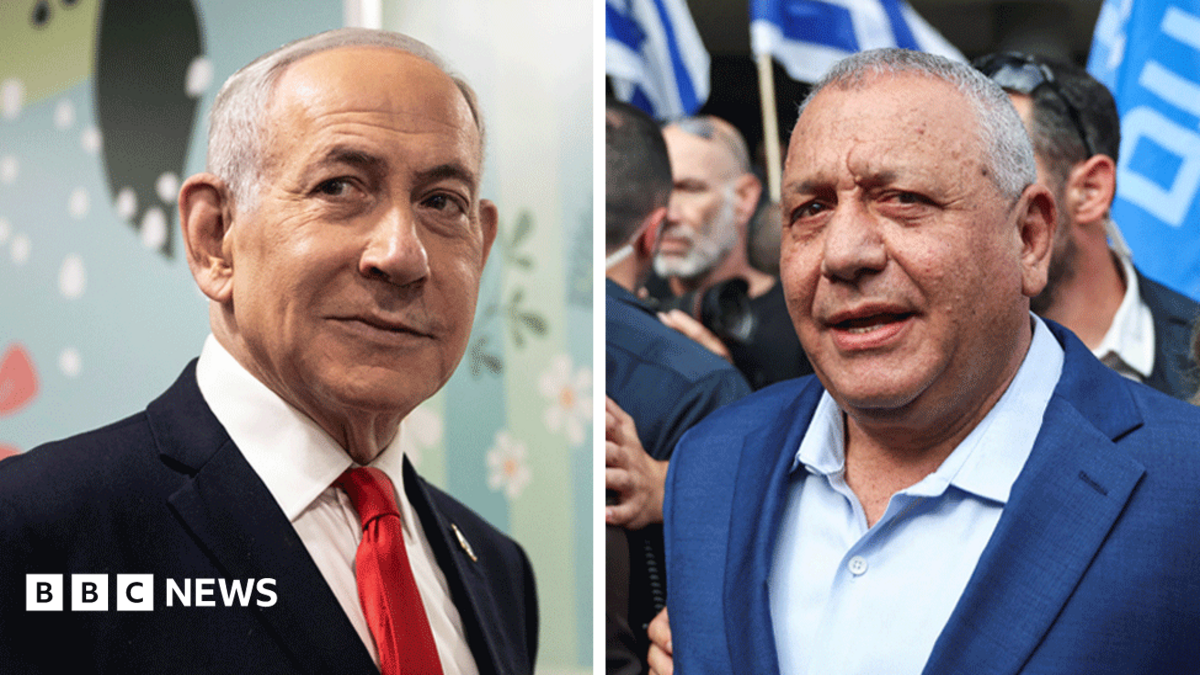
JERUSALEM — High-stakes negotiations are officially underway between caretaker Prime Minister Benjamin Netanyahu and opposition leader Gadi Eisenkot, as the two political rivals attempt to break the paralyzing deadlock triggered by last month’s inconclusive general election.
The breakthrough in communication follows a dramatic shift in rhetoric from Netanyahu on Saturday. In a surprising post on X, formerly Twitter, the long-serving leader appeared to concede his long-held insistence on heading any government, offering a power-sharing arrangement to end the current impasse.
“My responsibility as a leader obligates me to put everything aside, including the principle of the largest party,” Netanyahu stated. He proposed a national unity government featuring a rotating premiership, signaling his willingness to allow Eisenkot to serve as prime minister first, while he takes the role of alternate prime minister for the initial phase of the term.
The urgency of the talks is underscored by a looming constitutional clock. Eisenkot, a former Israel Defense Forces chief, has just one week to form a viable administration before the December 6 deadline elapses. If he fails to secure a majority in the 120-seat Knesset, the country risks being pushed toward an unprecedented cycle of new elections, a prospect that has deeply unsettled the Israeli electorate.
The October election left the political landscape fractured. Netanyahu’s right-wing bloc secured 53 seats, while Eisenkot’s diverse coalition of four parties garnered 48. With neither side reaching the 61-seat threshold required for a majority, President Isaac Herzog tasked Eisenkot with the arduous process of government formation.
Eisenkot responded to Netanyahu’s offer with a formal invitation to engage in “genuine and accelerated negotiations.” This positive reception marks a stark departure from the tension seen just twenty-four hours earlier, when Eisenkot publicly accused the Likud party of intentionally stalling coalition talks in an attempt to force the country back to the ballot box.
Despite the renewed optimism, significant hurdles remain. While Eisenkot has successfully finalized coalition deals with two smaller parties, his path to a majority is obstructed by deep-seated ideological divisions. Efforts to build a stable cabinet have been repeatedly hampered by fierce opposition to incorporating Arab parties into the government, as well as unresolved friction with ultra-Orthodox factions regarding key policy demands.
For weeks, the nation has been in political limbo, with Netanyahu acting as caretaker prime minister while the fragmented legislature struggles to find common ground. Whether this late-stage offer of a rotating premiership is a genuine attempt to stabilize the country or a tactical maneuver remains the central question for political analysts. As the December 6 deadline approaches, all eyes are on the negotiating rooms where the future of Israel’s governing stability hangs in the balance.
Disclaimer: This content is auto-generated for informational purposes only.
Source: Read Original News