








European Cinema Takes Center Stage in Delhi as 31st EUFF Kicks Off
From the rugged, atmospheric forests of Sweden to the vibrant heart of the national capital, the 31st edition of the European Union Film Festival (EUFF) brought a slice of international storytelling to Delhi this week. The Stein Auditorium at the India Habitat Centre hummed with activity on November 25 as over 300 cinema enthusiasts gathered for the opening screening of The Last Viking.
Directed by Anders Thomas Jensen and starring Nikolaj Lie Kaas, the Danish dark comedy captivated the audience with its unconventional narrative. The film centers on a bank robber fresh out of prison, entangled in a bizarre quest to recover hidden loot from a sibling who is convinced he is the reincarnation of John Lennon. By balancing heavy subjects like parental trauma with a sharp, witty edge, the film earned a rapturous response, with the auditorium erupting in applause as the credits rolled.
A Collective Cinematic Experience
Organized by the Delegation of the European Union to India alongside various member state embassies, the festival features 28 films from 27 EU nations and Ukraine, presented in 30 different languages. The Delhi chapter will run until December 4, utilizing iconic cultural spaces like the India International Centre and Triveni Kala Sangam, before moving to Pune.
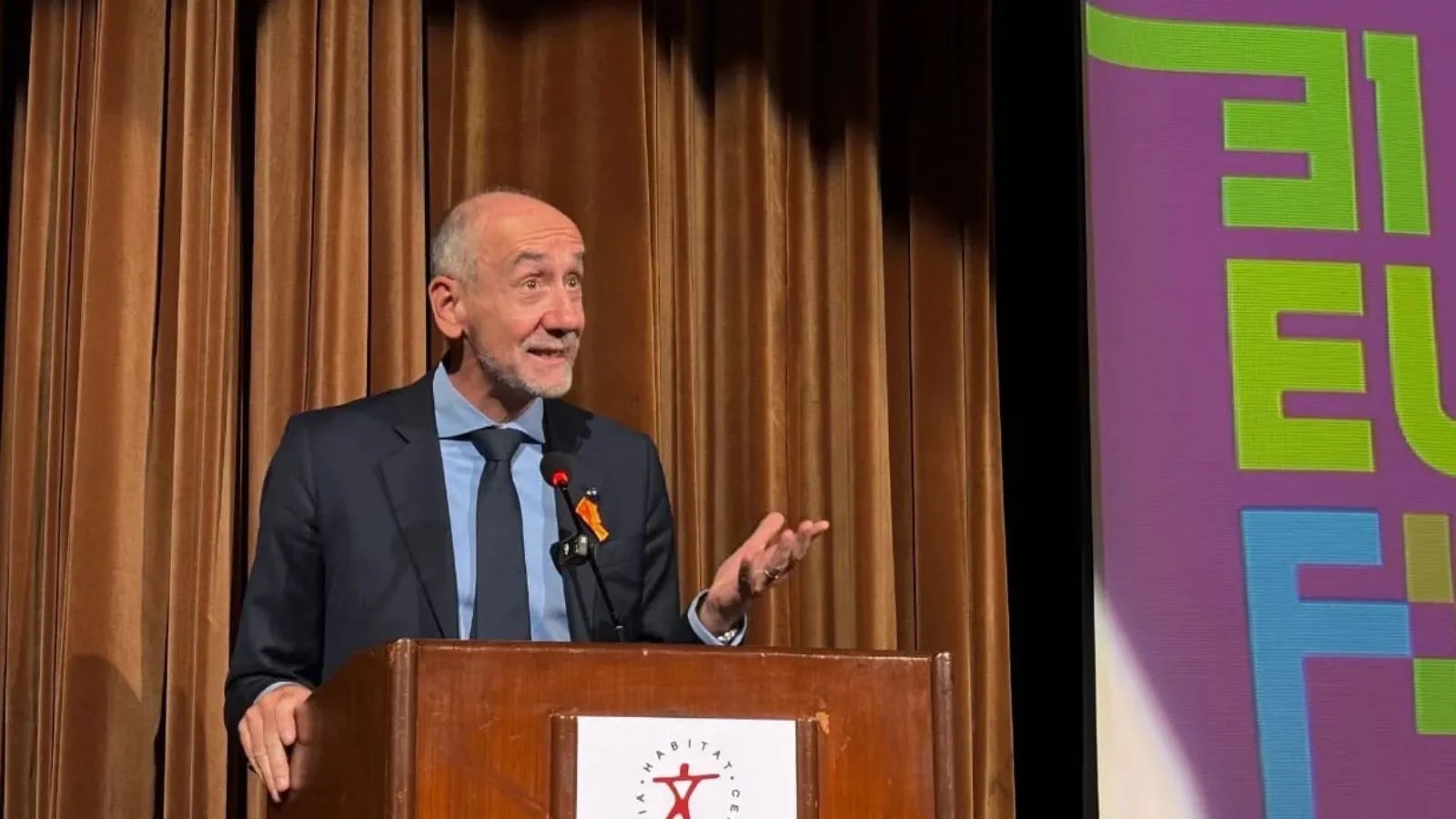
For Jean-Eric Paquet, the EU Ambassador to India, this event underscores the enduring power of communal viewing. Despite the ubiquity of streaming platforms, Paquet emphasizes that the festival offers an irreplaceable sensory experience. “Sharing the emotion with hundreds of other people is a completely different experience,” Paquet noted, highlighting how the fragmented nature of modern home viewing—where audiences often pause or multitask—cannot compare to the total immersion of a theater. He added that while some of the featured films might be available online, the majority remain exclusive to the festival circuit.
The festival’s reach is expanding, with its debut in Shillong earlier this November marking a strategic shift to engage with audiences beyond major metros. According to Paquet, the 30-year legacy of the EUFF serves as a testament to the European commitment to a long-term partnership with India, remaining a reliable cultural presence even amidst an increasingly complex global climate.
Nurturing New Voices
This year’s curation goes beyond traditional narratives, showcasing seven films by women directors and five debut features. The selection spans a wide spectrum of human experience, tackling themes of mental health, aging, and disability through documentaries, sports dramas, and historical epics.
Innovation is also at the forefront of this edition with the launch of the EUFF Film Project, a competition aimed at emerging Indian filmmakers. The festival’s initiative seeks to bridge the gap between creative talents in India and Europe. During the opening night, Ambassador Paquet presented the inaugural award to Vasu Bhatia for the film The Lost Calf. As part of the prize, Bhatia will gain exposure at the prestigious Script Fiesta in Warsaw next year.
Curator Artur Zaborski, affiliated with the Warsaw Film School, believes that these cross-cultural collaborations are already gathering momentum. Highlighting recent examples like the Indo-Polish co-production Kamathipura Express—which recently secured a Student Academy Award—Zaborski emphasized that the younger generation of filmmakers is increasingly moving past geographical boundaries. As European and Indian producers find more common ground, the EUFF stands as a vital platform for this evolving creative exchange, ensuring that stories from across the continent continue to find a home in the hearts of Indian audiences.
Disclaimer: This content is auto-generated for informational purposes only.
Source: Read Original News