






In the vast, glittering firmament of Hindi cinema’s golden era, few stars possessed the transformative power of Sanjeev Kumar. He was the rare actor who could command the screen with the gravitas of a retired police officer in Sholay and, with equal ease, portray the vulnerability of a stuttering lover in Koshish or the comedic timing of a man juggling two lives in Angoor. Yet, for all his professional brilliance, the narrative surrounding the man born Harihar Jethalal Jariwala—affectionately known as “Haribhai” to his peers—is increasingly colored by the shadow of a profound, lingering loneliness.
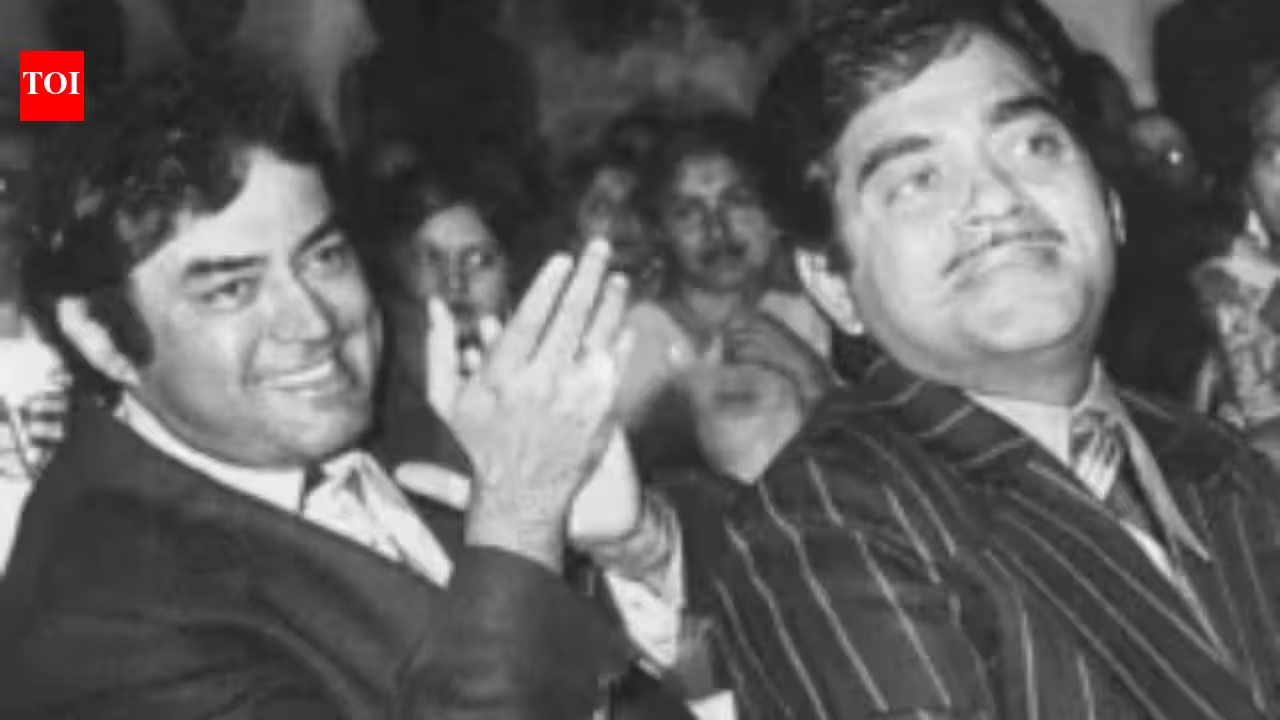
Decades after his untimely passing at the age of 47, the conversation surrounding his life has resurfaced, anchored by the poignant reflections of his close friend and frequent collaborator, Shatrughan Sinha. In a series of candid recollections, Sinha has peeled back the layers of a man who seemed to have everything, yet couldn’t secure the one thing he craved most: a stable, reciprocal love.
The Unmatchable Talent We Barely Knew
Shatrughan Sinha, a titan of the screen in his own right, has never been one to mince words, but when speaking of Sanjeev Kumar, his tone shifts to one of reverent melancholy. In interviews reflecting on their shared history, Sinha has described the late actor as an “unmatchable talent.” It is a bold statement, but one backed by a filmography that remains a masterclass in acting.
“Balki main toh yeh kahunga ke humne kuch bhi nahin dekha,” Sinha remarked, suggesting that when Sanjeev Kumar suffered his fatal heart attack in 1985, the industry was robbed of the peak of his capabilities. Unlike many of his contemporaries who relied on stardom, Haribhai relied on craft. Whether he was playing an aged Thakur or a confused man in a farce, he disappeared into the skin of his characters. For Sinha, who shared screen space with him in projects like Beraham, Bad Aur Badnaam, and the fateful Qatl, working with Kumar was a masterclass in presence. It wasn’t just about the lines delivered; it was about the heavy, deliberate weight he brought to every frame.
A Heart Broken, Not Just Stopped
The medical cause of death for Sanjeev Kumar was a massive heart attack, a tragedy that hit the industry with the force of a thunderclap. However, Shatrughan Sinha offers a more metaphysical diagnosis for his friend’s end. He posits that while the heart failed physically, it had been crumbling emotionally for years.
“Lekin mein toh kahunga unki maut dil tootne se hui,” Sinha famously stated. The irony of Sanjeev Kumar’s life was that he was a man who understood love deeply, yet it seemed to perpetually elude him in the form he desired. Sinha paints a picture of a man caught in a cruel cycle of unrequited affection: “The problem was, the women he loved did not love him back. And those who loved him, he did not love back.”
This emotional tug-of-war was compounded by a traditional sensibility. Kumar was deeply devoted to his mother, and according to Sinha, he harbored a desire to marry only a woman who would earn her full approval. This creates the image of a man torn between the modern romantic ideals of the film industry and the traditional expectations of his upbringing, leaving him caught in a purgatory of solitude.
The Foodie Who Loved to Share
Beyond the tragedy, there was the man himself—a figure who found solace in the simple, sensory pleasures of life, most notably food. Sinha fondly remembers the lighter side of Haribhai, noting that he was a massive foodie who loved a wide variety of cuisines. This became a sort of love language in his life; women who hoped to win his affection would often cook for him, attempting to reach his heart through his stomach.
Yet, even in these gatherings, one suspects the loneliness remained. Sinha’s memories are not of a man who was surrounded by the noise of a bustling family, but of a brilliant artist who was constantly seeking a connection that never quite solidified. It provides a sobering contrast: a man who could play any emotion perfectly on command, struggling to curate the one emotion that mattered in his private life.
Two Notorious Latecomers
Sinha also shares a humanizing, humorous anecdote about their friendship, revealing that the two stars were notorious for their poor timekeeping on set. For many, this might be viewed as a mark of ego, but Sinha offers a surprisingly grounded explanation. “I don’t know about him. But I came late because I had a sleeping problem. And I did yoga after waking up,” he confessed.
It is a small detail, but it highlights the camaraderie between two men who were essentially operating on different wavelengths than the rest of the industry. They weren’t just colleagues; they were peers navigating the dizzying heights of fame, the weight of public expectation, and the private battles that come with being a household name.
The Final Curtain: Qatl
The end of the road came with Qatl, the film that would serve as Sanjeev Kumar’s final bow. Looking back, the film carries a haunting resonance. To think of an actor of his caliber being taken at 47 is a stark reminder of how fragile life in the limelight can be.
Sanjeev Kumar left behind a legacy that continues to influence generations of actors. He didn’t need the typical “hero” persona to dominate the box office; he won through nuance, vulnerability, and a rare ability to convey deep sorrow with a single look. Shatrughan Sinha’s reflections do not diminish the actor’s achievements; rather, they add a layer of humanity that makes his performances feel even more profound. We watch him now not just as the legendary Thakur or the comedic genius of Angoor, but as a man who lived, loved, and eventually let go, leaving behind a body of work that continues to beat long after his own heart went silent.
Disclaimer: This content is auto-generated for informational purposes only.
Source: Read Original News