






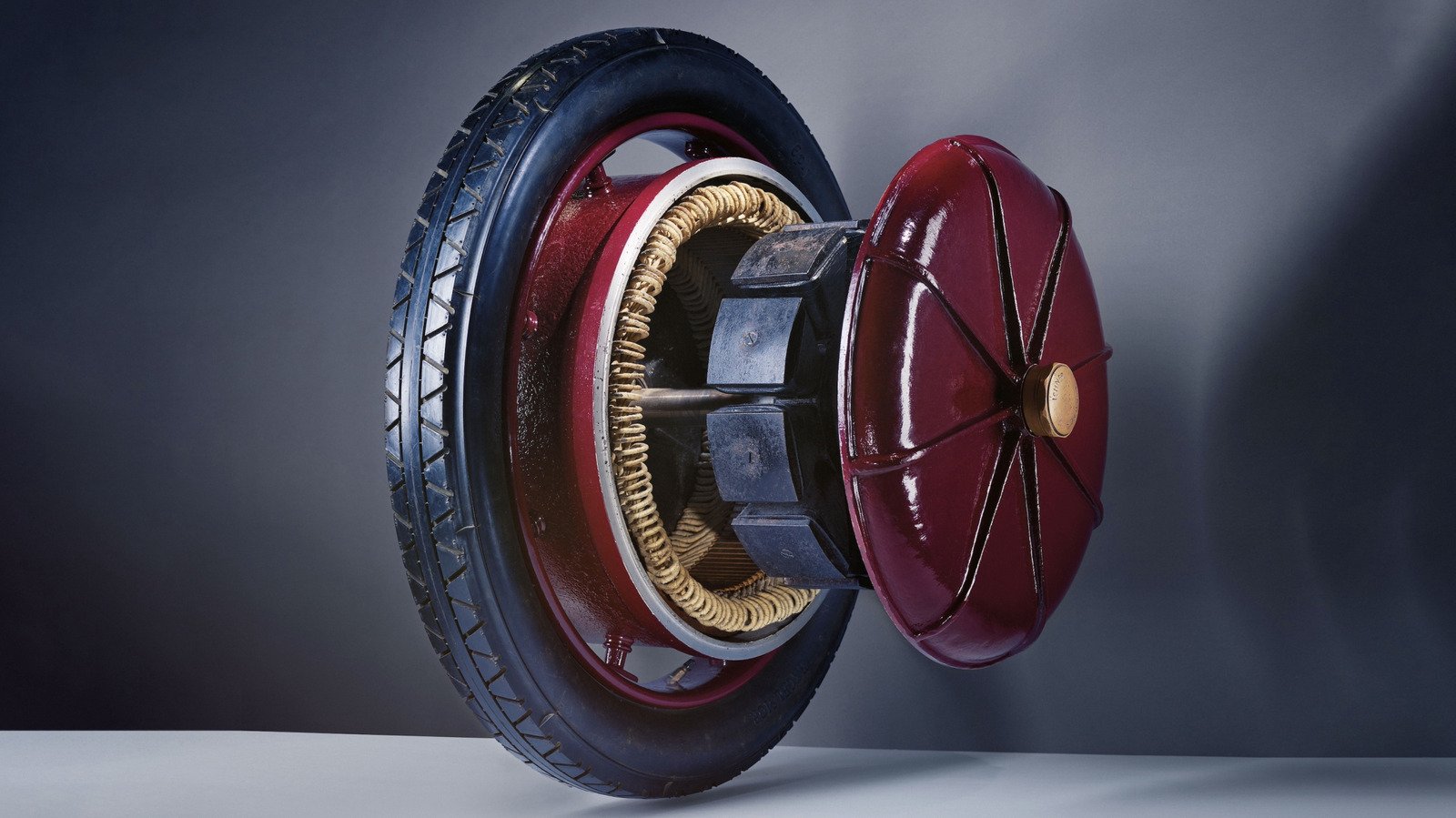
The concept of the electric hub motor is far from a modern invention. Its roots trace back to the 1900 Paris Exposition, where Ferdinand Porsche unveiled an electric vehicle utilizing hub-mounted propulsion. The technology even traveled beyond our atmosphere, powering the wheels of the Lunar Roving Vehicles used during the Apollo 15, 16, and 17 missions. Despite this history and the clear theoretical advantage of eliminating complex transmissions and heavy drivelines, hub motors remain a rarity in the consumer automotive market. As manufacturers grapple with the transition to electrification, the debate over whether these motors can overcome their physical limitations is more relevant than ever.
The Fundamental Engineering Hurdles
The primary challenge surrounding hub motors is the increase in unsprung mass. In a traditional vehicle, the motor and transmission are supported by the suspension, allowing the wheel assembly to react quickly to road irregularities. When the motor is placed inside the wheel, that weight—the unsprung mass—sits directly on the tire, bypassing the suspension’s dampening effects. In automotive dynamics, every pound of unsprung weight exerts a disproportionately negative impact on ride quality and tire contact with the road.
Beyond weight, the rotational mass of a hub motor creates a gyroscopic effect that resists changes to the vehicle’s direction. This can lead to sluggish steering responses and increased stress on suspension components. Furthermore, mounting sophisticated electromagnetic hardware directly inside the wheel exposes it to severe operating conditions. Unlike chassis-mounted motors protected within a controlled, stable environment, wheel-mounted units are subjected to continuous shock from road surfaces, along with exposure to water, salt, road debris, and thermal cycling. Sealing these components sufficiently to prevent failure while maintaining adequate cooling creates a significant engineering paradox.
Evaluating Efficiency and Performance
Proponents of hub motors argue that the removal of drive shafts, differentials, and traditional gearboxes leads to superior drivetrain efficiency. By delivering power directly to the wheel, the system avoids the energy losses associated with mechanical friction across multiple drivetrain components. Theoretically, this allows for more precise torque vectoring, where each wheel is controlled independently, granting the vehicle superior agility and traction control.
However, real-world application has proven difficult. The experience with the Lordstown Endurance pickup serves as a cautionary tale for the industry. While the project promised high efficiency through hub-based propulsion, the end result did not meet the performance metrics required for mass-market competition. The failure highlights that theoretical efficiency gains can be negated by the increased complexity of managing four separate power units, each requiring its own inverter and thermal management system, versus one central, highly optimized motor.
Hybrid Solutions and New Approaches
Industry leaders are beginning to view the hub motor not necessarily as an “all-or-nothing” proposition, but as a component that can be integrated into smarter chassis designs. Hyundai’s Universal Wheel Drive System (Uni Wheel) represents a significant shift in this logic. By moving the gearing inside the wheel hub but keeping the motor mounted to the chassis, Hyundai effectively mitigates the unsprung mass problem. This design utilizes a planetary gear system to allow the wheel to move vertically while the motor stays stationary, bridging the gap between traditional drivetrains and pure in-wheel motors.
This hybrid philosophy addresses the durability concerns by keeping the vulnerable electronic motor off the wheel, while still reaping the benefits of a compact, decentralized drive system. Such innovations suggest that the future of the technology may lie in modular components that decouple the motor from the direct impacts of the road, rather than placing the entire drive unit inside the wheel rim.
The Path to Mainstream Adoption
Despite the obstacles, the automotive industry continues to experiment with hub-drive systems in high-performance and specialty vehicles. Companies like Elaphe and Protean remain at the forefront of this research, developing high-torque motors capable of withstanding the harsh environments of daily driving. The Renault 5 Turbo 3E serves as a high-profile proof of concept, utilizing dual rear hub motors to produce 555 horsepower and achieve track-ready performance figures. While this remains a limited-production endeavor, it demonstrates that these motors can provide the raw output and response times expected in modern high-performance vehicles.
The integration of solid-state battery technology and improved cooling materials may provide the necessary breakthroughs to push these systems toward broader reliability standards. As the industry moves toward software-defined vehicles, the ability to control each wheel independently becomes an increasingly attractive feature for active safety and vehicle stabilization. If manufacturers can successfully scale the durability and manage the weight distribution of these systems, the hub motor may finally transition from a niche solution to a cornerstone of electric vehicle architecture. The challenge remains to prove that these systems can withstand the “real world” of potholes and environmental wear as reliably as the internal combustion engines that currently dominate our roads.
Disclaimer: This content is auto-generated for informational purposes only.
Source: Read Original News