








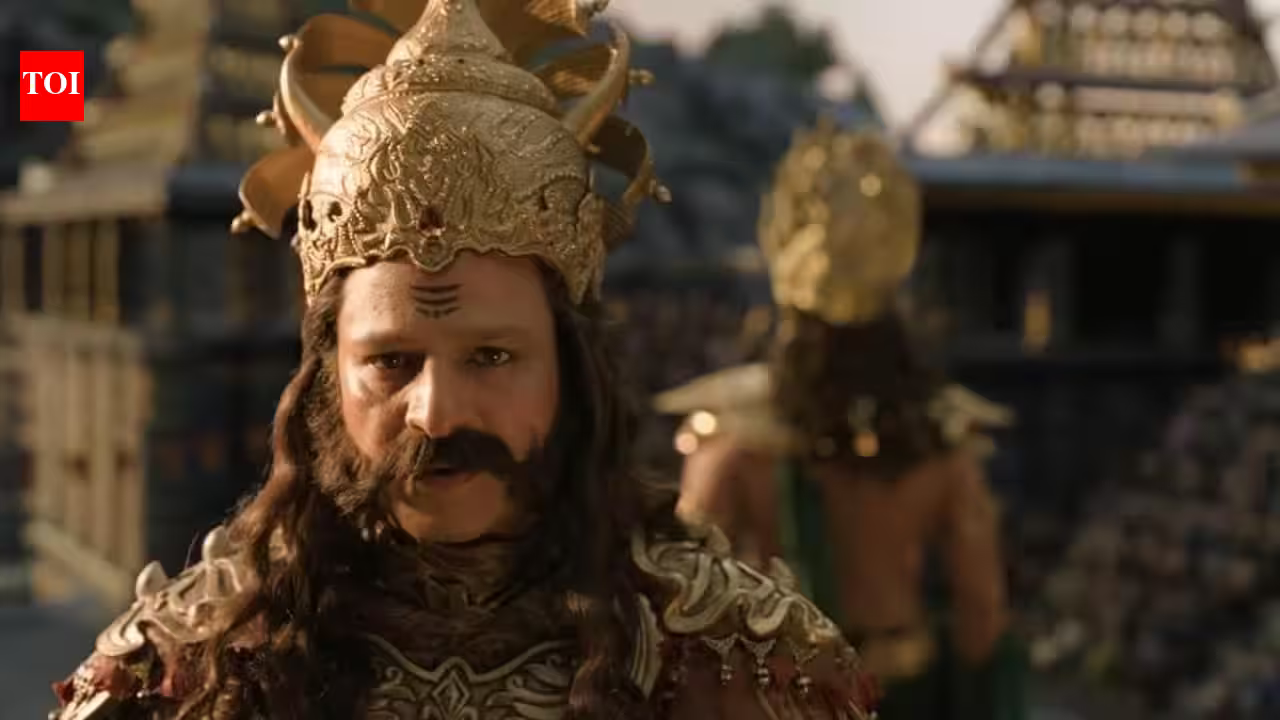
In the high-stakes, numbers-obsessed landscape of modern Indian cinema, where a film’s legacy is often reduced to its opening weekend or the speed at which it hits the “100-crore club,” Vivek Oberoi is offering a different metric. For the actor, currently appearing as the vengeful Vidyuthjiva in Nitesh Tiwari’s gargantuan mythological epic Ramayana, the film’s true value isn’t found in a spreadsheet. It is found in the eyes of an eight-year-old child witnessing the trials of Lord Ram for the first time.
Speaking to the press during a heartwarming special screening organized for children battling cancer in Mumbai, Oberoi brushed aside the relentless focus on the film’s staggering ₹1,814 crore global haul. While the numbers are undeniably historic—cementing the film as the second-highest-grossing Indian production of all time—Oberoi argues that the cultural currency the film has generated is worth far more than its gold-standard box office performance.
Beyond the Balance Sheet: A Cultural Legacy
“A film like Ramayana, I don’t think its value can be measured in monetary terms, like how many crores it earned or didn’t earn,” Oberoi remarked, his tone shifting from actor to advocate.
In an era where attention spans are fractured by social media and short-form content, bringing the epic tale of the Ramayana to life with such visual fidelity is, according to Oberoi, a “service.” He spoke fondly of his own childhood, defined by the appointment viewing of Ramanand Sagar’s 1987 television series, where families would gather religiously around a single TV set. He sees Nitesh Tiwari’s film as the modern successor to that communal experience, bridging the gap between generations.
The actor’s observation isn’t just sentimental; it’s demographic. He notes that the film’s theater halls have become a rare cross-generational meeting ground. “Everyone, from grandparents aged 80 to 85 years old to five-year-old children, is enjoying it,” he said. To Oberoi, the sight of a toddler and a senior citizen sharing the same emotional journey—the victory of dharma over adharma—is the real “profit” of the project.
The Art of the ‘Aahuti’
When news broke that Vivek Oberoi would be playing the role of Vidyuthjiva, some observers questioned the scale of the part. Vidyuthjiva, the husband of Shurpanakha (portrayed by Rakul Preet Singh), is not the central protagonist, nor is he the primary antagonist of the grand arc. However, for Oberoi, the size of the role was irrelevant compared to the magnitude of the project.
He characterized his participation as a small “aahuti” (a ritual offering) in the “mahayagna” (a great, sacrificial ceremony) of the Ramayana. In the context of a film boasting a budget reportedly exceeding ₹2,000 crore and featuring a massive ensemble cast—including Ranbir Kapoor as Lord Ram, Sai Pallavi as Sita, Yash as Ravana, and Sunny Deol as Hanuman—Oberoi’s perspective reflects a growing trend among veteran actors: prioritizing legacy and prestige over screen time. By stepping into a supporting role in such a monumental production, he isn’t just looking for a career boost; he is participating in a cultural milestone that he believes will be remembered long after the current box-office records are broken by the next big blockbuster.
Shattering Records in a Changing Industry
While Oberoi prefers to talk about the spirit of the film, the business reality of Ramayana is impossible to ignore. In just 24 days, the film has rewritten the history books. With a domestic net collection surpassing ₹1,015 crore and a global total of over ₹1,814 crore, the film has surpassed the legendary run of Baahubali 2: The Conclusion. It now stands as the second-highest-grossing Indian film ever, second only to Aamir Khan’s Dangal.
What makes these numbers particularly impressive—and perhaps what justifies the “mahayagna” metaphor—is that Ramayana is the first non-sequel in Indian history to cross the ₹1,000 crore net mark at the domestic box office. It hasn’t relied on a pre-existing franchise brand or a Part 2 hype cycle; it has relied solely on the enduring power of India’s most storied epic.
The Road to 2028: Sustaining the Momentum
The industry is already looking ahead. With the second installment scheduled for a Diwali 2028 release, the producers are clearly banking on a long-term franchise strategy. For actors like Oberoi, who have been part of the initial launch, the challenge will be to keep the narrative feeling fresh and vital rather than just a technical spectacle.
Critics often argue that mythological adaptations in modern Indian cinema suffer from a lack of emotional “soul” as they lean heavily on CGI and scale. However, the feedback Oberoi has received—particularly from the younger audience members who attended the recent screenings—suggests that Nitesh Tiwari has managed to balance the spectacle with a resonant heart.
As the dust settles on this initial, record-breaking run, Oberoi’s stance serves as a reminder to the film fraternity: while the industry tracks the “crores,” the audience tracks the connection. In the end, the success of a story that has survived thousands of years isn’t about what it earns in its first month, but how it shapes the imaginations of the children sitting in the dark, watching the screen in awe. As Oberoi put it, “I don’t think there could be a greater contribution than this.”
Disclaimer: This content is auto-generated for informational purposes only.
Source: Read Original News