








The Shift in Personal Computing Affordability
For several years, the trajectory of consumer hardware pricing has trended upward, driven by inflationary pressures, the rising cost of high-end semiconductor manufacturing, and an increased reliance on premium materials. As top-tier components like neural processing units and high-bandwidth memory become standard, the barrier to entry for a capable workstation has climbed. However, the current retail landscape, punctuated by Cyber Monday, serves as a necessary correction, offering professional-grade machinery at price points that reflect actual utility rather than marketing premiums.
The challenge for the modern consumer is discerning between deep discounts on aging, obsolete architecture and significant price drops on current-generation hardware. Investing in a machine with a processor architecture that is more than three generations old can lead to compatibility issues with modern software stacks and reduced support for future operating system updates. Therefore, this period represents a strategic window to acquire computing power that is optimized for longevity and sustained performance.
Evaluating the Silicon Architecture
When selecting a laptop or desktop during these sales, the underlying silicon architecture is the most critical metric. We are currently in a transition phase where artificial intelligence acceleration has moved from a niche requirement to a standard operating system feature. Users should prioritize hardware featuring integrated Neural Processing Units (NPUs) if they intend to utilize advanced background noise suppression, real-time video upscaling, or local large language model inference.
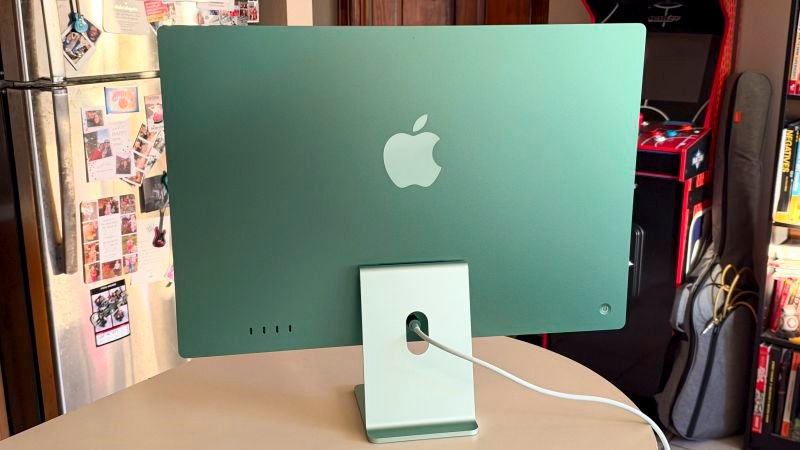
On the Apple side, the M-series chips continue to dominate in terms of thermal efficiency and performance-per-watt. Deals currently surfacing on M3-powered iMacs and MacBooks represent a sweet spot in the market. These machines utilize a 3-nanometer process, which offers substantial performance gains over the older M1 and M2 architectures. Meanwhile, in the Windows ecosystem, the focus has shifted toward the Qualcomm Snapdragon X Elite platform and the latest Intel Core Ultra series. These chips are designed to compete directly with Apple’s efficiency, providing long-lasting battery life for portable devices without sacrificing the ability to run resource-heavy applications.
Desktop Efficiency for Professional Workflows
Desktops remain the most sensible choice for users whose workflows involve persistent data processing, high-resolution video editing, or multi-monitor configurations. The primary advantage of a desktop is thermal headroom; because these systems are not constrained by the physical dimensions of a laptop chassis, they can maintain higher clock speeds for longer durations without thermal throttling.
Current Cyber Monday discounts are particularly strong for all-in-one systems. These units combine the display and the computing hardware into a single, cohesive unit, reducing desk clutter while maintaining high-fidelity visuals. For creative professionals, the display quality is paramount. Seek out configurations that offer P3 wide color gamut coverage and at least 500 nits of brightness. While a standalone custom-built PC may offer more modularity, the integrated approach offered by contemporary all-in-ones provides a balanced solution for users who prioritize an streamlined workspace without compromising on raw computing power.
Mobile Productivity and Battery Reliability
For mobile professionals, the priority is balancing weight with component capability. A common mistake during sale events is purchasing a budget-tier laptop that lacks enough random access memory (RAM) to handle modern web browsers and multitasking. In the current environment, 16GB of RAM should be viewed as the absolute baseline for any machine intended to last beyond the next two years. Anything less will inevitably lead to system degradation as background processes and software updates become more memory-intensive.
Portability features have also matured. Modern ultrabooks now leverage high-density lithium-ion batteries that, when paired with energy-efficient processors, can deliver genuine ten-to-twelve-hour work cycles. When browsing current deals, pay close attention to the display panel technology. IPS (In-Plane Switching) remains the industry standard for color accuracy and viewing angles, whereas OLED panels are becoming more affordable and offer superior contrast ratios, which are beneficial for content consumption and editing in dark environments.
Optimizing Long-term Value and Longevity
To ensure the hardware purchased today remains viable for the next five years, one must consider the peripheral connectivity standards. USB-C with Thunderbolt 4 or USB4 support is essential for future-proofing. These standards enable high-speed data transfer and the ability to drive multiple high-resolution displays through a single cable. Machines lacking these ports will feel increasingly dated as peripheral devices move toward universal high-speed connectivity.
Furthermore, storage capacity should not be overlooked. While cloud storage is ubiquitous, local read/write speeds are vital for operating system fluidity. An NVMe solid-state drive (SSD) is non-negotiable. If a deal includes a mechanical hard drive as the primary boot drive, it should be disregarded entirely, regardless of the price. The speed differential between an NVMe SSD and a mechanical drive is the single most significant factor in how “fast” a computer feels during daily tasks.
Navigating the Retail Landscape Responsibly
The surge in holiday retail activity often masks the true value of a product. Consumers are advised to look at the historical pricing of a unit rather than the suggested retail price provided by the merchant. Reliable hardware is defined by its ability to handle demanding software without stability issues. By focusing on machines with modern processors, sufficient memory, and fast storage, users can bypass the marketing noise and secure a tool that serves their requirements for years to come.
As the technology sector continues to evolve toward more specialized, efficient computing, the devices purchased today represent a shift toward high-performance computing becoming a baseline expectation rather than a luxury. This year’s Cyber Monday provides a rare intersection of rapid innovation and accessible pricing, creating an ideal environment for those looking to upgrade their digital infrastructure.
Disclaimer: This content is auto-generated for informational purposes only.
Source: Read Original News