








The Battle for the Big Screen: Namit Malhotra Puts ‘Ramayana’ OTT Rumors to Rest
In an era where the gap between theatrical release and digital premiere has shrunk to a mere four-to-eight-week window, the film industry has largely resigned itself to the “fast-streaming” model. Audiences have become conditioned to expect their favorite blockbusters to hit their living room screens before the popcorn smell has even left their local cinema lobby. However, the team behind the highly anticipated, star-studded mythological epic Ramayana: Part 1 is looking to rewrite that narrative entirely.
Producer Namit Malhotra has officially stepped into the fray to silence the deafening chatter surrounding the film’s streaming destiny. Amidst swirling reports that a massive Rs 450 crore deal had already been inked with a major OTT player, Malhotra has come forward to set the record straight: the Ramayana is staying put in the theater, and it isn’t going anywhere fast.
Dispelling the Rs 450 Crore Myth
For weeks, the trade circles were abuzz with whispers that JioHotstar had secured the digital rights to Nitesh Tiwari’s magnum opus for a staggering Rs 450 crore. It was the kind of headline that fit perfectly into the current landscape of Indian cinema—where high-budget spectacles are frequently snatched up by streaming giants for record-breaking sums.
However, in a candid interview with DD News, Malhotra categorically dismissed these claims as pure speculation. By his account, the ink hasn’t even touched the paper. Not only is the reported valuation inaccurate, but the very existence of a signed contract is a work of fiction. Malhotra’s clarification serves as a firm “hold your horses” to an industry that has become perhaps too obsessed with the digital afterlife of films before they’ve even had a chance to breathe in their natural environment.
A Vision for the Cinematic Spectacle
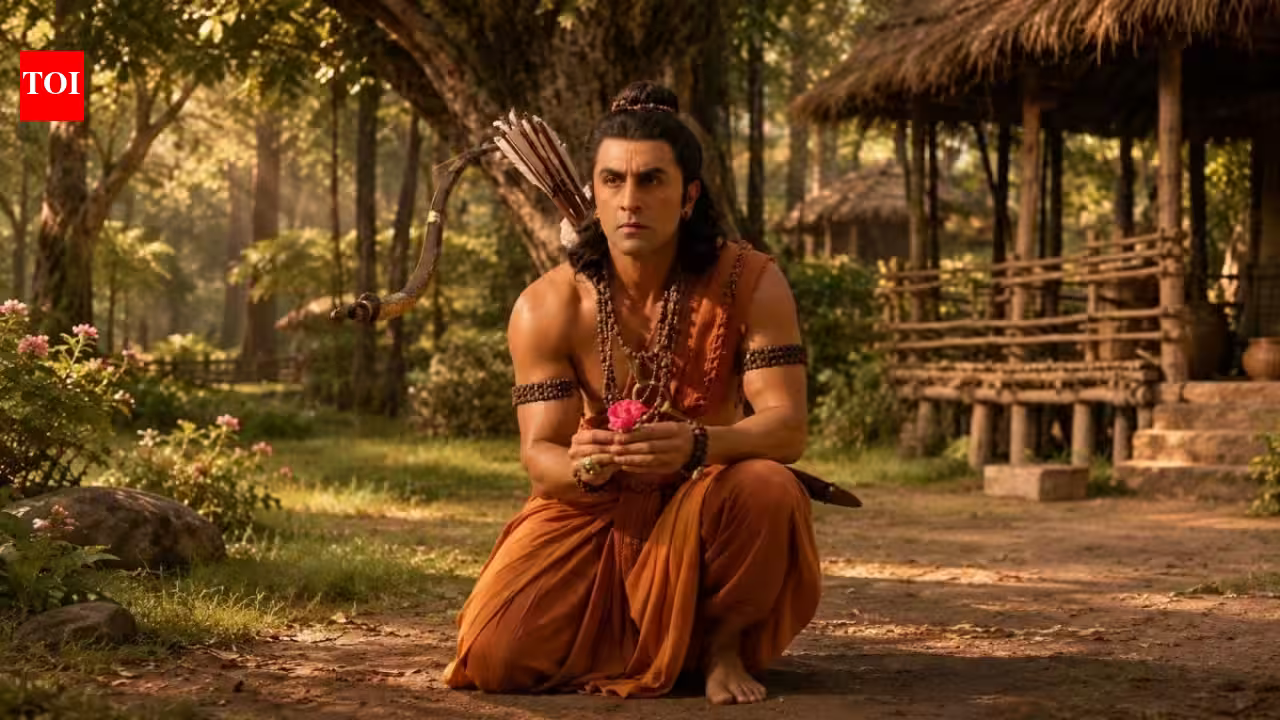
What makes the Ramayana project stand out isn’t just its A-list casting—featuring Ranbir Kapoor as Lord Rama, Sai Pallavi as Goddess Sita, and Yash as the formidable Ravana—but the sheer ambition behind its visual scale. Directed by Nitesh Tiwari, the film was conceived as a landmark in Indian filmmaking, designed to utilize the latest in visual effects and sound design to bring a mythological epic to life on a scale never before seen.
Malhotra’s insistence on a prolonged theatrical window isn’t just a business strategy; it feels like a defensive stand against the “content-at-home” culture. He is adamant that the film’s meticulous craft—its music, its sweeping visuals, and its grandeur—is fundamentally incompatible with the smaller, often compromised viewing conditions of a home streaming setup. By delaying the OTT release, the producers are signaling a respect for the medium of cinema that has been increasingly rare in the post-pandemic era.
Resisting the Short-Window Trap
The “usual process” in modern Bollywood involves a rapid pivot to digital platforms, often driven by the need to recoup investment or satisfy contractual obligations with streaming giants. Malhotra, however, is charting a different course. He has made it clear that the team is under no financial or contractual duress to rush the film to digital.
“I have not sold the OTT rights to anyone till date,” Malhotra stated, emphasizing that the team is willing to wait out the market to ensure the film receives its due at the box office. His stance is a calculated risk. By refusing to sign on the dotted line, he is betting that the audience’s desire to see a definitive version of the Ramayana will translate into sustained theatrical footfalls over several months, rather than a quick burst of revenue followed by an immediate shift to a subscription-based model.
What This Means for Future Blockbusters
Malhotra’s refusal to play the game according to the current, fast-paced rules might just start a trend—or at least a conversation. If Ramayana: Part 1 proves that a massive film can thrive without the safety net of an early OTT release, we could see a shift in how studios view theatrical exclusivity.
For the fans who have been waiting with bated breath to see Ranbir Kapoor step into the role of Rama, this news is a double-edged sword. On one hand, those who prefer the comfort of their home couches will have to endure a significantly longer wait than they might be accustomed to. On the other hand, it is an implicit validation of the “event cinema” experience. It’s an invitation to return to the theater, to sit in the dark with a crowd, and to appreciate the work that goes into a film meant for the silver screen.
The Long Road to Streaming
As of right now, the only thing we know for certain about the digital fate of Ramayana is that there is no plan. No platform has been locked in, no release date is on the horizon, and no contracts have been finalized. For a film that has been in the news for its production scale, the silence regarding its digital future is perhaps its most bold statement yet.
Namit Malhotra has drawn a line in the sand. He has made it clear that the Ramayana will arrive on our small screens only when the time is right—and that time, he maintains, is several months away at the very least. For now, the epic is exclusively for the big screen, and that is exactly where the producers intend to keep it. Whether this strategy will pay off in the long run remains to be seen, but for now, the message is loud and clear: see it in the theater, or don’t see it at all.
Disclaimer: This content is auto-generated for informational purposes only.
Source: Read Original News