








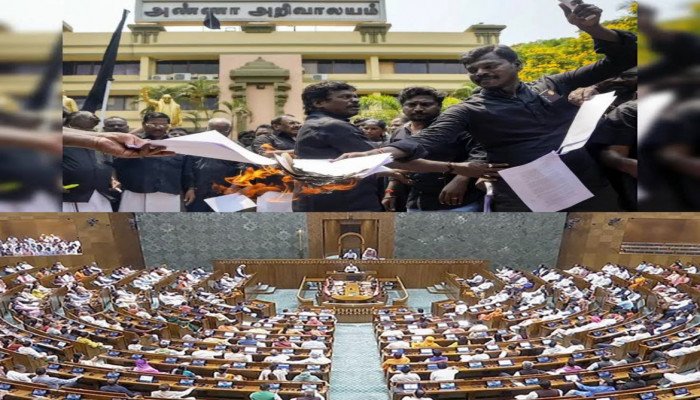
Amid ongoing discussions about whether northern states might gain more representation than southern states in a future expansion of the Lok Sabha, past data present a more balanced picture. Historical trends from 1951 to 1977 show that both the Hindi-speaking states and the southern region experienced a decline in their share of parliamentary seats. However, the reduction was more pronounced in the Hindi belt, which saw a drop of 3.1 percentage points, compared to a smaller decline of 1.2 percentage points for the southern states, as reported by TOI.
This shift in seat share was not due to one region benefiting at the cost of another. Instead, it was influenced by broader structural changes in representation. A key factor was the gradual increase in the number of seats allocated to Union Territories. At the same time, Western and Eastern states also saw a rise in their share of representation. These changes redistributed the overall composition of the Lok Sabha without directly favouring either the North or the South.
The context of the early years of India’s electoral system is crucial to understanding these trends. The first general election in 1951 took place before the linguistic reorganisation of states. At that time, state boundaries were significantly different from what they are today. The political map of India underwent a major transformation in 1956, when states were reorganised largely along linguistic lines. This reorganisation resulted in boundaries that closely resemble the present-day structure of states.
Even after the 1956 changes, representation across regions continued to evolve. Several Union Territories had limited or no representation in the Lok Sabha during the early years. Over time, as these territories gained more defined political status, their presence in Parliament increased. This contributed to a gradual shift in the overall share of seats, affecting all major regions, including both the Hindi heartland and the southern states.
By 1977, which is the last election considered in this analysis, the process of seat redistribution had effectively paused. Since then, Lok Sabha seats have not been reallocated based on population changes. This makes the 1951–1977 period particularly important for understanding how representation evolved during the early decades of independent India. It is also worth noting that even by 1977, certain administrative changes had not yet taken place. For instance, Daman and Diu had not been carved out as a separate Union Territory at that time, which further highlights how the political map was still evolving.
Another important aspect of this comparison is the method used to measure representation. The analysis focuses on the share of total Lok Sabha seats held by different regions. It does not take into account other factors such as the number of voters per Member of Parliament or the size of constituencies. These factors can also influence representation, but are not part of this particular assessment.
Additionally, the nature of constituencies in the early elections was different from what it is today. In the 1951 and 1957 elections, some constituencies elected two members instead of one. As a result, the figures from those years refer to the number of seats rather than the number of constituencies. This distinction is important when comparing data across different time periods.
Overall, the historical evidence suggests that changes in Lok Sabha seat distribution were shaped by multiple factors, including administrative restructuring and the growing representation of previously underrepresented areas. The decline in seat share for both the Hindi belt and the southern states reflects these broader dynamics rather than a direct competition between regions. This perspective adds depth to current debates and shows that the issue of representation has always been more complex than a simple regional divide.