A €5.3 billion housing and energy plan announced by the Greek government, intended to help vulnerable households cut energy costs and accelerate the country’s green transition, may not be enough to unlock renovations at scale, argue researchers.
Funded through the EU Social Climate Fund and expected to begin implementation within the year, the package includes support for home renovations, heat pumps, solar water heaters and social housing, targeting around 1.5 million households.
A central pillar of the Greek plan is the expansion of “Exoikonomo” renovation schemes, which will subsidise insulation works, window replacements and other efficiency upgrades.
Yet findings from the EU-funded LOCATEE project suggest that tackling energy poverty in apartment-heavy cities such as Piraeus requires more than funding alone. Ageing buildings, fragmented ownership and weak building-level governance continue to slow renovation efforts, even where financial support exists.
Old buildings, inefficient homes
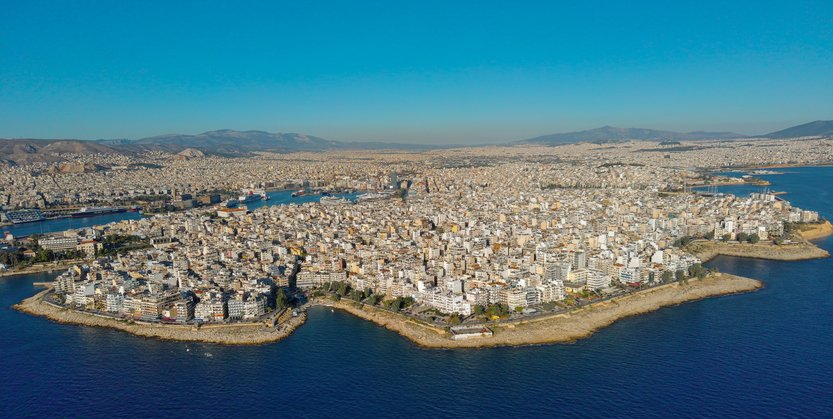
Piraeus, one of Greece’s most densely populated municipalities and home to the country’s main port, is dominated by the “polykatoikia” model – reinforced-concrete apartment blocks built mainly between the 1960s and mid-1980s, before Greece introduced thermal building regulations.
LOCATEE findings show that around 72 per cent of the municipality’s buildings were constructed before 1985. The city contains roughly 16,500 multi-apartment buildings, with apartments averaging around 76 square metres.
The project’s preliminary analysis estimates that around 28 per cent of apartments in multi-apartment buildings – approximately 13,552 units out of 48,405 analysed – are likely exposed to energy poverty risks.
Energy performance data reveal widespread inefficiencies. Around 96 per cent of apartments in multi-apartment buildings fall into EPC class C or lower, while only four per cent achieve classes A+, A, B or B+.
Heating systems remain heavily dependent on fossil fuels. Oil boilers account for around 62 per cent of apartment heating systems, while district heating is effectively absent from the local urban context.
At the same time, the city is increasingly exposed to cooling-related vulnerabilities. Around 76 per cent of apartments rely on air conditioning, while summer overheating is emerging as a growing concern, particularly in top-floor flats with poor insulation and ageing building envelopes.
Turning funding into local projects
Municipal authorities say the challenge is not simply securing access to national or European funding, but translating it into projects that reflect the realities of Piraeus’ housing stock and vulnerable residents.
Through LOCATEE, the municipality is using administrative datasets, Energy Performance Certificates and heating-system information to identify apartment buildings most exposed to energy poverty and prioritise interventions accordingly.
Piraeus is also linking LOCATEE to broader planning frameworks, including its Sustainable Energy and Climate Action Plan. The role of municipal authorities here is less that of direct implementers and more one of coordinators capable of connecting national programmes with residents, building managers, technical stakeholders and social services.
The project is also attempting to move “beyond general awareness-raising” towards targeted interventions in vulnerable apartment buildings.
Renovation barriers beyond funding
Despite the scale of national and EU-backed support, the biggest obstacles identified are often organisational rather than technological.
Unlike single-family homes, apartment-building renovations in Piraeus usually require collective agreement among multiple owners, tenants and building managers. Fragmented ownership structures and weak building-level coordination remain major barriers slowing energy upgrades.
Stakeholder consultations carried out through LOCATEE identified recurring concerns among residents, including high renovation costs, low household incomes, procedural complexity and weak technical support.
This creates an “implementation gap” in which funding exists nationally, but vulnerable households still struggle to benefit from it in practice.
More than half of survey respondents involved in the consultations considered themselves energy poor. Older residents and lone female households were identified among the groups most exposed to these risks.
A local coordination method
Within this context, LOCATEE researchers argue that the most scalable model for Piraeus is not a single technology, but a package combining data-based targeting, tailored technical advice, access to funding and building-level coordination.
Project simulations identify heat pumps as one of the most cost-effective options for reducing energy consumption and lowering household bills across the building typologies analysed in Piraeus.
Thermal insulation also remains important, particularly in older and low-performing dwellings. Researchers also stress that reducing reliance on oil and gas in Piraeus will require targeted support to ensure low-income households can participate in the transition.
Alongside technical measures, the municipality is placing strong emphasis on practical coordination and resident engagement. Through cooperation with social services such as KODEP and the municipal Community Centre, local authorities are working to help residents better understand which renovation measures are technically feasible and financially beneficial.
For policymakers, the case of Piraeus underlines a growing challenge across southern Europe: while funding for the green transition is expanding, translating it into coordinated renovation projects inside ageing apartment blocks remains far more difficult – and increasingly dependent on local coordination capacity.
[BM]