







By Osa Mbonu-Amadi
Visual artist, Oreoluwa Ayoyimika Odufejo, also known as YÍÍMIIKÁ, employs waste materials like recycled wax and repurposed dye to enliven the art pieces, thereby steering deep conversations about the intricate relationship between art, culture and environmental protection. His collection covers among others, titles such as “Y” (2023), Iṣẹ́ Ọwọ́ (2021–2025), and Pile.
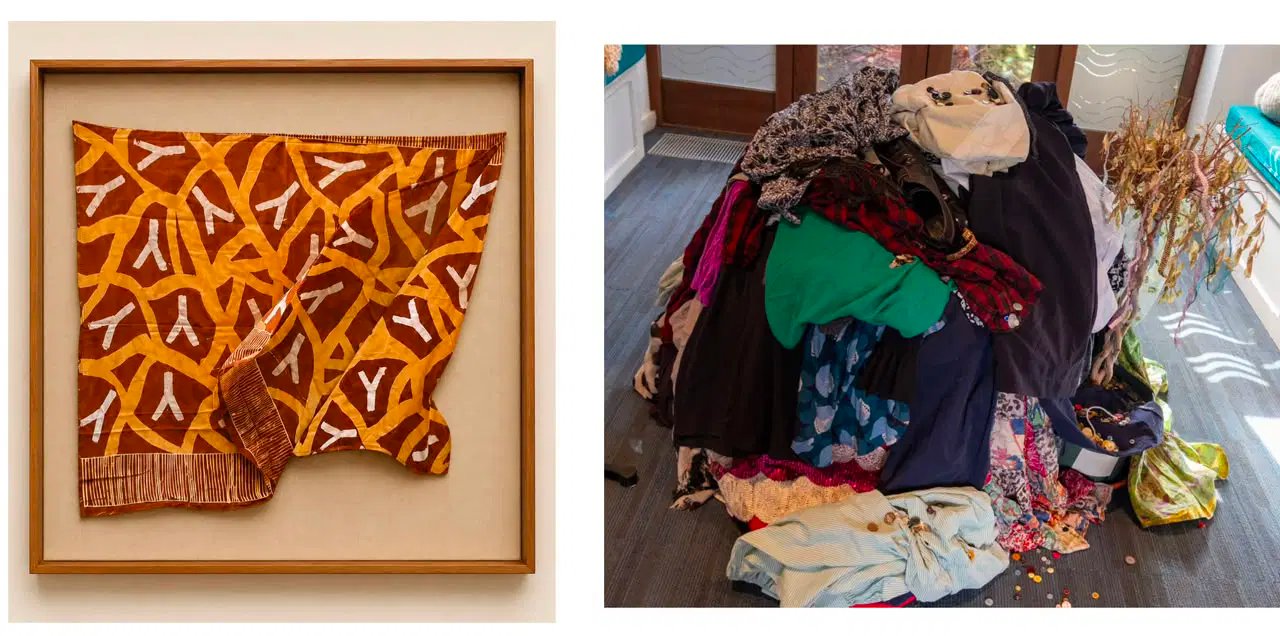
A close look at “Y” reveals Oreoluwa’s ingenuity in wordplay as he fine-tunes the single letter syntactically from diverse angles to introduce a serious subject, raising a plethora of unanswered questions.
He describes the piece as “The endless Ys, the endless “whys”, reaffirming the connection between art and society. Curiosity, he says, is central to learning, growth, and resistance. His work focuses on subject matters that have direct bearing on environmental issues and explores thematic threads that are tied to cultural memory, social identity, regeneration, and belonging.
The art collection extends the chain of meditation to encompass the tangible experiences of textiles and the intersection with human lives, celebrating the hands that weave, bodies that wear, and the ecosystems that feed them.
Oreoluwa’s work transposes local Yoruba Adire traditions into contemporary designs, yielding textiles that document history, culture, and evolving fashion unwittingly pitched against the dominance of foreign clothes in the local fashion landscape.
Across the Thread Carefully exhibition, the artist masterfully curates pieces, moving from intimate markings to public installations. Each image shows that cloth is a compendium of cultural history, memory, and pedagogy and never a neutral concept.
Oreoluwa’s art unveils his honest dealing with materials as he applies reclaimed substances like used foam stamps, repurposed dyes, wax paraphernalia, and water in the composition process, resulting in captivating batik displays and visual storytelling.
Moreover, recovered materials and natural pigments are redeployed to make his art an admirable remedial outlet for repairing the damages fashion and allied industries cause the environment through their manufacturing activites. By drawing viewers’ attention to the trails of labour that preceded the wearables, Oreoluwa stylishly mirrors the value attached to honest labour.
Works in this category reflect the beauty of traditional designs, conveying themes of dignity in labour, celebration of cultural heritage, and economic prosperity. The piece, Iṣẹ́ Ọwọ́, a handwoven artwork, visually portrays the generative potential of production processes while downplaying the risks, difficulties, and dirts involved.
Another piece, “Pile: wardrobe as ecology” pinpoints a heap of garments rarely worn by the possessor, signalling the vanity of overt materialistic tendencies. Building on Greenpeace Africa reports and UN SDG 12 in Pile, Oreoluwa positions craft in the purview of public conversations about textile art, civic responsibility, and waste recycling. Pile is staged as an intersection of wardrobes, embedded with unspoken statement about material acquisition, environmental pollution, and waste, forming part of the human stories told at the international conferences the United Nations and other organisations reference while warning against the likely consequences of textile pollution and unbridled consumerism.
The heap metaphor in Pile appeals to the viewer’s sense of sight and reasoning, prompting further questions on corporate social responsibility, consumption habits, and other socio-economic realities. Oreoluwa also stages Pile as a didactic composition, interrogating human attitudes to the environment and imploring viewers to visualise garments as pointers to living standards, industrial waste, and wearer insensitivity.
Besides being the most compelling piece, Pile readily resonates with the average viewer in terms of intimacy and dressing. Although clothing is portrayed as deictic to personal appliance, identity, mood, belonging and social status, Pile reveals that dressmakers and wearers could constitute a public nuisance or environmental hazard by misusing the finished products as instantiated in the figure. It also flags human disconnection from the soil and its byproducts like fibres, cotton, and even the hands that make the clothing.
In “Y”, Oreoluwa employs pun in translating written Yoruba language with hand-stamp marks, repetitions, and resist patterns that interrogate and dominate the visual narrative. “Y” is symbolically primed as an interrogative tool to drive the viewer’s curiosity about some prevailing realities. The figure instigates questions, which the artist describes as “endless why”. With such questions, the viewer can probe the subject matter further for embedded communicative intents and themes.
Among the traditional approaches are Adire techniques which the artist rigorously adapts in transmitting collective memory through artistic expressions. The infusion of traditional motifs into the reclaimed materials evokes nostalgia as Oreoluwa’s work reinforces the idea that cultural heritage is not really expressed in museums, but through the identity and character of the custodians who in exercising their inalienable rights undertake to preserve, promote, and transmit culture to future generations, thereby addressing contemporary challenges in the art and fashion world.
As a visual image, Repair appears consistently in the body of work eliciting philosophical and ideological undertones while still retaining its literal meaning such as mending, fixing, and adjusting which are also common terminologies in the textile and fashion industry.
The focus on repair reframes sustainability as a cultural act instead of a consumer virtue, signaling regeneration as a social and ecological trend. Oreoluwa’s insistence on communal participation gives a sense of belonging to guests, creating an atmosphere of intimacy and inclusion unlike the exclusivity associated with industrial fashion.
Oreoluwa’s work bridges the gap between the textured warmth of hand-dye and the reclamation of traditional approaches to textile arts.
The used foam stamps in Iṣẹ́ Ọwọ́ signal marks of labour. Rather than prescribe aesthetic, cultural, and sociolinguistic meanings, the artist opens a visual window through which viewers could interact with the art pieces and derive their own interpretations. He unveils the process, using marks, stains, and seams to sustain viewers’ curiosity in appreciating the aesthetic and educative qualities of the artwork together with the embedded ethics.
Thread Carefully portrays textiles as a medium for conversations on environmental issues. It showcases clothing as both pedagogical material and historical artifacts. The artist presents relics of documented artistic and textile narratives, amplifying the call for responsible actions toward reclaiming, preserving, and propagating African culture.
Oreoluwa leverages resources in culture memory and modern technology to pivot Africa’s fashion, art, and rich cultural heritage on the global stage.
Beyond the art studio, the connoisseur engages the public in programmes like Commonwealth Fashion Council Education Experience, Bridging Fields Road Show – Farming Fast Fashion, Bridget Steenkamp Slow Workshops, Built With Purpose and in collaborations with recycling advocates. Thus, his practice encompasses art, industry, and the ecological system. The proposed colloquium will allow for inclusive conversations on environmental education.