







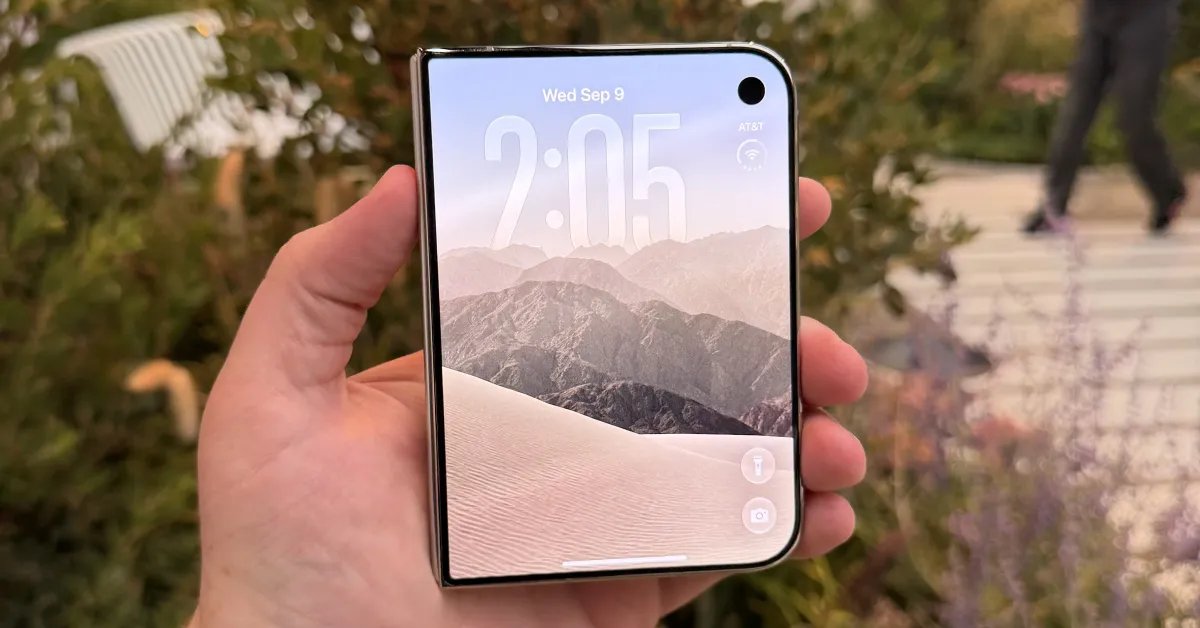
The landscape of mobile hardware is entering a new era with the imminent arrival of the iPhone Duo. As Apple prepares to launch its first foldable device next month, the engineering philosophy behind the hardware has come into sharp focus. Tom Marieb, Apple’s newly appointed Vice President of Hardware Engineering, recently provided insights into the development process, highlighting the significant efforts directed toward hinge mechanics, display longevity, and material science.
Engineering a Premium Hinge Experience
One of the primary concerns regarding foldable devices has historically been the mechanical integrity of the folding mechanism. Marieb emphasized that the iPhone Duo was designed to bridge the gap between complex utility and high-end construction. The engineering team prioritized the “torque profile” of the hinge, ensuring it provides a tactile, satisfying response.
The design goal was to mimic the solid, reassuring feedback of a luxury car door closing. This is intended to instill confidence in the user, conveying that the device is robust rather than fragile. Beyond the closure sound and feel, the team focused on stability in a half-folded state. By precisely calibrating the resistance, Apple aims to prevent the “floppy” behavior common in earlier iterations of foldable technology. This allows users to rely on the device for hands-free tasks, such as video calls or media consumption, while maintaining a consistent viewing angle.
Addressing the Foldable Crease
The physical indentation where the screen folds has been a persistent challenge for manufacturers. Apple has adopted a multi-faceted approach to mitigate this, leveraging both mechanical design and optical physics. Marieb revealed that the choice of a matte, nano-texture finish on the display is a deliberate engineering decision meant to combat the visual impact of the fold.
On glossy displays, high specularity—the tendency to reflect light directly—makes any variation in the surface topology, such as a crease, immediately apparent to the human eye. By utilizing a matte finish, Apple reduces glare and softens light dispersion across the display surface. This finish is more forgiving, effectively masking the physical changes that occur at the hinge point over time. Marieb invited users to hold the company accountable for these durability claims, signaling a high level of confidence in the material choices made for the panel.
Evolution of Ceramic Shield 2
Beyond the folding mechanism, screen protection remains a critical priority. The introduction of Ceramic Shield 2 represents the next iteration of Apple’s glass technology, engineered specifically to withstand the rigors of a flexible form factor. Marieb’s comments suggest that this new formulation is designed to be resilient enough that consumers should not feel compelled to apply aftermarket screen protectors.
The engineering team expressed a strong preference for the factory-shipped display, which is meticulously tuned for clarity and touch sensitivity. Third-party additions often introduce variables that degrade the display experience, such as reduced responsiveness or changes in light transmission. With Ceramic Shield 2, the goal is to provide a baseline of scratch and impact resistance that renders supplemental layers redundant, preserving the visual fidelity of the device as designed.
Impact on Software and User Interaction
The hardware innovations of the iPhone Duo are not solely for durability; they serve as the foundation for a revamped software environment. The folding form factor enables a distinct split-keyboard interface and expanded multitasking capabilities, which shift the way users engage with iOS. By creating a device that remains stable at various angles, Apple is essentially expanding the “desktop” surface area of the iPhone.
The synergy between the robust hinge and the optimized display allows developers to rethink app layouts. Multitasking, in particular, benefits from the ability to hold the device in a semi-folded orientation, allowing for a primary workspace on one segment and secondary control inputs or media playback on the other. These hardware choices were clearly made with these long-term software goals in mind, moving away from a traditional slab design toward a more dynamic, multi-modal computing tool.
Market Positioning and Reliability
As the launch approaches, the emphasis on rigorous testing and long-term reliability is central to Apple’s narrative. The transition to a new hardware architecture is always a complex endeavor, and by addressing the concerns regarding hinges, screen creases, and glass durability early, Apple is positioning the iPhone Duo as a mature product from its inception.
The “blood, sweat, and tears” mentioned by the engineering team underscores the transition from experimental foldable concepts to what they believe is a finished, daily-driver-ready piece of hardware. Whether these innovations successfully set a new industry standard for durability will become clear once the device is in the hands of consumers. For now, the focus remains on the marriage of sophisticated mechanical engineering with the practical needs of modern mobile users.
Disclaimer: This content is auto-generated for informational purposes only.
Source: Read Original News