







In the glitzy, high-stakes ecosystem of Indian cinema, where a single Friday can either cement a legacy or invite scathing critique, few names command the respect of Priyadarshan. With a career spanning four decades and a staggering 98 films under his belt, one would expect the veteran director to possess the calm, unshakeable confidence of a man who has seen it all. Yet, in a candid admission that has resonated throughout the industry, Priyadarshan has revealed a surprising truth: his prolific output is not born from mastery, but from a persistent, gnawing insecurity.
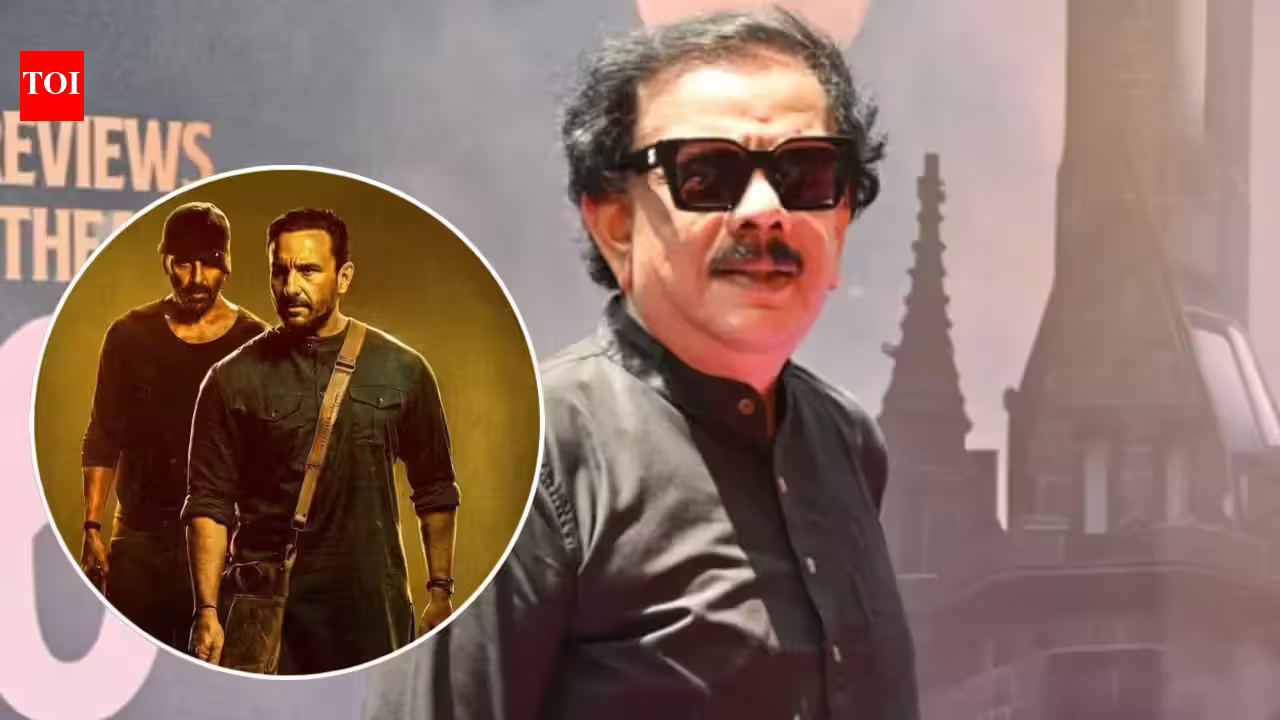
This rare glimpse into the psyche of a titan comes on the heels of the underwhelming box office performance of his latest venture, Haiwaan. Starring industry heavyweights Akshay Kumar and Saif Ali Khan, the film was expected to be a triumphant return to form. Instead, it has become a sobering reminder that in show business, there is no “formula” that guarantees success, regardless of the pedigree of the director or the star power on screen.
The Engine of Insecurity: Why 98 Films Isn’t Enough
For many, ninety-eight films represent a life’s work of absolute certainty. For Priyadarshan, that number represents a relentless pursuit of validation. Speaking with India Today, the director didn’t shy away from the vulnerabilities that define his creative process.
“I’m a very insecure person,” he confessed. “Because each time a film runs, I don’t know what I’m going to do next. That insecurity is what made me do 98 movies.”
It is a profound sentiment—the idea that the filmmaker uses work as a buffer against the fear of irrelevance. He describes a cycle familiar to many creators: the brief, intoxicating belief that he has finally decoded the “technique” of making a successful film, followed by the humbling reality check of the next project. “Every time I write a screenplay and the film works, I believe that I know the technique—and then the next film drops. So then I know, ‘Okay, I still don’t know how to make a successful film.'” This admission is a refreshing departure from the usual bravado associated with big-budget filmmakers, reminding us that for all the commerce involved, the act of filmmaking remains an deeply human, fragile enterprise.
Reimagining Stories: The Art of the Remake
Haiwaan sits at the center of a long-standing discourse regarding Priyadarshan’s penchant for remakes. The film is a Hindi adaptation of his own 2016 Malayalam thriller Oppam, which featured the iconic Mohanlal.
Priyadarshan has often faced criticism for “recycling” stories, but he maintains that the process is far more nuanced than simply hitting the ‘copy-paste’ button. His philosophy on adaptation is rooted in the idea of contextualizing a narrative for a new audience. To him, filmmaking is a process of translation—of moods, cultural rhythms, and pacing—rather than a rigid reproduction of scenes. Even so, the box office performance of Haiwaan poses a difficult question: if a director chooses to revisit his own work, is the audience obligated to engage with it as a new experience, or does it invite unfair comparisons to the original? In this instance, it seems the magic that allowed the Malayalam version to resonate so deeply didn’t translate seamlessly to the Hindi market.
The ‘Haiwaan’ Reality Check
The commercial struggles of Haiwaan have been difficult to ignore. Despite boasting an ensemble cast that reads like a who’s-who of talent—Akshay Kumar, Saif Ali Khan, Boman Irani, Saiyami Kher, and the late legend Asrani—the film failed to gain real traction. With a reported domestic collection of just over Rs. 9 crore and a worldwide gross sitting at approximately Rs. 15.01 crore, the numbers are a far cry from the box office juggernauts that usually define the careers of such A-list stars.
For audiences, it’s a baffling result. You have a director who has mastered the art of both slapstick comedy and taut thriller, paired with two of the most bankable leading men in the country. Yet, the disconnect here underscores a broader trend in Bollywood: audiences are becoming increasingly unpredictable, if not outright fickle. They are no longer buying tickets based solely on the names on the poster; they are demanding a freshness and a narrative urgency that even seasoned veterans are struggling to predict.
The Myth of the Masterpiece
Priyadarshan’s career is defined by his ability to pivot. From the riotous humor of Hera Pheri and Hungama to the dark, stylized atmosphere of Oppam and Kaalapani, he has never stayed in one lane. But perhaps his current struggle highlights a greater truth: there is no such thing as a “successful filmmaker”—only filmmakers who have had successful films.
By admitting he doesn’t have the secret, Priyadarshan is actually reclaiming his creative agency. If he believed he had a foolproof recipe for a hit, he would likely become stagnant, producing assembly-line cinema. His admission of insecurity implies that he is still experimenting, still searching for that elusive connection with the viewer.
As the industry reflects on the performance of Haiwaan, the narrative shouldn’t be about the film’s “failure.” Instead, it serves as a testament to the volatility of the art form. In a world of algorithms, focus groups, and massive marketing spends, the most experienced director in the room is telling us that he still doesn’t know how to catch lightning in a bottle. In a strange way, that is perhaps the most honest thing anyone in Indian cinema has said in years.
As for Priyadarshan, the insecurity that keeps him awake at night is likely the very same fuel that will drive him toward his 99th, 100th, and hopefully many more films. After all, when you accept that you don’t know the answer, you are much more likely to keep looking for it.
Disclaimer: This content is auto-generated for informational purposes only.
Source: Read Original News