






When the present Knesset and government were sworn in at the end of 2022, those of us involved in environmental policy braced ourselves for a difficult period. The coalition agreements had already carved up planning and regulatory authorities like spoils, and the environment appeared nowhere on the new government’s list of priorities. Yet even the pessimists among us did not anticipate the sheer scale of the failure.
After four years, I have searched, in good faith, for a single meaningful environmental achievement of this government. I cannot find one. What I find instead, in every domain, is retreat, neglect and capitulation.
Begin with the institution charged with defending the public’s environmental interest: the Ministry of Environmental Protection itself. Over three decades, successive governments — right and left alike — built up a cadre of committed professionals: scientists, engineers, economists and jurists who carried the institutional memory without which serious regulation is simply impossible.
Under Minister Idit Silman, that cadre has been demoralized and dispersed. Three directors-general have come and gone, two of them her own appointments. The ministry’s legal adviser departed. So did the senior deputy director-general for industry, the head of the climate change division the head of policy and strategy, the head of environmental planning and the deputy director-general for natural resources and climate resilience — along with a long list of veteran division heads and inspectors.
Roughly one position in ten now stands vacant. Those who remain describe politicization, managerial chaos and despair. A regulatory agency stripped of its expertise and its memory cannot stand up to polluters — and the polluters know it.
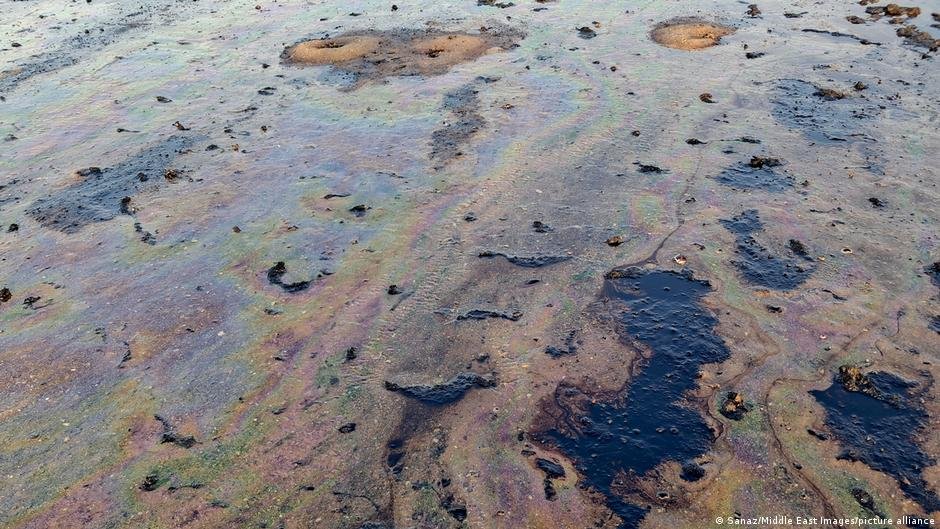
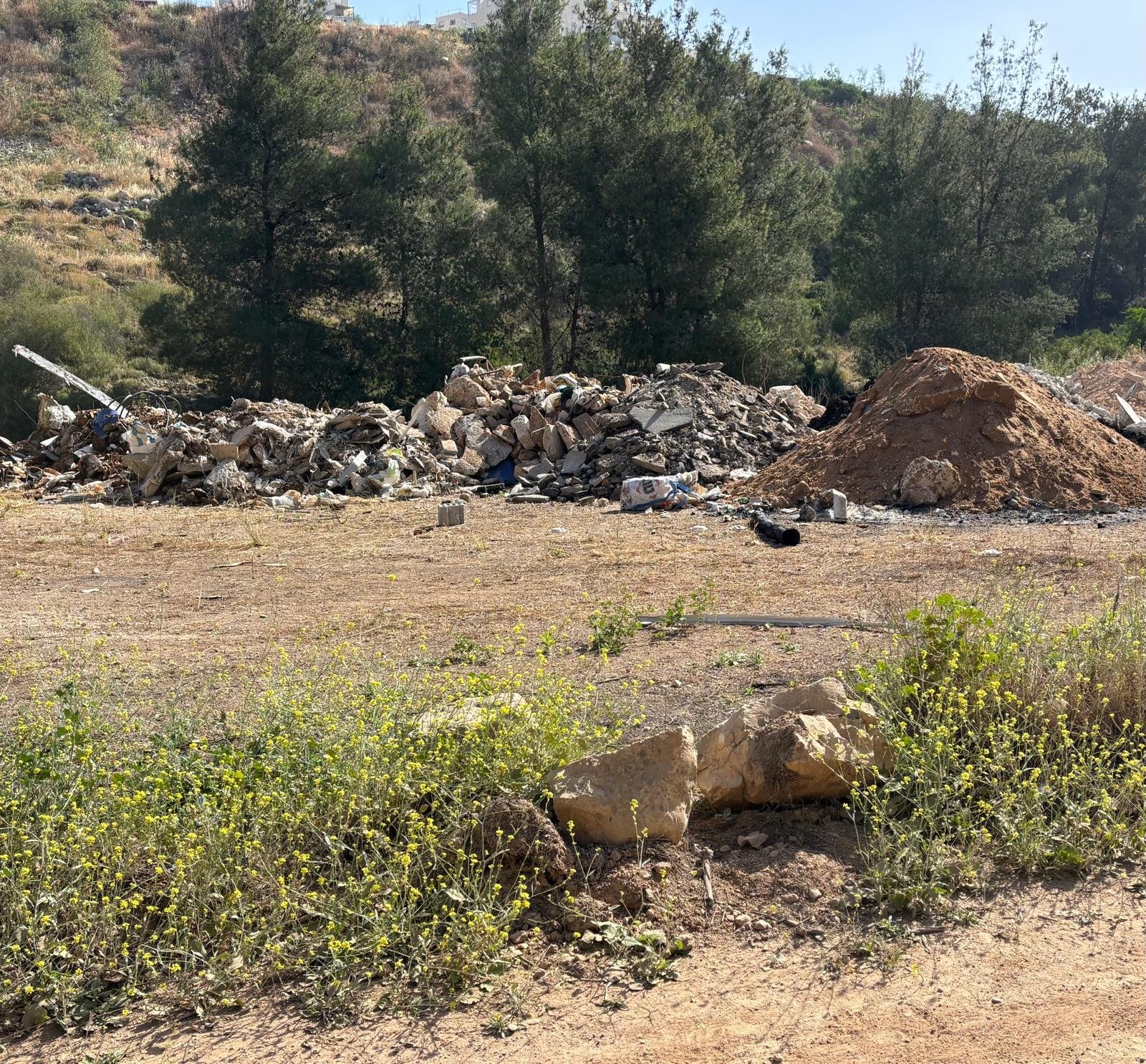
Consider next the fate of the Cleanliness Fund. Financed principally by the landfill levy, the fund was conceived as the ministry’s single most powerful instrument for moving Israel toward sustainable waste management: money collected from burying garbage was to be reinvested in recycling, treatment infrastructure and enforcement. The need could hardly be more desperate. Israel still buries roughly four-fifths of its municipal waste, among the very worst performances in the OECD, while illegal dumping and burning poison communities from the Negev to the Galilee.
The State Comptroller documented years ago how the Treasury treated the fund as its private petty-cash box, draining well over a billion and a half shekels from its accounts with no plan for repayment. The proper response of any self-respecting environment ministry would have been to launch a campaign to restore the money and fortify the fund’s independence. Instead, this government has surrendered without a fight: the landfill levy is being abolished and control over the fund’s billions surrendered. A ministry that voluntarily hands over its own economic instruments has, in effect, announced that it no longer intends to govern.
And then there is the climate crisis — the defining environmental challenge of this century, and this government’s most complete failure. Four years on, Israel still has no climate law. The government reneged on its explicit commitment to legislate one within six months of taking office; the bill has been postponed, shelved and diluted again and again, largely at the Finance Ministry’s insistence. The state went so far as to tell the High Court of Justice that it is under no obligation even to set binding emissions targets.
Meanwhile, emissions have not fallen; they have risen, and the government’s own projections concede that Israel will miss even its modest 2030 targets by a wide margin. The ministry’s climate-preparedness directorate was at one point reduced to a skeleton staff of two.
The nadir arrived this past January, when Minister Silman instructed her ministry to examine Israel’s withdrawal from the UN Framework Convention on Climate Change and the Paris Agreement. Let us call this what it is: a craven, sycophantic gesture toward President Trump, dressed up in rhetoric about international bias. Israel – a country on the front line of Mediterranean warming, drying and extreme heat – would become the first and only nation on Earth to follow Washington out of the global climate framework, forfeiting scientific cooperation, adaptation assistance and access to the green-technology markets on which our own innovators depend.
There is no environmental logic here, no diplomatic logic, no economic logic. There is only the logic of a politician whose eyes are fixed not on the public interest but on her standing among Likud primary voters.
The list, sadly, goes on. This government repealed the tax on single-use plastics even after the ministry’s own data showed the levy had cut sales by roughly forty percent — a rare, proven policy success, discarded for coalition convenience. It repealed the tax on sweetened beverages over the protests of the entire public-health community. The Comptroller’s scathing reports on climate preparedness gather dust. Protections for open spaces have given way to fast-tracked planning schemes. Enforcement against industrial polluters withers as inspectors leave and are not replaced.
Even the modest achievements of previous governments — the deposit law, national recycling targets, the coastal and streams rehabilitation programs — have been left to atrophy through simple inattention. Indeed, very little has been done to advance key decisions adopted by the previous government, including the removal of the petrochemical industry from Haifa Bay and the implementation of the national plan for tree planting and urban shade. Standards requiring factories to adopt the best available technology for preventing air pollution have also been weakened.
For four years now, despite the many ecological crises, the minister’s most conspicuous energies have been devoted to photo opportunities and to cultivating party activists.
And when environmental organizations voiced criticism, Environmental Protection Minister Idit Silman decided to retaliate by canceling the ministry’s annual funding for green NGOs and refusing to appoint their representatives as public members of the planning committees – as the law requires
In the coming elections, Israelis will rightly focus on the great questions of the hour: a fair and equal draft law; the demand that our politicians finally accept responsibility for the catastrophe of October 7; defense of the attorney general, the Supreme Court and Israeli democracy itself. Each of these alone is reason enough to insist on change. But let us add one more item to the reckoning.
These elections are also about the air our children breathe, the water in our streams, the coasts and open landscapes we hold in trust for generations to come — and about whether Israel will confront the climate crisis with seriousness or with sycophancy. The environment has no lobbyists among the coalition negotiators and no seat at the cabinet table. It has only us, the voters. Four lost years are enough. Israel’s beleaguered environment cannot afford four more.
Alon Tal is a professor of Public Policy at Tel Aviv University. In 2021 and 2022, he was chair of the Knesset’s Environment, Climate & Health subcommittee.