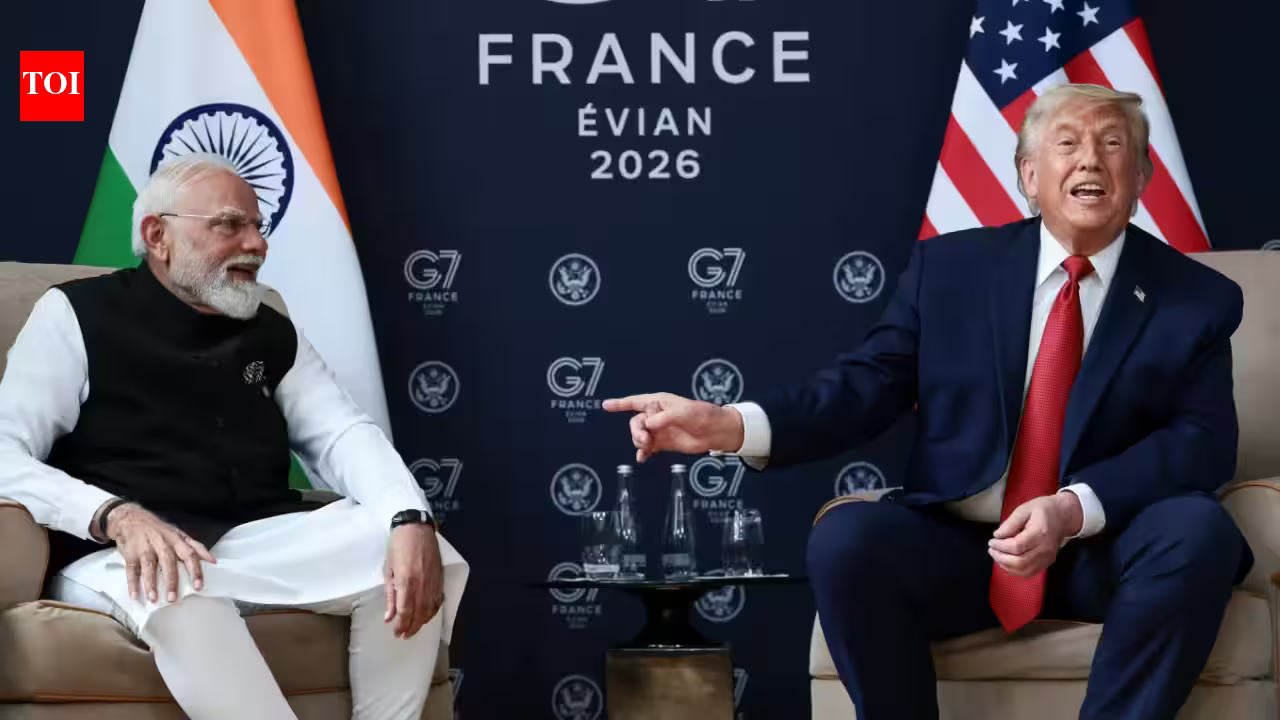








India and the US are “very close” to an interim trade deal, Union commerce minister Piyush Goyal said on Thursday, stressing that free trade agreements are “all about a comparative advantage.”
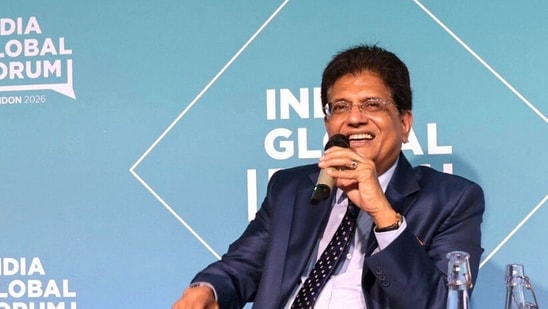
The minister was speaking at an event in London where he was asked about the progress of talks between New Delhi and Washington, when he explained the principle of competitive benefit. “And until the framework of getting the competitive advantage can be finalised, we can’t enter into force a US deal,” Goyal said.
He was replying to a specific question at the India Global Forum in London on the progress of the India-US BTA talks, following his two-day meeting with the US trade representative in New Delhi on June 23-24. “We are very close,” he said, also referring to the US ambassador’s recent statement that the interim BTA is 99% complete.
Explaining the business logic behind a mutually beneficial trade deal, Goyal said: “A free trade agreement is basically about getting a comparative advantage over your competitors for market access.”
He explained that both New Delhi and Washington had agreed to a framework for an interim deal on February 6, but before it could be operationalised after legal vetting, the very basis of the deal—its tariff architecture—was invalidated by the US Supreme Court on February 20. He was referring to reciprocal tariff levies imposed on various countries by the US under the International Emergency Economic Powers Act (IEEPA), which the court struck down.
“There were the IEEPA tariffs, when we finalised the deal,” Goyal said, referring to the situation before the framework agreement, when Indian goods attracted a steep 50% tariff in the US market.
India had negotiated the deal to bring that tariff down to 18%, with the entire arrangement centred on the competitive advantage that gave Indian exporters an edge with higher tariffs imposed on rival exporting nations.
“So, we were lower than all our neighbouring countries, lower than all ASEAN countries, other than Singapore,” he said. “And that is why the deal was attractive.”
With the Supreme Court striking down that tariff structure, and the current 10% tariff set to expire on July 24, “we obviously have to have some reasons to be able to enter into force,” Goyal said, referring to the February 6 framework jointly announced by India and the US (February 7, India time).
He said India wants to ensure a competitive advantage over competitors at a similar stage of development with comparable cost structures, naming Vietnam, Thailand, the Philippines, Indonesia, Malaysia, China, Bangladesh and Sri Lanka as among them. “So that’s broadly the discussions,” he said. “I don’t think I can be more transparent than that.”
Also Read | ‘Moment to seize victory’: Pull out all stops to make India-US trade deal work
According to Goyal, the deal was almost finalised under the February 6 framework. “The deal was done on the 6th of February, confirmed by both the US and India, broad contours were fixed at that time,” he said. “Teams are working since then to finalise the fine print and there’s always a little give and take,” he added, drawing a parallel with the last-minute negotiations between New Delhi and London before the India-UK Comprehensive Economic and Trade Agreement (CETA) was announced.
The India-UK free trade agreement will be the “most comprehensive agreement” India has entered into so far, and will come into force in July, Goyal said. India and the UK announced on June 17 that CETA, along with an agreement on social security contributions, is set to enter into force on July 15.