







Contrary to what you might think, Keir Starmer’s No. 10 and No. 11 had an almost Stalinist disdain for the environment. Environmentalists found themselves portrayed as blockers to growth, and growth had to win. There are few more apposite examples from the Starmer years of Labour’s initial unpreparedness for government and its confusion about what to do when in power.
Instead of accepting society’s evolved expectations about how to grow in a greener way and tackling the sclerosis of the planning system by starting with reforming the planning inspectorate, an in-house problem, Sir Keir accepted uncritically the recommendations of the Fingleton Review into nuclear power and went as far as contemplating the abolition of duties to conserve national parks and areas of outstanding natural beauty, both historic Labour achievements. There were characteristic U-turns on the government’s opposition to swift boxes on new housing, and on its intention to slap inheritance tax on successful family farming businesses.
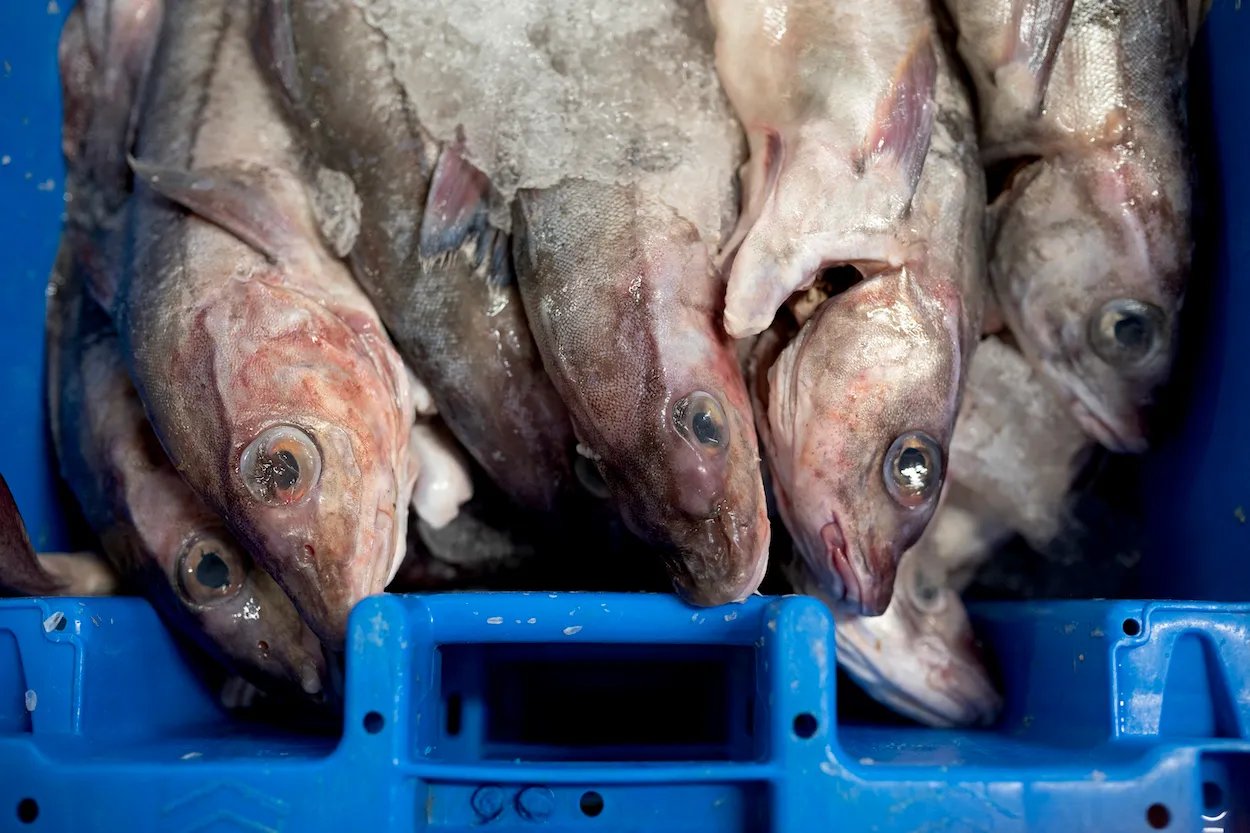
Having annoyed the farming constituency far more than anticipated with its first Budget (and sacked the farming minister, Daniel Zeichner, who honourably stuck up for the farmers), Sir Keir’s government became paranoid about upsetting the other ‘f’ sector: fishermen. Presented with a post-Brexit Fisheries Act which should, in theory, have enabled Britain to restore fish stocks to health and given the industry a future that would have been impossible without Brexit, Starmer’s government sucked up to the EU in annual negotiations, listened to the richest (often foreign) fishermen, then made bad decisions. Result: nearly 60 per cent of all fishing opportunities that they gave out last year had catch limits above scientific advice and stocks are in a parlous state everywhere, in the Irish Sea, Celtic Sea and North Sea. Our last remaining sizeable and hugely valuable stock, mackerel, is crashing (to be fair, that is an international problem with a decade-long history, but one that has had almost no high-level attention). Labour’s record is worse than the Conservatives’, but the Tories’ weak Fisheries Act is part of the problem.
One of the most extraordinary examples of see-sawing under Starmer, though, has been over marine protection. Under the Conservatives, environmentalists pointed out that the abolition of the Common Fisheries Policy meant that this was no longer an obstacle to complying with laws that were meant to protect nature at sea. The battle for the Dogger Bank – which every 1950s school child knew was where all the fish were – was won. In the face of a legal threat from environmental groups and boulders dropped by Greenpeace, the then Conservative government instructed the Marine Management Organisation to actually protect this vast and scandalously over-fished offshore marine-protected area which under the EU had been just a ‘paper park’. This was a hugely popular decision and the MMO started issuing bylaws for the Dogger, removing all damaging bottom-trawling activity from this and other offshore sites. The MMO was roughly halfway through a timetable for removing trawling from the other sites, something that might have provided a bit of an insurance policy against successive governments’ failure to control over-fishing, when Labour entered power.
Steve Reed, Starmer’s environment secretary, had to be reminded that there was a legally driven timetable for kicking bottom trawling out of marine-protected areas when he was already six months behind it. He was warned that Sir David Attenborough, no less, had made a film showing in devastating detail what trawling does to supposedly protected areas. Reed, who had made a big thing about protecting nature when he got in, duly announced in June last year that he would protect the remaining 41 offshore sites. He said this would be good for fish and for fishermen. Since then, nothing has happened. Reed was moved, and Emma Reynolds, Reed’s successor, blames having to work through a large number of consultation responses. These are likely to include a staged outcry from Cornish fishermen who pretend they don’t know that the areas in the Channel that they are protesting about are fished almost exclusively by EU fleets. My sources tell me that probably the biggest quandary for Labour, though, is that flexing our post-Brexit nature laws in such a popular way might annoy the French.
Another of the genuine green dividends from Brexit is the banning of the fishing of sandeels
This is a diplomatic problem, not a legal one. Another of the genuine green dividends we have received from Brexit is that Britain has banned the fishing of sandeels, little fish at the bottom of the food chain (cod, salmon, birds and marine mammals eat them) and then successfully defended that decision under the Trade and Cooperation Agreement. The resulting arbitration made it clear that Britain has every right to make conservation decisions that go against foreign fishing fleets in its own waters – if it has the required scientific justification. That arbitration killed off not only the challenge from the Danish sandeel fleet but should have scotched a potential French threat to marine-protected areas in British waters where the French fish. But we still hear that the genuine Brexit green dividends of functional marine-protected areas and the sandeel fishing ban remain in the EU’s sights in any Labour ‘reset’. The instincts of the Starmer government were to trade them away.
The EU’s demands will evolve. Unfortunately for the fishing nations of the EU, their shameful tolerance of trawling in marine-protected areas has now been successfully challenged in the Dutch courts. Meanwhile, for all our failings, Britain’s management of our domestic waters is years ahead of the EU’s, and there is so much we could do with our post-Brexit powers to protect vanishing fish species if we were willing to risk upsetting Brussels – the Celtic Sea cod, for instance, is down from an adult population of 13,000 tonnes in 2013 to 130 tonnes today. Starmer was unwilling. Will Andy Burnham be different?