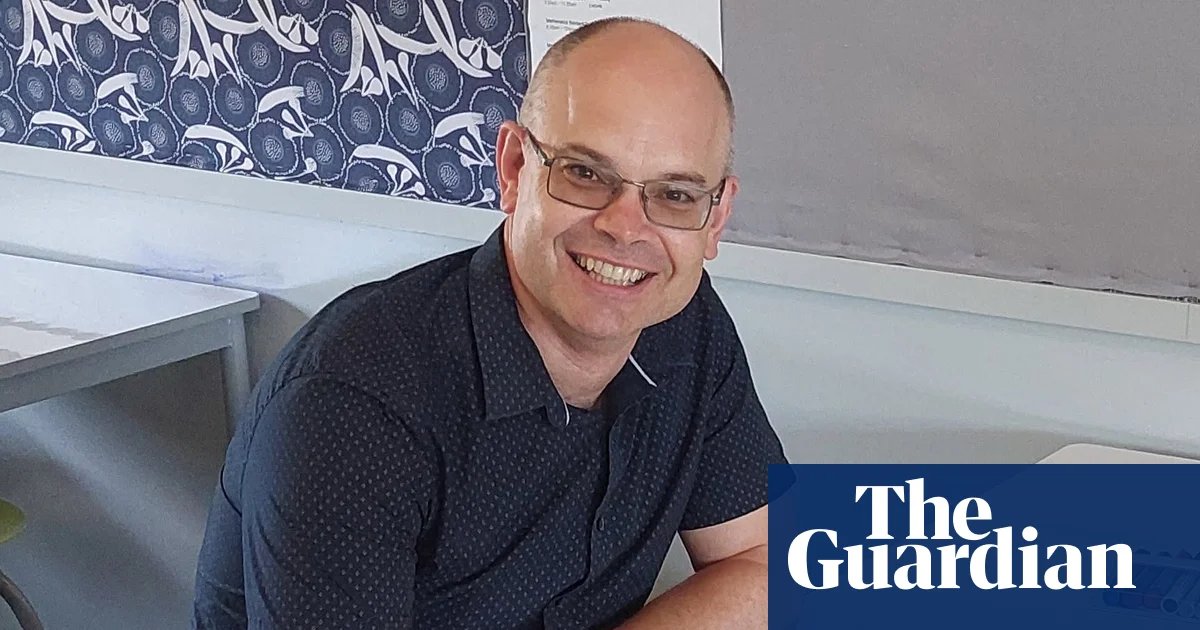






On Thursday, Kate Ellis was elevated to become Labor’s national president, leading for the first time an all-female team at the top of the party’s organisational wing, with two female vice-presidents.
The former Rudd and Gillard government minister joins the Australian Council of Trade Unions president, Sally McManus, and its secretary, Michele O’Neill, as some of the most powerful members of the labour movement.
But as the federal caucus, again for the first time, has more women than men, they barely get a mention in discussions about who will succeed Anthony Albanese.
‘Everyone wants to talk to her’
This term, Tanya Plibersek will become the longest serving woman of the House of Representatives in Australia. Plibersek has held senior cabinet and shadow cabinet roles since 2004, was deputy leader to Bill Shorten between 2013 and 2019 and is one of the most recognisable politicians in the country.
One Labor MP, speaking anonymously, said: “The public love her, you’ve only got to walk down the street with her, and everyone wants to shake her hand, everyone wants to talk to her.”
But in the conversation of who is in line to be Labor’s next leader after Albanese, Plibersek barely registers, nor do any other women. And for a party that has taken enormous pride in achieving gender parity in its caucus – where women now make up a majority of the party room and cabinet – the leadership pipeline is almost entirely fielded by men.
In conversations with more than a dozen MPs, staffers and former parliamentarians, one name came up most as the successor to Albanese: the health and NDIS minister, Mark Butler. In public polls and news articles, Jim Chalmers is also mentioned, as is the deputy prime minister, Richard Marles, and minister for home affairs, Tony Burke.
If a leadership ballot was called tomorrow, many believe Plibersek would not have the votes among the left faction, let alone the entire caucus. Butler is the most senior member of the faction, and resides in Albanese’s innermost circle, unlike Plibersek, whose relationship with the prime minister fell out after she backed Shorten in 2013. The move also turned some of the left faction away from her, according to one Labor source.
Pamela Anderson, the chief executive of Emily’s List, which promotes gender equity within Labor, said there was certainly an “optics” problem with both the prime minister and his deputy being men.
“They’re [Albanese and Marles] doing really good work around encouraging and making space for women, but it would just be, I think, fantastic to have [a woman in] one of those positions.”
Veteran activist Sheila O’Sullivan, who was instrumental in Labor establishing gender quotas that 35% of candidates in winnable seats had to be women by 2002, said Albanese had “extraordinary control” of his cabinet and caucus.
“He’s always been a master at assembling support and in negotiating agreements so his leadership is really very significant,” O’Sullivan said. “For [Plibersek], the issue goes back to when Shorten offered her the job as his deputy … and if you do that, then you know, by definition you wear the consequences of what do the other left members think.”
But several MPs past and present said they “wouldn’t put it past Tanya” to have another go at the leadership, even if she would struggle without control in the caucus.
The power brokers are still blokes
Several Labor sources said part of the reason why there were so few women – if any – in contention was because “the power brokers are still very much blokes”.
Butler is the most senior member of the party’s left faction, other than Albanese, while Burke and the energy minister, Chris Bowen, head two sub-factions of the NSW right, Marles leads the Victorian right, Chalmers has the Queensland right, and Don Farrell, the special minister of state, leads the right in the “small states”: South Australia, Tasmania and the Northern Territory. Just two women – Penny Wong in South Australia and the Senate president, Sue Lines, in WA – lead their left factions.
One Labor MP said the situation would remain while men were in charge. “We have really impressive women, but why aren’t they seen as contenders? The challenge for women in cabinet is also that they are constrained by this kind of command and control culture.”
Another Labor source noted that women often face the brunt of bad media or difficult decisions. They pointed to when Plibersek and Albanese had that awkward moment at the 2025 Labor campaign launch when she went in for a hug, he refused, and it turned into an elbow bump. The story went on in the media for days, but it would have quickly “blown over” if that had been a bloke, the source claimed.
They added that women were more risk-averse, and would face stronger pushback both internally from Albanese and from the public if they started getting more leadership attention.
Anderson said toxic social media was a significant issue, and added some women in the party also feared being treated the way Julia Gillard was as prime minister.
“They’re 100% worried about those attacks. They are always violent [threats] and always very personal. They’re about physical assault, not just you, but your family members as well. They’ll bring people’s children into it … and the more senior you are, the more violent and more vicious those attacks are.”
after newsletter promotion
Wong and the finance minister, Katy Gallagher, are two of the most senior and powerful women in government – though both are in the Senate and have no intention of moving to the house, which would be necessary to become leader.
A Labor source claimed their position in the Senate meant they were not seen as a “threat” by Albanese or other senior factional leaders.
“The PM has a good relationship with Katy and Wong because they’re not a threat and they don’t pretend to be,” they said.
Clare O’Neil ‘brilliant’
Plibersek isn’t the only senior woman in the cabinet with ambition – whether past or current.
Clare O’Neil once signalled she would run for the deputy leadership in 2019, though withdrew quickly as Marles announced his tilt. While the Victorian right cabinet minister is known to be ambitious, and has been a strong media performer, it’s understood she isn’t close to Albanese, and her factional influence was described as “thin”.
One source suggested a scenario where if Butler, a South Australian, was elected leader, O’Neil could be made deputy, which could put her “a stone’s throw away” from the leadership.
One MP called her “brilliant”, and said her work in housing – an economic portfolio – could stand her in good stead. Another said O’Neil was the most likely among senior women to get a crack.
But timing would make O’Neil’s tilt more difficult, depending on when Albanese leaves, and how long his successor reigns – one MP said it would more likely be women in the generation below O’Neil who could get closer to the top job.
Of some of the other senior women on the frontbench, the communications and sports minister, Anika Wells, has been burned recently by expenses scandals, as well as managing the portfolio that has seen multiple telco failures.
Catherine King is seen as closer to the end than to the beginning of her career, while the attorney-general, Michelle Rowland, while highly respected, is not seen as a candidate for the leadership, and neither have made a tilt, nor would they have the factional numbers. The small business minister, Anne Aly, is viewed as a smart operator with an “incredible background” in counter-terrorism and de-radicalisation, but “is limited in what she can demonstrate” in the current political environment.
Among the younger generation of MPs, the former Tasmanian Labor leader Rebecca White, who moved to federal politics in 2025, is named as a possible contender for a future leadership role, as is Kristy McBain, the minister for emergency management, and a member of the NSW right.
But even among that group, Andrew Charlton, the cabinet secretary and former senior economic adviser to Kevin Rudd, is seen by many as a future treasurer and prime minister. There are also constant whispers and speculation the wildly popular and charismatic South Australian premier, Peter Malinauskas, could turn to federal politics.
“There’s a whole range of women, Clare O’Neil, Kate Thwaites, Ged Kearney, Michelle Rowland, but none of them have the numbers,” O’Sullivan said.
On Thursday, Albanese told the Labor conference in his opening address that the party’s diversity would be unrecognisable to the party’s first representatives. But when that progress will lead to a second female Labor prime minister remains unclear.