







Recent scrutiny of welfare programs has raised critical questions about the efficacy and long-term financial implications of cash-transfer initiatives, even as they profoundly impact the lives of beneficiaries. This examination comes after a review revealed various reasons for exclusion from such programs and highlighted instances of improper payments.
Individuals were disqualified from receiving benefits if they surpassed established income or age thresholds, were members of families with government employees, were already enrolled in other welfare schemes, or if multiple individuals from the same household were claiming benefits.
Further government data indicated that nearly 29,000 men and approximately 8,000 government employees had erroneously received payments. While Tatkare confirmed that the state is actively working to recover these funds, the total amount repaid has not yet been disclosed.
Economists are divided on the broader impact of these schemes. Neeraj Hatekar, a welfare economist, asserts that the Ladki Bahin program, in particular, has demonstrably improved the financial situation for women with low and unpredictable incomes. Citing labor-force data, Hatekar notes that women in Maharashtra typically earn around 300 rupees daily. Even with 20 days of work per month, their earnings hover between 6,000 and 7,000 rupees. In this context, he emphasizes that the scheme’s monthly payment of 1,500 rupees constitutes “a big amount.” However, Hatekar also suggests that similar needs could be met by increasing investments in robust public services such as healthcare, education, childcare centers, and transportation, thereby reducing women’s out-of-pocket expenses.
Conversely, economist Ajit Ranade underscores the importance of governments meticulously evaluating the fiscal costs associated with these programs. He warns that while such schemes might secure electoral victories by diverting funds, the potential for “long-term damage [to the state’s finances]” often goes unaudited.
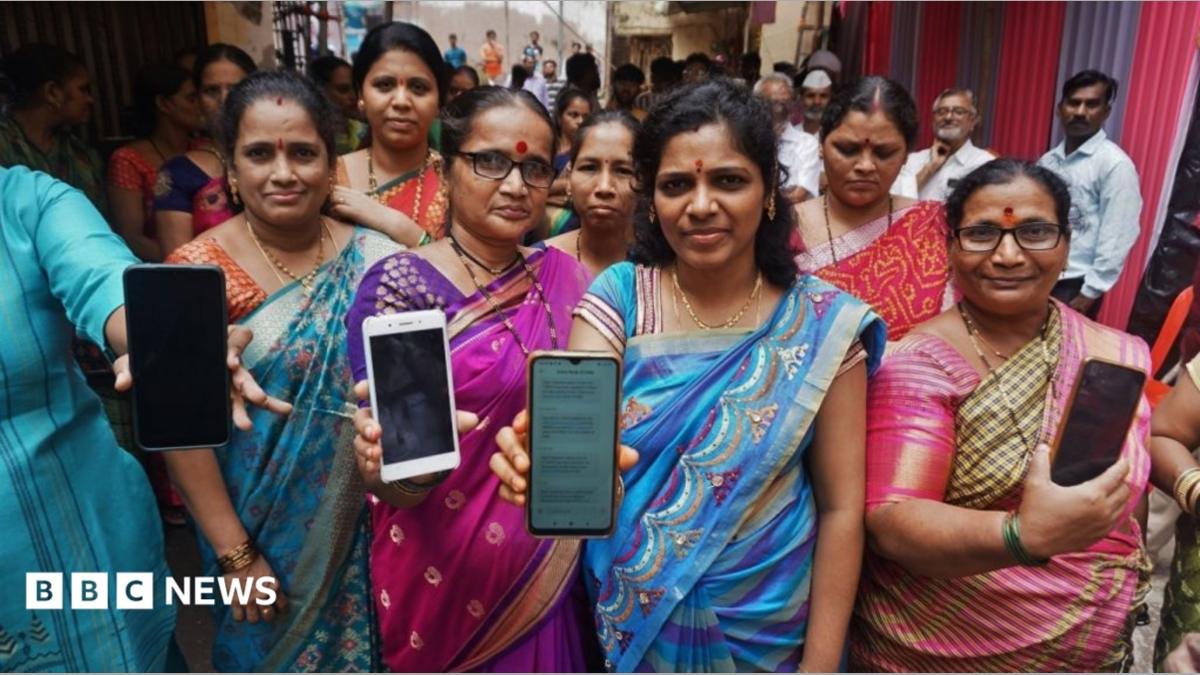
Despite these ongoing debates and the impending impact of the audit on the scheme’s future operation, the Ladki Bahin program has already been transformative for individuals like Bawaskar. While the funds may not have lifted her family out of poverty, they have provided her with a newfound sense of financial independence: money deposited directly into an account under her own name. “It’s money of my own,” she stated, emphasizing, “That’s what matters to me.”