







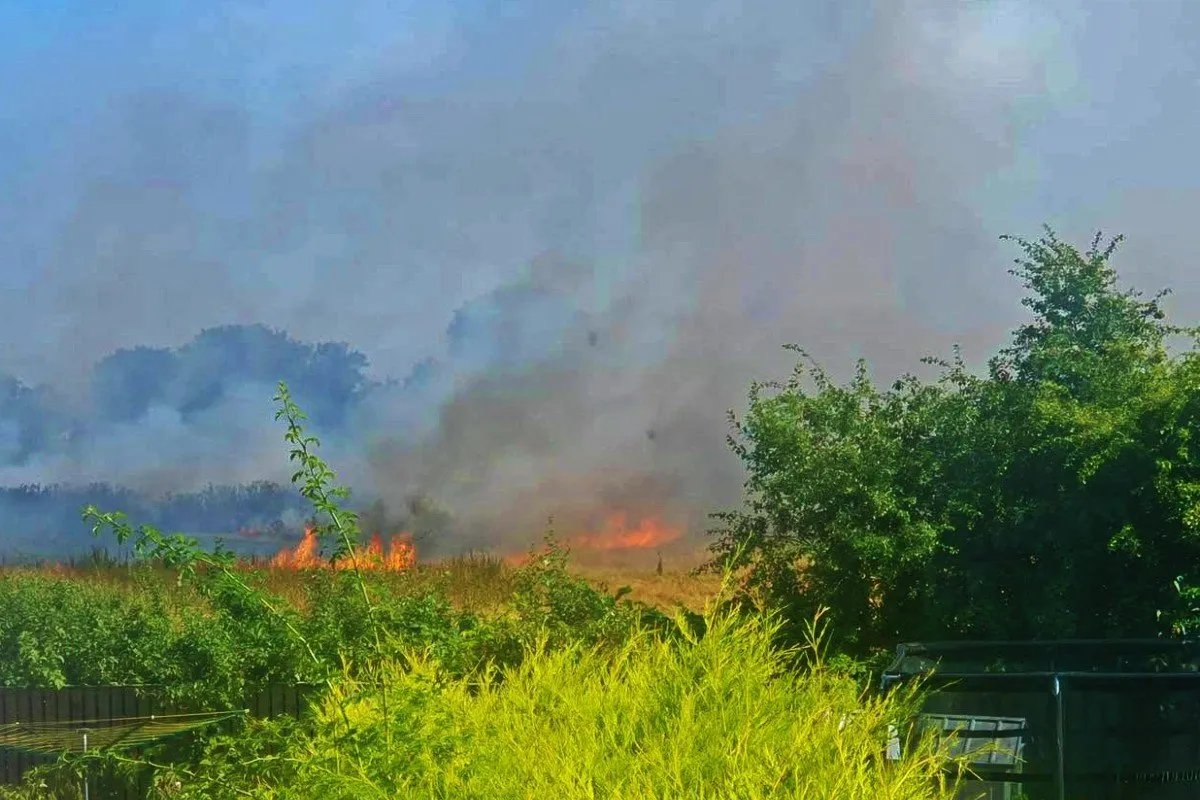

YORK, UK – July 20, 2026 – Hob Moor, a cherished Local Nature Reserve in York, was struck by a wildfire on July 19th, as plumes of steam and smoke rose from a substantial patch of land just off Thanet Road. Firefighters swiftly contained the blaze, which left behind black ash and raised urgent questions about escalating wildfire incidents in the region. The immediate cause of the fire remains unknown, though a firefighter on scene noted persistent wildfire issues in the area recently.
Hob Moor: A Local Treasure Under Threat
Designated a Local Nature Reserve (LNR) since 2002, Hob Moor serves as a vital green space for the York community. Children frequently play there, dog walkers enjoy its open expanses, and families commute to and from the adjacent Hob Moor Community Primary Academy and Hob Moor Children’s Centre. For years, the dedicated volunteer group, Friends of Hob Moor, has diligently maintained the area, organizing litter-picks and educational walks that highlight the moor’s rich local flora, fauna, and history.
Ordinarily vibrant with deep green grass, wildflowers, and occasional grazing cattle, Hob Moor has recently succumbed to the effects of prolonged high temperatures and scarce rainfall. Much of its vegetation has turned dry, brown, and dormant – a stark visual testament to the arid conditions evident in the fire-affected areas.
Climate Change’s Tangible Impact
This incident unfolded during a period of unprecedented meteorological extremes for the UK, including its longest dry spell in decades, the third heatwave of 2026, and the hottest July on record. These extended hot, dry conditions are increasingly common extreme weather anomalies across Europe, contributing to a global rise in average surface temperatures.


While the specific cause of the Hob Moor fire remains under investigation, the prevailing meteorological conditions highlight a broader concern about our changing climate. A Forestry Commission report for 2020–2021 warned of the “potential for destructive wildfire events to increase in frequency in the UK due to increased land-use pressure and climate change.” Data from 2009–10 to 2020–21 further indicates that the majority of wildfires (54.4%) occurred in built-up areas and gardens, underscoring the risk to communities.
Policy Paradox: Burnham’s North Sea Stance
Amidst these environmental challenges, Mayor Andy Burnham has adopted a “pragmatic approach” to new oil and gas drilling in the North Sea. This stance comes despite decades of scientific consensus linking fossil fuel consumption to rising global temperatures and extreme weather events.
The wildfire at Hob Moor, and more recently, the devastating blaze at Dunwich Heath in Suffolk, starkly challenge Burnham’s position on North Sea oil drilling and net-zero targets. Continued reliance on fossil fuels demonstrably has, and will continue to have, tangible impacts on the global climate.
The Disproportionate Burden on Working-Class Communities
Less discussed is how these climate impacts disproportionately affect working-class communities. Access to green spaces, safe areas for outdoor play, and air quality are all compromised by the ongoing use of fossil fuels. It is well-documented that wildfire smoke contains harmful pollutants that pose serious health risks to residents – particularly children attending schools – near affected green spaces.
Beyond wildfires, other tangible effects of climate change are already impacting the UK. Half of England is now officially in drought, and rising food prices are an increasingly common consequence as supply chains struggle with reduced yields due to water shortages.
Drilling: No Solution for Energy Bills
While some proponents argue that North Sea drilling is essential for lowering consumer energy prices, this claim is questionable. Firstly, an analysis of government data by Global Witness reveals that over 80% of oil extracted from the UK sector of the North Sea is exported, not used domestically. With gas reserves approximately 90% depleted, oil constitutes the majority of remaining extractable resources.
Secondly, this argument overlooks the true driver of high energy bills. It is not merely the volatility of international wholesale fuel markets, as often asserted, but rather the insistence of private energy companies that consumers absorb these market shocks (such as the Russian invasion of Ukraine or the recent US–Israeli attack on Iran) instead of impacting their profit margins.
At least two alternative strategies exist to address rising energy bills:
- More restrictive price controls.
- A long-term solution: nationalisation of energy providers.
Energy.eu data indicates that UK household energy bills have surged far beyond those in comparable European economies. Countries like France, Greece, and Hungary, which benefit from publicly owned energy providers, have experienced the smallest increases. This is not coincidental; a state-owned energy provider can set price benchmarks for all firms and absorb external shocks, preventing the burden from falling solely on ordinary citizens.
The recent surge in local wildfires, palpably demonstrated at Hob Moor, underscores that no community is immune to the negative environmental effects of fossil fuel extraction and use, with lower-income earners disproportionately impacted. In this context, any expansion of North Sea drilling represents a clear lose-lose scenario for working people.