








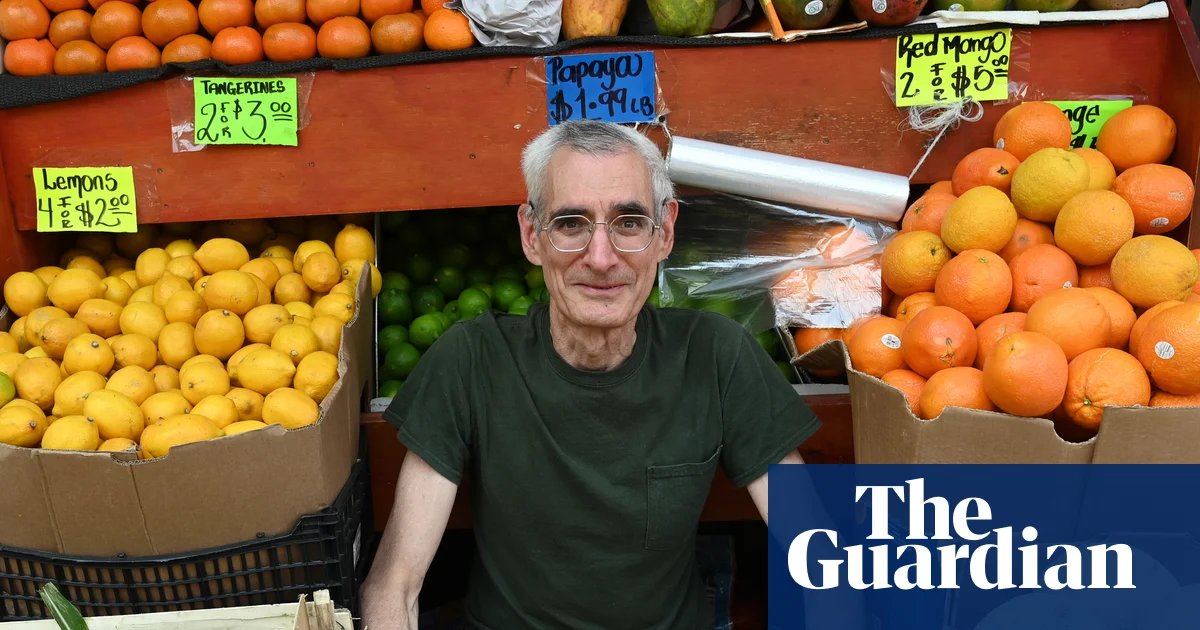
Finding Fulfillment in the Aisles: One New Yorker’s Unconventional Career Shift at 71
In an era where many professionals spend their final working years counting down to a quiet retirement, 71-year-old Robert Solomon is doing exactly the opposite. He is stocking shelves, refreshing bundles of greens, and finding a profound sense of purpose in the physical labor of an independent New York market.
Solomon’s path to becoming an assistant produce buyer was anything but linear. A veteran of the nonprofit sector, he spent years managing technology and facilities for organizations. However, when the pandemic hit and his hours were curtailed, he picked up a temporary role stocking shelves at a local food cooperative. While it was a stark departure from his office-based background, he discovered something unexpected: he thrived in the “ordinary.”
“I love the opportunity to do physical, creative work with my body, hands and mind,” Solomon says. “I’m working harder than I have since my 30s, and I love it.”
The Art of the Produce Aisle
For Solomon, the day begins long before the city’s bustle reaches its peak. His mornings often start at 5:30 or 6:00 a.m., a period of quiet transition where he preps the store floor. His pride in his work is tangible; he speaks with genuine passion about the meticulous care required to maintain produce.
Whether he is “fussing up” dandelion greens—carefully swishing them in buckets of water to ensure their crispness—or arranging broccoli into what he describes as a “sea of blue-green,” Solomon views his role with professional gravity.
He rejects the “fantasy” often associated with modern career trajectories, where individuals feel pressured to constantly chase prestige or fame. “My political belief is that all work is important,” he explains. By focusing on the tangible, immediate requirements of the store, he finds a mental stillness that long-term corporate goals never provided.
A Legacy Rediscovered
Solomon’s journey toward manual labor is, in some ways, a full-circle moment. Born in Brooklyn to first-generation Russian immigrants, he was raised in an environment where success was measured by climbing the ladder into managerial or scientific roles. For decades, he attempted to pivot toward more traditional professional paths—dabbling in computer programming, nursing, and ministry—only to find that those endeavors rarely aligned with his values.
He recounts a defining moment during an interview to be an emergency medical technician: when asked if he would cross a picket line, he refused on moral grounds, effectively ending his candidacy.
Today, he realizes that his current profession is deeply connected to his roots. He recalls his mother’s stories of helping her father at their small home-based shop as a girl, where she learned the intricacies of selecting quality produce and cleaning fresh greens. “All these things I learned from her that she didn’t mean to teach me are coming back,” he says.
Redefining the “Better Job”
The transition was not without its physical tolls; in the early days, the strain of standing and lifting made the subway ride home a grueling test of endurance. But those challenges have faded, replaced by a sense of physical resilience.
“I feel quieter mentally,” Solomon notes. “My knees hurt less. I feel stronger.”
For Solomon, this late-in-life pivot represents a personal triumph—a realization that a “better job” is not necessarily one with a higher title or a desk, but one that provides dignity and genuine satisfaction. As he continues his work in the market, he is a living testament to the benefits of a new start after 60, proving that it is never too late to trade the pursuit of prestige for the satisfaction of a job well done.