







The Aadhaar Divide: Why Central Government Employees Resist Digital Oversight
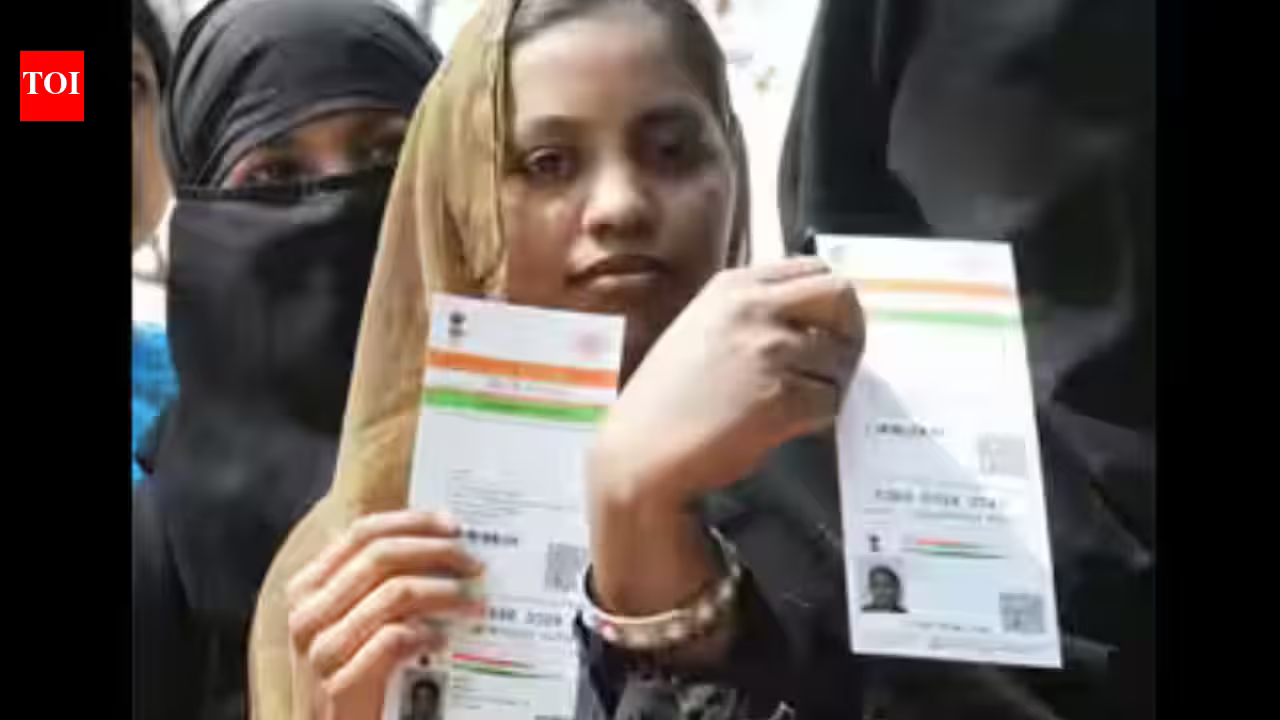
In a striking display of administrative double standards, the Indian bureaucracy has once again successfully evaded the mandatory linking of its health benefit cards with Aadhaar. While the government has aggressively pushed for Aadhaar-based authentication across more than 3,100 welfare schemes and public services—often placing the burden of digital verification on the nation’s poorest citizens—it has found itself paralyzed when attempting to impose similar transparency measures on its own employees.
A Pattern of Resistance
The Central Government Health Scheme (CGHS), which covers a vast network of current and retired bureaucrats, former and sitting MPs, judges, and accredited journalists, remains a notable exception to the government’s digital push. Despite repeated attempts by the central government to enforce mandatory Aadhaar linking through various office memoranda since June 2015, these directives have been consistently withdrawn following stiff resistance from government employee unions.
The most recent instance occurred in July 2024, when a government mandate requiring the integration of CGHS beneficiary IDs with the Aadhaar-based Ayushman Bharat Health Account (ABHA) was suddenly placed “in abeyance till further orders.” As it stands, this crucial digital verification process remains entirely voluntary for government staff.
The Disparity in Accountability
The contrast between the treatment of welfare recipients and government employees is stark. For a laborer seeking daily wages under government employment schemes, Aadhaar is the immovable key to receiving sustenance. Yet, for those working within the system, the same technology is treated as an optional convenience.
The Press Information Bureau (PIB) has frequently touted Aadhaar as the bedrock of “targeted, transparent, and leak-proof delivery,” noting its efficacy in eliminating duplicate and ineligible beneficiaries. Ironically, this logic is not applied to the CGHS, despite the fact that approximately 90% of the scheme’s funding is drawn directly from the Consolidated Fund of India. While critics within the bureaucracy argue that CGHS is a “contributory” scheme and therefore distinct from Direct Benefit Transfer (DBT) programs, their personal contributions cover only a marginal fraction of the total expenditure.
The Cost of Inaction
The refusal to integrate Aadhaar into the CGHS framework carries significant fiscal implications. Unlike the Ex-Servicemen Contributory Health Scheme (ECHS) and the Indian Railway’s health services—both of which have successfully implemented mandatory Aadhaar linking—the CGHS system suffers from a lack of rigorous verification.
Administrative experts point out that the absence of annual check-ins creates a breeding ground for fraud. Pensioner records that were digitized as far back as 2005 remain active in the system today, with no systematic mechanism to identify deceased beneficiaries or dependents who have since become ineligible. This systemic lethargy contributes to the CGHS having a higher per capita expenditure compared to other government health schemes. By failing to weed out phantom beneficiaries, the exchequer continues to bear unnecessary costs, reinforcing the perception that the “babus” are protected from the very audit processes they impose on the rest of the country.
As the government continues to march toward a digitized administrative future, the CGHS issue remains a glaring monument to the power of bureaucratic inertia, highlighting that in the corridors of power, some mandates are clearly more optional than others.
Disclaimer: This content is auto-generated and paraphrased.
Source: Read Original News