








The debate surrounding the “glass ceiling” of the Indian entertainment industry has been reignited, and this time, the fire is being fueled by those who have successfully shattered it. For decades, a persistent hierarchy has dictated the flow of talent in Mumbai: theater actors were considered “pure,” film actors were the “stars,” and television actors—despite grueling shooting schedules and massive reach—were often dismissed as “TV faces.”
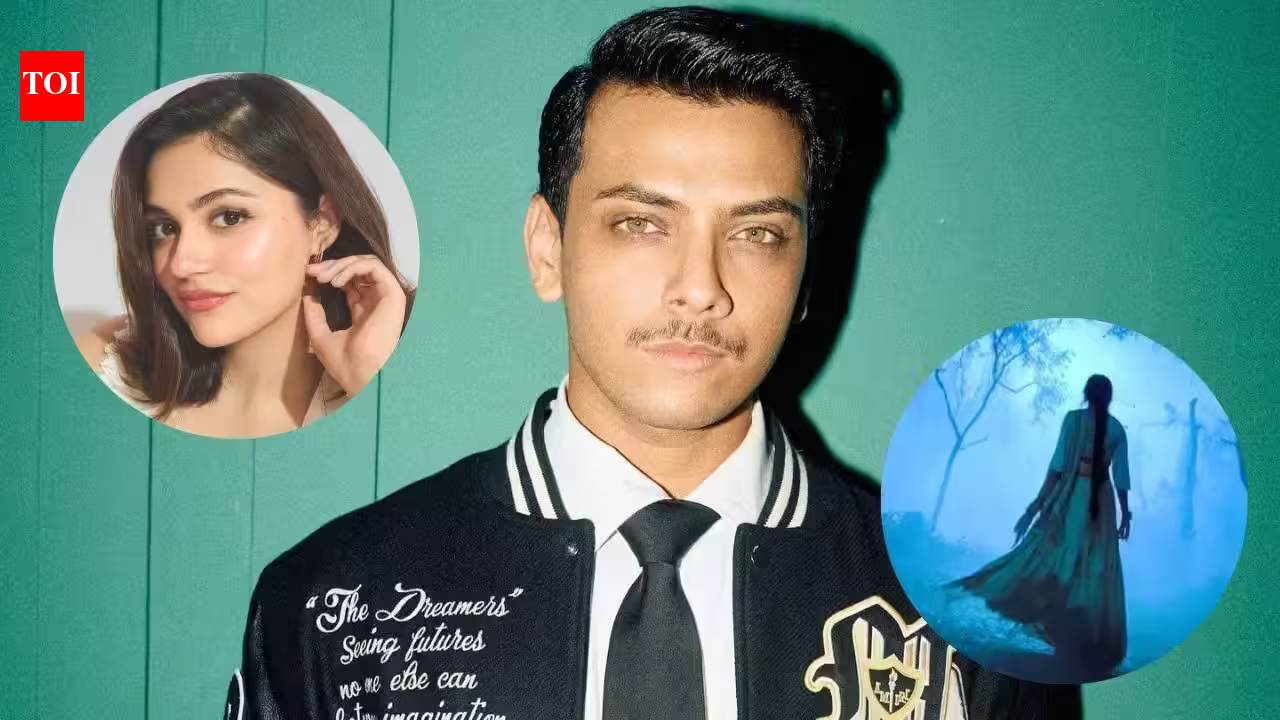
Vishal Jethwa, the powerhouse performer who proved his mettle as a terrifying villain in Mardaani 2 and charmed audiences in Salaam Venky, is tired of the labels. Speaking candidly at FICCI FRAMES 2026, Jethwa weighed in on a comment made by the queen of prime-time, Rupali Ganguly, regarding the historical disdain shown toward television actors. For Jethwa, the conversation isn’t just professional—it’s personal.
The Stigma of the Small Screen
In an industry that prides itself on storytelling, it is ironic how obsessed it remains with provenance. When an actor steps onto a film set having cut their teeth in the high-pressure environment of daily soaps, they are often met with an invisible gatekeeper. Jethwa, who has navigated the waters of television before rising to critical acclaim in cinema, admits that the industry’s tendency to categorize performers is a source of genuine frustration.
“Logon ka ek point of view hota hai ki, ‘Achha, TV actor hai, TV se hai.’ Toh woh mujhe thoda khatakta hai,” Jethwa remarked. He noted that even within the echelons of film production, there is an inherent bias where a resume rooted in television is treated as baggage rather than a badge of honor. To Jethwa, this gatekeeping is not just snobbish; it is reductive. It ignores the sheer versatility and endurance required to sustain a performance over hundreds of episodes, where the craft is honed under the constant pressure of a ticking clock.
The Call for Equal Opportunity
The core of Jethwa’s argument is a plea for meritocracy over pedigree. He envisions a landscape where the platform—be it a web series, a big-budget film, a theater stage, or a commercial—becomes secondary to the individual’s talent. The pigeonholing that currently persists—”Oh, he’s just a TV actor” or “She only does ads”—is, in his view, a failure of the industry to recognize true artistry.
“Mujhe aisa lagta hai ki actor ko actor ki tarah dekhna chahiye,” he stressed. For Jethwa, the mandate is simple: stop the categorization. He argues that by labeling actors based on their origins, the industry inadvertently limits its own pool of talent. If a director or a casting agent looks at an actor and sees only their history rather than their range, the audience is the one that suffers. His vision for the future is one of fluid movement, where actors are granted equal opportunities to audition and perform, judged solely on their ability to embody a character rather than their past billing.
From Villainy to Horror-Comedy: A Versatile Trajectory
Vishal Jethwa’s own career arc serves as the perfect case study for why these labels are obsolete. He exploded onto the scene as a cold-blooded sociopath in Mardaani 2, a performance so chilling that it forced audiences to disregard any preconceived notions about his background. He followed that up with the nuanced, heartfelt performance of a young man battling Duchenne Muscular Dystrophy in Salaam Venky.
By playing roles that exist on such opposite ends of the emotional spectrum, Jethwa has effectively outrun the “TV actor” label. He hasn’t just entered the film industry; he has occupied a space that demands immense emotional labor, proving that his training in the industry’s “lesser” tiers was, in fact, the foundation of his versatility.
The Maddock Effect: Stepping into ‘Shakti Shalini’
The industry’s perception of Jethwa is perhaps best evidenced by his latest project. He is currently gearing up for Shakti Shalini, a film that places him squarely in the middle of India’s most successful cinematic experiment: Maddock Films’ horror-comedy universe.
Directed by Aditya Sarpotdar—the visionary behind Munjya and Stree—the project is a major milestone. What makes this particular outing interesting is the reunion factor. Jethwa will be sharing the screen with Aneet Padda, with whom he shared a palpable chemistry in Salaam Venky. Reuniting with a co-star in a high-profile genre film suggests that Jethwa is not only trusted by top-tier production houses but is also being groomed as a reliable lead capable of anchoring a high-concept franchise.
Why the Industry Must Evolve
The conversation started by Rupali Ganguly and echoed by Vishal Jethwa is symptomatic of a larger cultural shift in Bollywood. The “Us vs. Them” mentality is losing ground as streaming giants and regional crossover hits blur the lines of what “stardom” looks like. When a television actor can carry a film to blockbuster status, or when an OTT release can generate more conversation than a theatrical launch, the old hierarchy begins to crumble.
Jethwa’s message is a reminder that in 2026, the industry needs to grow up. The talent is there; the work ethic is there. All that is missing is the willingness of the gatekeepers to widen their perspective. If Vishal Jethwa is the new guard of Hindi cinema, then the future of the industry looks significantly more inclusive—and infinitely more talented. As he prepares to dive into the supernatural world of Shakti Shalini, he isn’t just proving he can hold his own in a horror-comedy; he is proving that an actor’s past is not a ceiling, but a ladder.
Disclaimer: This content is auto-generated for informational purposes only.
Source: Read Original News