








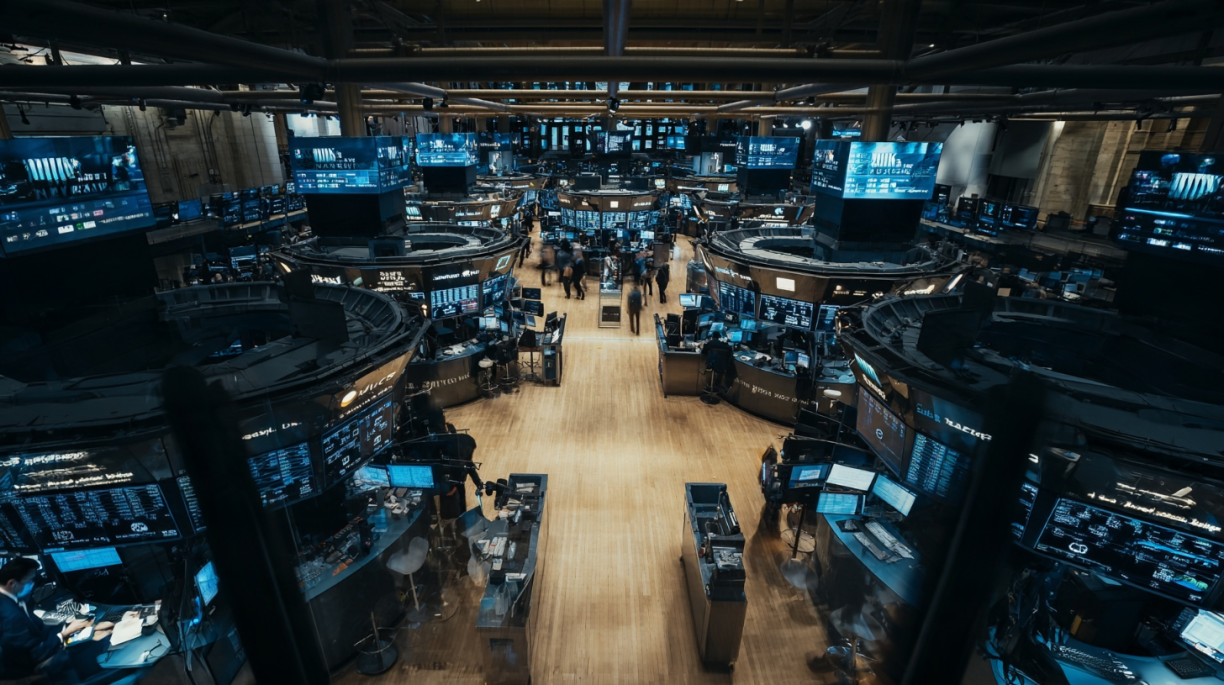
Wall Street finished a volatile week with a mixed performance on Friday, November 6, 2026, as investors attempted to regain their footing following a historic selloff in the artificial intelligence sector. While technology shares staged a partial recovery, broader market sentiment remained fragile as a surprisingly robust jobs report forced a reassessment of future monetary policy.
The Nasdaq Composite managed to climb 1.1% on Friday, and the S&P 500 added 0.3%. However, these gains were not enough to erase the week’s losses, which left the Nasdaq down 3.4% and the S&P 500 down 2.7%—the latter representing its sharpest weekly decline since April 2025. Meanwhile, the Dow Jones Industrial Average bucked the tech-led trend, slipping 0.5% as rising Treasury yields pressured traditional industrial and cyclical stocks.
## The AI Trade Under Fire
The recent market turbulence was sparked by deep-seated anxiety regarding the sustainability of the massive capital expenditures currently pouring into the AI ecosystem. Following a Thursday session that wiped approximately $2.5 trillion from the market capitalization of Nasdaq-listed companies, investors have begun to critically evaluate the long-term return on investment for data centers and semiconductor infrastructure.
Reports of a potential slowdown in data-center construction, particularly as political shifts following midterm elections come into focus, acted as a catalyst for the initial selloff. Despite Friday’s recovery—led by a 4.2% jump in the Philadelphia Semiconductor Index—the market remains in a state of high alert. While public reassurances from key industry stakeholders provided a temporary floor, the durability of the current AI-driven rally is being heavily scrutinized against the reality of rising infrastructure costs and questions regarding the immediate profitability of AI-integrated services.
## Economic Resilience Complicates Fed Outlook
The market’s path forward was further complicated by Friday’s October jobs report, which significantly outperformed expectations. The U.S. economy added 165,000 jobs, far exceeding the projected 59,000, while the unemployment rate ticked down to 4.1%.
While the data highlights the underlying strength of the U.S. labor market, it has also reignited concerns that the Federal Reserve may maintain a hawkish stance on interest rates. Higher-than-anticipated payroll numbers decrease the likelihood of near-term monetary easing, keeping a potential December interest-rate increase firmly on the table. Following the release, the 10-year Treasury yield rose to 4.87%, further complicating the environment for growth-heavy technology equities that are sensitive to the cost of borrowing.
## Future Outlook: Volatility and Broadening
The central question for the coming weeks is whether the current rebound in tech shares can translate into a broader, more sustainable rally. Historically, market leaders depend on strength across multiple sectors to maintain upward momentum. As it stands, the divide between the tech-heavy Nasdaq and the cooling blue-chip components of the Dow suggests that market breadth remains narrow.
Investors are now bracing for a period of ongoing tension. The intersection of artificial intelligence skepticism, stubborn inflation, and a resilient labor market suggests that volatility will likely persist. Moving forward, the focus will shift toward corporate guidance, particularly regarding cash flow and AI expenditure commitments, as companies attempt to prove that the massive investments in generative AI and digital infrastructure are more than just a temporary trend. For the time being, the market is caught between the promise of future technological innovation and the current reality of restrictive financial conditions.
Disclaimer: This content is auto-generated for informational purposes only.
Source: Read Original News


