








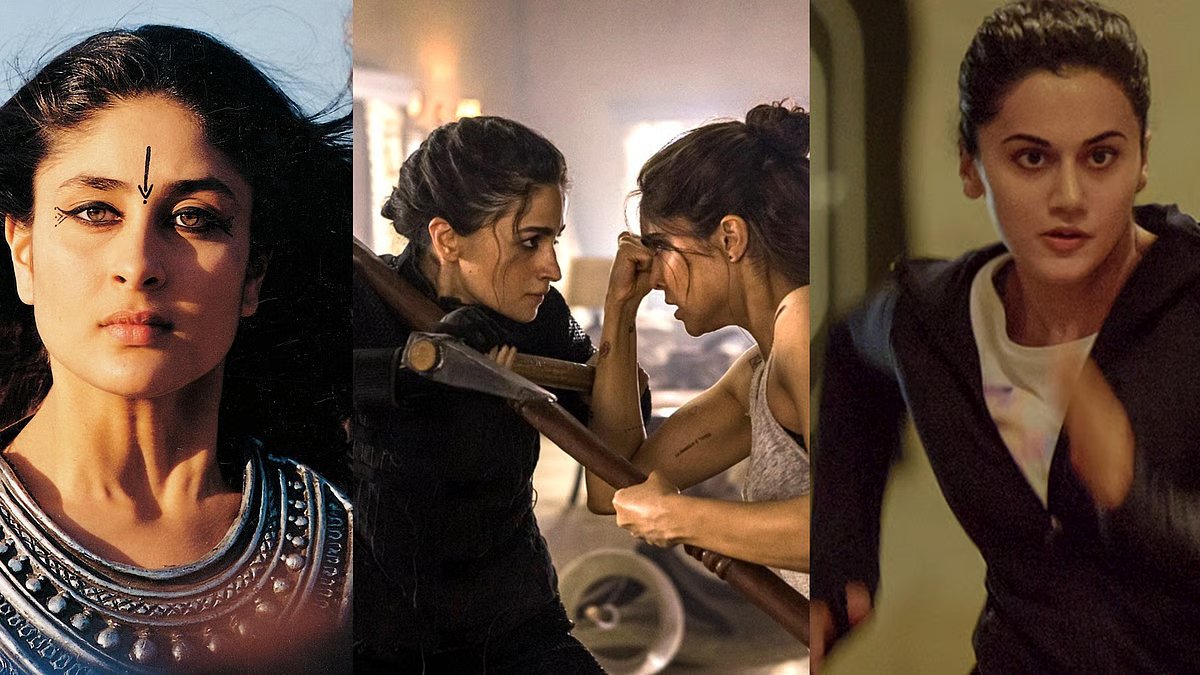
We knew the answer, of course. There would be little to no takers for a serious mainstream entertainer headlined by an actress in a culture that thrived on aspirational masculinity and gendered relationships. Kaurvaki — and many strong female figures like her — could only exist as part of a Hero Package. They could be ‘heroines’ who punched above their weight and surprised viewers, as long as a Shah Rukh or Salman or Hrithik remained the top draws alongside them. When performers like Vidya Balan and Priyanka Chopra soon emerged to prove that women-centric dramas could be commercially successful, the spiritual descendants of Kaurvaki, too, widened the agency and physicality of women in action vehicles. They were still paired with male stars, but their presence was no longer limited to the margins of the genre.
Stars like Katrina Kaif (the Tiger franchise), Taapsee Pannu (Baby), Deepika Padukone (Pathaan), Anushka Sharma (Sultan) and Samantha Ruth Prabhu (Citadel: Honey Bunny) stood out with focused set-pieces and themes in franchise action thrillers. Pannu’s Nepal-hotel-room brawl instantly lifted the street-cred of the male-saviour-driven Baby. Kaif, in particular, expanded the realms of aggression and social dynamics without fetishising the sensuality of these characters; the towel-fight scene in Tiger 3 remains a watershed moment in a career marked by brutal outings in Bang Bang!, Dhoom 3 and others. On paper, they may have been ‘action heroines’ who supplied the glamour, but they played these roles with the confidence of ‘female action heroes’ who led their own parallel narratives. They did, in quick bursts, what the writing couldn’t afford to.