








Amazon Web Services (AWS) has officially hit the brakes on its ambitious plan to construct a $5 billion data center at the Port of Walla Walla’s Wallula Gap Business Park. The tech giant, which previously moved to acquire 550 acres under a pseudonym, is now pivoting to a period of public outreach, hoping to address mounting community skepticism regarding the massive infrastructure project.
Roger Wehner, AWS’s vice president of economic development, confirmed that the company has paused construction plans to engage with residents. The move comes as Amazon faces intense scrutiny over the scale of the facility, its potential resource consumption, and the long-term impact on the Tri-Cities region.
## The Push for Transparency Amid Growing Distrust
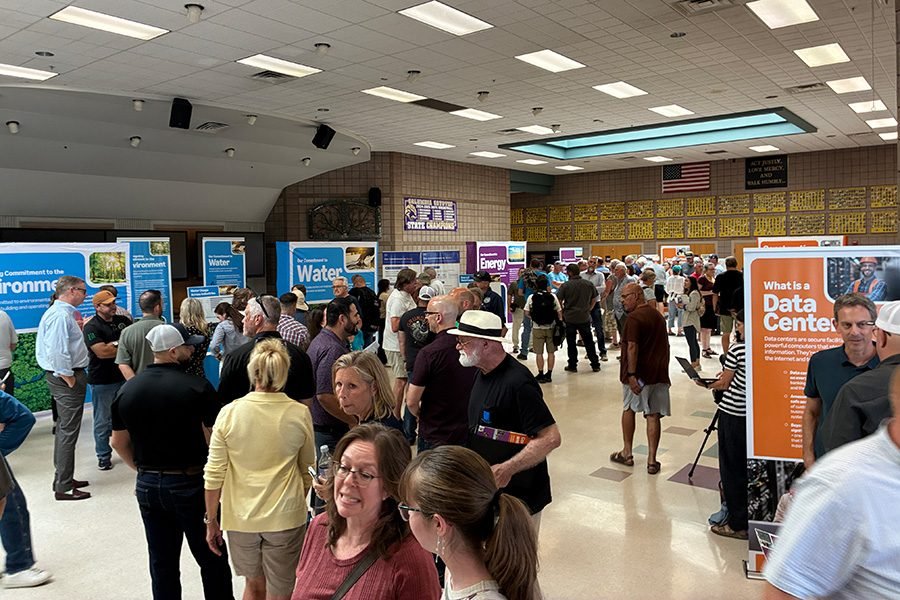
In an effort to quell anxieties, Amazon hosted an open house in early August at Columbia High School. The event featured informational booths and staff members prepared to field questions on everything from utility demands to environmental footprints. However, the venue was met with a vocal turnout of protesters, many wearing apparel signaling their opposition to the tech industry’s expansion in the Pacific Northwest.
Critics, such as local resident Daniel Brown, expressed concerns that the company is prioritizing profit over the preservation of local resources. The skepticism is rooted in fears regarding water usage and power grid stability. While Amazon has publicly asserted that the facility would only consume water during a small fraction of the year and would not impact the utility bills of local power customers, many residents remain unconvinced. Comparisons have been drawn to historical industrial developments in the area that critics argue were rushed through without sufficient consideration for long-term community quality of life.
## Strategic Energy Moves and Data Demands
The Wallula Gap project is a strategic piece of a much larger puzzle for Amazon. As the tech industry continues to race toward advanced artificial intelligence and cloud computing capabilities, the demand for stable, high-capacity power has become a critical bottleneck.
Amazon’s interest in this specific location is no accident; it aligns with the company’s broader energy strategy. The tech giant has already entered into a partnership with Energy Northwest and nuclear developer X-energy to advance the creation of small modular reactors (SMRs) near the Columbia Generating Station. By securing first access to the energy produced by these next-generation reactors, Amazon is effectively building an integrated ecosystem designed to power its data-hungry services without relying solely on the public grid. The Walla Walla site serves as a cornerstone for this growing digital infrastructure.
## An Uncertain Future for the Wallula Gap Facility
Despite the clear intent behind the land purchase, the future of the Wallula Gap data center remains in a state of flux. Amazon officials claim that they have all necessary applications prepared for submission, yet they are withholding a definitive construction timeline.
When pressed on whether the company would abandon the project if community pushback remained steadfast, Wehner did not rule out an exit, though he stopped short of confirming that the company would pull out. Instead, AWS maintains that it wants to host a “broader conversation” with the public.
For now, the project sits in limbo. While the Port of Walla Walla has touted the potential for a 50% increase in the local tax base through the development of the four-phase, multi-building site, the path forward is obstructed by a local population demanding transparency and accountability. As Amazon navigates this friction, the outcome of the Walla Walla project will likely serve as a litmus test for how global tech firms navigate the increasing tensions between rapid digital growth and local community preservation.
Disclaimer: This content is auto-generated for informational purposes only.
Source: Read Original News