









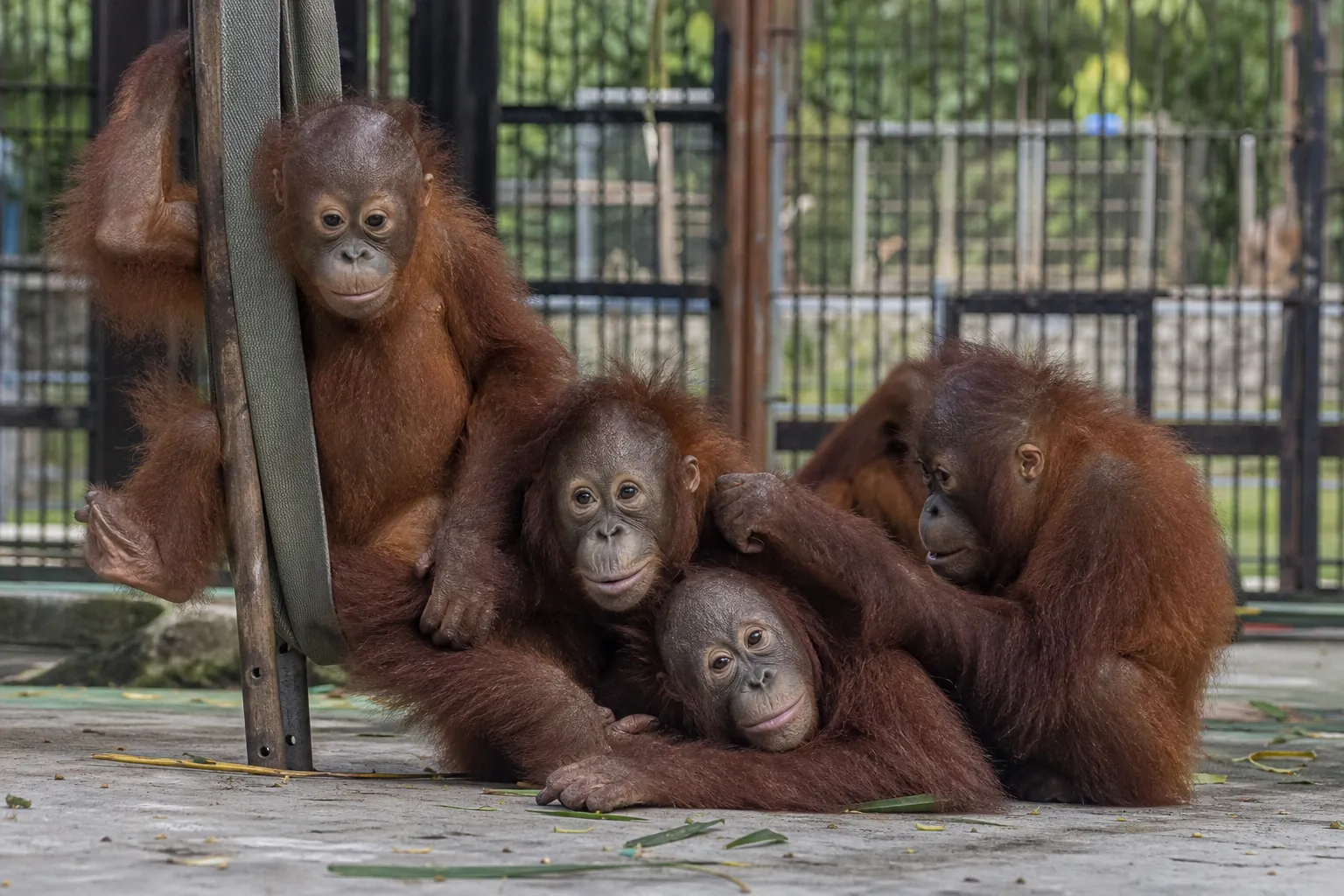
International Smuggling Probe Underway After Rare Orangutans Rescued in Odisha
In a startling discovery that has drawn national attention, forest department officials in Odisha’s Balasore district have successfully rescued five baby orangutans found abandoned in the Jaleswar forest region. The presence of these primates in India has sent shockwaves through the wildlife conservation community, as orangutans are not indigenous to the Indian subcontinent; they are native exclusively to the tropical rainforests of Borneo and Sumatra in Southeast Asia.
A Suspected International Wildlife Syndicate
The recovery of the primates has triggered a high-stakes investigation into a suspected international wildlife smuggling ring. Odisha Environment Minister Ram Singh Khuntia has publicly suggested that the complexity and scale of transporting such exotic animals across borders point toward an organized criminal network rather than an isolated incident.
Authorities believe the infant apes were likely being held in the vicinity for several days before a routine forest patrol stumbled upon them. The proximity of the Jaleswar area to transit routes has led investigators to theorize that the animals were being held as a waypoint before being moved to a final destination, possibly for the illegal pet trade.
“This is a matter of serious concern,” noted a senior forest official. “The illegal trafficking of endangered species is a global scourge, and we are working closely with intelligence agencies to identify how these animals crossed several international boundaries to reach Odisha.”
Rescue, Quarantine, and Recovery
Following their discovery, the five infants—three males and two females—were immediately secured by forest department personnel. To ensure their safety and provide specialized medical oversight, the animals were transported to the Nandankanan Zoological Park, a facility renowned for its wildlife conservation efforts.
Upon arrival, the primates were placed under strict quarantine protocols. Balasore District Forest Officer (DFO) Pratik Prakash Indalkar confirmed that while four of the babies are in stable, healthy condition, all five are undergoing comprehensive medical examinations by a team of veterinarians.
The rehabilitation process has been delicate, requiring specific nutritional intervention. Zookeepers have developed a specialized diet tailored to the age and health status of each individual. The youngest among the group are being hand-fed a mixture of mashed potatoes and apples, while the older infants are being introduced to solid foods. Heartwarming footage released by the forest department shows caretakers gently feeding the youngsters milk and fresh fruit, a stark contrast to the trauma they likely endured during their illicit transit.
A Global Conservation Crisis
Orangutans are listed as critically endangered by the International Union for Conservation of Nature (IUCN). Their population numbers have dwindled significantly due to habitat loss and the persistent threat of illegal poaching and trafficking. According to the World Wildlife Fund, the global wild population is estimated at approximately 104,700 for Bornean orangutans, 13,846 for Sumatran, and only around 800 for the rare Tapanuli species.
The Convention on International Trade in Endangered Species of Wild Fauna and Flora (CITES) strictly prohibits the commercial trade of these primates. The current rescue highlights the ongoing battle that forest authorities face against poachers who ignore international law to exploit some of the world’s most vulnerable creatures. As the investigation continues, officials are focused on ensuring the survival of these five survivors, who represent a small but vital victory in the broader effort to dismantle international wildlife crime syndicates.
Disclaimer: This content is auto-generated for informational purposes only.
Source: Read Original News