







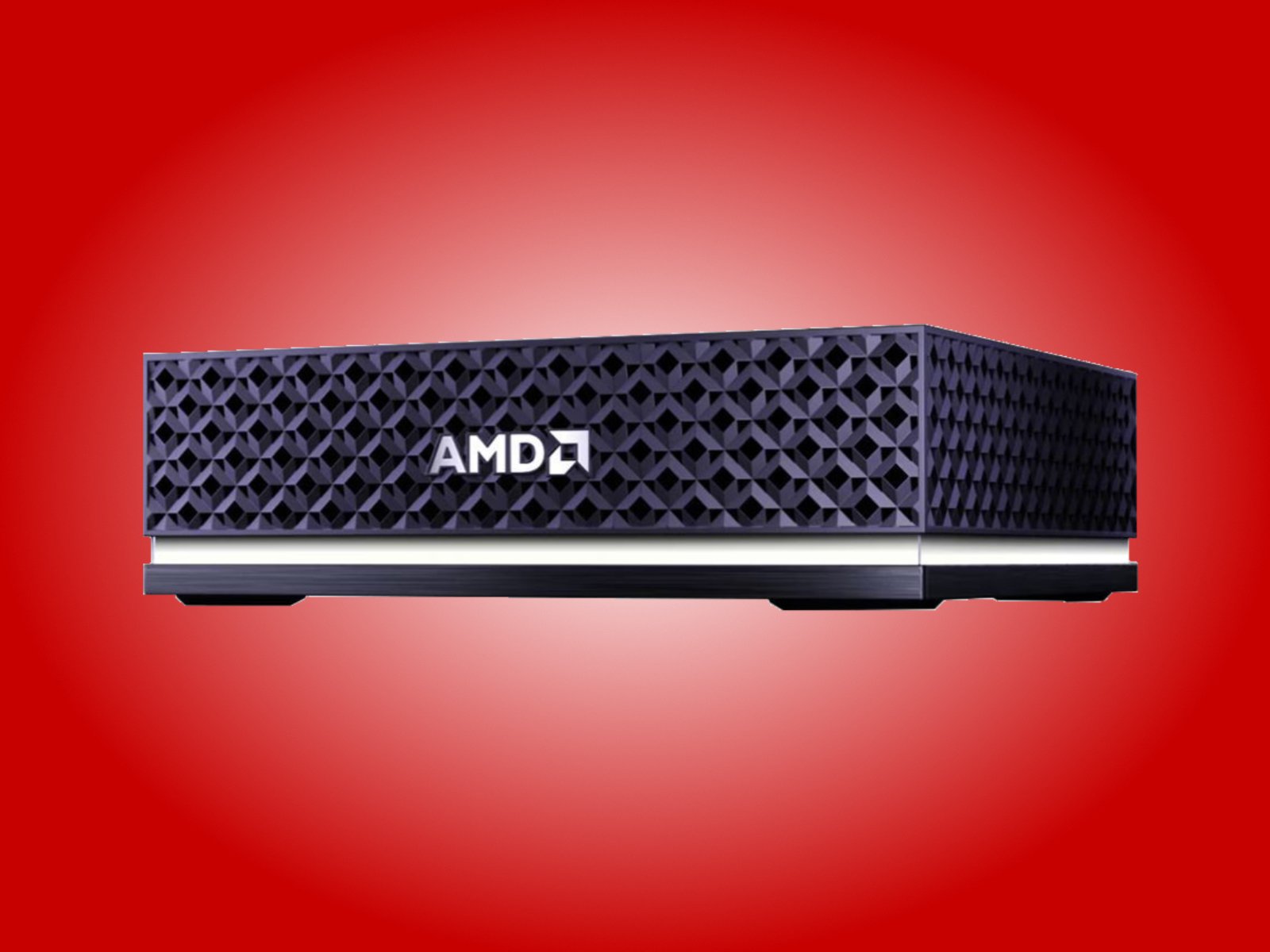
Evolution of the Gorgon Halo Developer Platform
The landscape of professional-grade computing hardware is shifting as manufacturers refine their architecture to meet the surging demands of artificial intelligence development and memory-intensive workflows. AMD has recently introduced its latest iteration of the Developer Platform, centered on the Gorgon Halo architecture. This release signals a strategic focus on expanding memory ceilings for specialized tasks, even as core processing throughput experiences incremental rather than revolutionary gains.
For developers working in machine learning, large language model training, and high-fidelity simulation, the shift from previous hardware generations to the Gorgon Halo platform represents a deliberate pivot toward unified memory architecture. By prioritizing capacity over raw clock-speed increases, this platform addresses a specific bottleneck: the inability of smaller, consumer-focused systems to load massive datasets entirely into memory. While the underlying CPU architecture maintains a consistent trajectory with modest performance improvements over previous iterations, the ecosystem built around the Ryzen AI Max Pro 495 processor suggests a focus on sustained, stable computing for professional development environments.
Analyzing the Radeon 8065S Integration
A central component of this platform is the integrated Radeon 8065S graphics engine. Technical examination reveals that this unit serves as a revision of the established Radeon 8060S. Both versions leverage the RDNA 3.5 architecture and maintain a consistent count of 40 Compute Units. For those expecting a fundamental shift in rasterization power or raw graphical throughput, the 8065S may appear familiar.
However, the value of the Radeon 8065S lies in its integration within the unified memory fabric. In heterogeneous computing designs, the graphics engine is no longer merely a tool for display output or gaming, but a critical accelerator for general-purpose compute tasks. By maintaining the RDNA 3.5 foundation, the platform ensures software compatibility and stability for existing development toolchains while providing a refined baseline for developers who require consistent, reproducible results during the debugging and optimization phases of software development.
Unprecedented Memory Ceiling
The most significant technical advancement in the Gorgon Halo platform is the massive expansion of the unified memory capacity. While the predecessor, Strix Halo, supported a maximum of 128 GB of RAM, the Gorgon Halo platform raises this limit to 192 GB. This 50 percent increase in total addressable memory is not merely a quantitative change; it fundamentally alters the types of workloads the system can handle.
More critical is how the system handles the allocation of this memory. The platform allows for up to 160 GB of this unified pool to be assigned as Virtual RAM (VRAM) to the Radeon 8065S graphics engine. This shift provides a 66 percent increase in available VRAM compared to previous platforms. For developers training neural networks or processing high-resolution visual data, having a massive VRAM pool allows for the residence of larger model weights directly on the accelerator. This minimizes the latency incurred by offloading data to slower storage or system memory, thereby significantly enhancing the efficiency of deep learning pipelines that have historically been constrained by physical memory limits on standard desktop workstations.
Use-Cases in Professional AI Development
The target demographic for the Gorgon Halo platform is specifically the professional software and AI developer. Typical use-cases involve the deployment of local, small-to-medium language models that require significant VRAM to maintain low-latency inference speeds. In a professional setting, the ability to store a model entirely within the memory space of the integrated graphics core prevents the performance degradation that occurs when a system relies on traditional system RAM or disk caching.
Furthermore, data science teams working on real-time analytics or complex simulation environments benefit from this unified architecture. By centralizing the data, the platform reduces the complexity of data movement between CPU and GPU contexts. This streamlined flow is essential for rapid prototyping, where iterative testing requires frequent data processing cycles. The inclusion of the Ryzen AI Max Pro 495 ensures that the CPU side of the equation can adequately manage data pre-processing tasks, such as feature extraction or data normalization, before passing the heavy lifting to the Radeon 8065S core.
Financial Considerations and Market Positioning
The leap in memory capacity and professional-tier optimization comes with a substantial financial requirement. Currently, the Developer Platform equipped with 192 GB of RAM and 2 TB of storage is positioned at a price point of $7,299. This valuation places the hardware firmly in the category of specialized industrial and enterprise equipment rather than consumer hardware.
This pricing strategy reflects the platform’s role as a niche tool for researchers, engineers, and developers who require a stable, Linux-optimized workstation that avoids the necessity of a discrete, power-hungry server stack. By delivering this level of performance in a mini-PC form factor, AMD is essentially providing a high-density compute node for local development environments. While the internal components offer modest clock-speed improvements, the total system value is found in the massive memory allocation. For firms looking to equip developers with the capacity to train and test complex models locally without the overhead of cloud-based training environments, the financial investment is balanced by the potential for increased productivity and reduced reliance on metered cloud compute resources.
Conclusion: The Future of Unified Memory Platforms
The Gorgon Halo platform highlights a clear trend in the industry toward maximizing the utility of unified memory architectures. While the Radeon 8065S may be a minor evolution of its predecessor, the ability to assign the vast majority of 192 GB of RAM to the GPU elevates the system’s utility significantly. This platform is not designed to win benchmarks in gaming or single-threaded CPU tasks; it is designed to hold massive datasets in an active state for rapid computation. As the field of AI development continues to demand larger local memory footprints, the Gorgon Halo serves as an essential building block for professional development, offering a bridge between standard desktop computing and expensive, specialized data-center hardware.
Disclaimer: This content is auto-generated for informational purposes only.
Source: Read Original News