





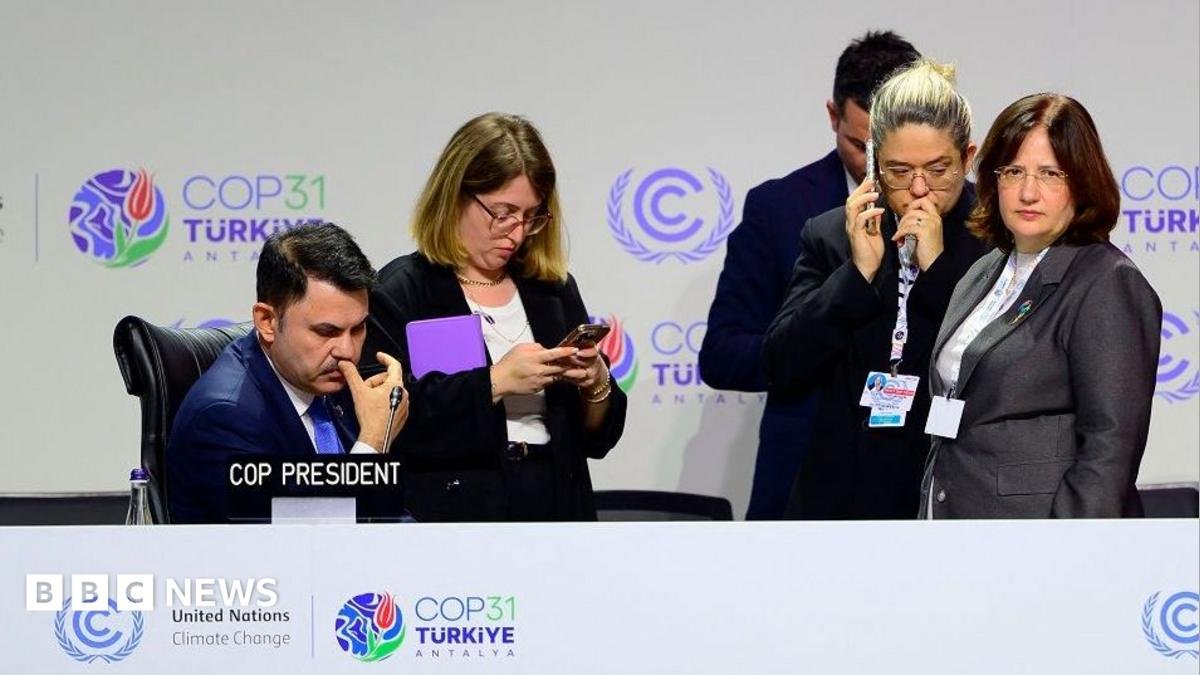
ANTALYA – In a historic and sobering shift for international climate policy, the latest draft of the “Antalya Pact” has officially acknowledged that the world will miss the crucial 1.5C global warming target. The admission marks the first time that nations gathered at a COP summit have formally conceded that the primary objective of the 2015 Paris Agreement is now out of reach.
For more than a decade, the 1.5C threshold has served as the bedrock of global climate negotiations. It was established to limit the most catastrophic effects of a warming planet, including extreme heatwaves, rising sea levels, and the destruction of vital ecosystems. While every COP meeting since Paris has reaffirmed a commitment to stay below this limit, the scientific reality of current warming trajectories has finally forced a change in diplomatic language.
As global temperatures edge closer to 2C, climate scientists warn that the threshold for runaway, irreversible climate impacts is shrinking. We are currently living in a period of warmth not seen on Earth for over 100,000 years. The inclusion of this concession in the Antalya draft is an unmistakable signal that the international community is transitioning from a strategy of prevention to one of urgent damage control and adaptation.
“The importance of this cannot be overstated,” says Esme Stallard, reporting from the conference floor. By formally acknowledging that the 1.5C goal will be missed, the draft shifts the burden of policy toward managing a fundamentally hotter world.
Perhaps the most significant consequence of this admission is the text’s explicit focus on “carbon dioxide removal” (CDR) technologies. With the 1.5C target effectively conceded, negotiators are now pinning their hopes on the mass-scale extraction of greenhouse gases from the atmosphere to draw temperatures back down in the future.
The strategy involves a mix of natural and technological solutions. While reforestation remains a primary tool, the draft acknowledges its limitations, particularly regarding scale and land use. Consequently, it leans heavily into controversial industrial-scale carbon capture technology. These systems—designed to suck carbon dioxide directly from the air—have been widely criticized by environmental advocates. Many experts argue that these technologies are not yet sufficiently developed, are prohibitively expensive, and risk creating a “moral hazard” where reliance on future, unproven tech delays the immediate, necessary cuts to fossil fuel emissions.
As the summit in Antalya reaches its final stages, the atmosphere among delegates is one of grim pragmatism. By drafting a document that drops the pretense of meeting the 1.5C goal, nations are admitting that the era of climate mitigation has entered a new, more desperate phase. The focus is now shifting toward how humanity will survive and adapt in a world that is hotter than any known to human civilization.
Disclaimer: This content is auto-generated for informational purposes only.
Source: Read Original News