







The New Frontier: China Launches First Scheduled Arctic Cargo Service to Europe
By Charlotte Edmond, Senior Writer, World Economic Forum
In a landmark shift for global logistics, China has inaugurated the first scheduled cargo service connecting Asia and Europe via the Arctic Ocean. This development marks a significant acceleration in the utilization of the Northern Sea Route (NSR), signaling a potential transformation in how goods flow between continents.
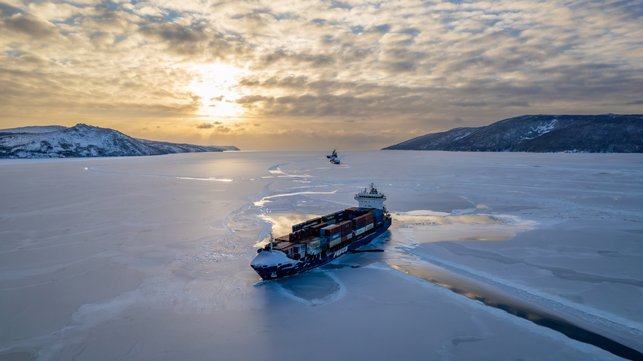
On August 15, a Chinese-owned vessel departed from the port of Ningbo, embarking on a 5,600km journey across the Arctic Circle. The ship, which is transporting high-value goods including photovoltaic equipment and batteries, is expected to reach the United Kingdom in approximately 20 days—a transit time nearly half that of traditional routes passing south of Asia through the Suez Canal. This voyage is the first of eight scheduled by the carrier Sea Legend for the current season.
The “Polar Silk Road” and Global Trade Security
As geopolitical tensions rise—fueled by conflicts in the Middle East and concerns over the fragility of maritime bottlenecks like the Strait of Hormuz and the Suez Canal—nations are increasingly looking toward Arctic shipping as a strategic alternative.
While countries such as India, Japan, and South Korea have expressed interest in these northern passages, China has been the most proactive in institutionalizing the route, branding it the “Polar Silk Road.” South Korean operator PanStar has also joined the effort, recently dispatching its own container ship from Busan toward Europe, with South Korean officials characterizing the NSR as an inevitable alternative to traditional southern shipping lanes.
Economic Hurdles and Geopolitical Risks
Despite the promise of speed, the NSR faces formidable economic and operational challenges. Currently, the route is primarily used for the transport of Russian oil and gas between domestic ports. Extending this to full trans-continental cargo service remains complex.
For much of the year, the NSR is navigable only by vessels with reinforced hulls, often requiring expensive icebreaker escorts. While Sea Legend is utilizing advanced digital navigation to optimize real-time routing, the limited availability of specialized vessels and the high costs associated with ice-hardened ships significantly erode the competitive price advantage of the Arctic route.
Furthermore, geopolitical experts warn of risks associated with the dependency on Russian infrastructure. Operating within the NSR could potentially expose international firms to Western sanctions if they rely on Russian-provided services or support. Additionally, the deep partnership between China and Russia regarding the NSR raises concerns among Western powers regarding the potential for future military applications of the route.
A Fragile Ecosystem at Risk
The environmental implications of opening the Arctic to increased maritime traffic remain a point of intense debate. Proponents argue that the shorter distances reduce fuel consumption and, consequently, carbon emissions. However, conservation groups, such as Bellona, have highlighted the severe threats posed to one of the planet’s most delicate ecosystems.
The Arctic is already struggling under the weight of climate change and melting ice. A surge in shipping traffic increases the risk of accidents, including oil spills—a catastrophe for which there is currently minimal response infrastructure in the remote, frozen north. Beyond the risk of pollution, the underwater noise generated by heavy shipping vessels threatens to disrupt marine mammals, such as whales and seals, which rely on sound to navigate, hunt, and communicate.
As climate change continues to cause polar ice to retreat, the window of viability for the Northern Sea Route is widening. While the economic and environmental trade-offs remain stark, the pursuit of shorter, more secure supply chains suggests that the Arctic is rapidly becoming a central, if contentious, theater for global trade.
This article was originally published by the World Economic Forum and is part of their coverage on the Centre for Regions, Trade and Geopolitics.