









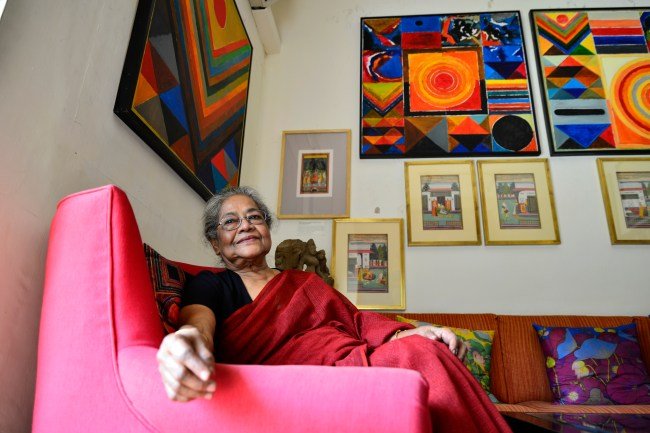
Arpita Singh: A Visionary Chronicler of the Indian Experience Dies at 89
The Indian art fraternity is in mourning following the passing of Arpita Singh, one of the country’s most celebrated contemporary painters. Singh, whose evocative and dreamlike canvases offered profound insights into the inner lives of women and the shifting landscape of Indian society, died on November 9 at the age of 89.
Often described as India’s answer to Marc Chagall for her ability to weave the surreal into the mundane, Singh’s work transcended simple categorization. Her passing marks the end of an era for a generation of artists who sought to redefine the narrative of modern Indian art through a deeply personal and often feminist lens.
A Legacy of Floating Narratives
Born in 1937, Arpita Singh’s artistic journey spanned over five decades. She was perhaps best known for her signature style that featured floating, ethereal figures—often women—trapped in a tension between domestic tranquility and existential turbulence. Her work did not just capture a moment in time; it captured the rhythm of a life lived in a rapidly modernizing India.
Critics frequently highlighted her unique color palette and her habit of populating her paintings with everyday objects—clocks, flowers, maps, and textiles—which she repurposed into symbolic anchors. In her hands, a simple red sari or a reclining figure became a vessel for complex political and personal storytelling.
Capturing the Feminine Psyche
Singh’s influence on the Indian art scene was both profound and quiet. Unlike some of her contemporaries who gravitated toward grand historical or political themes, Singh centered her practice on the domestic sphere, turning the private, often invisible experiences of women into the subject of high art.
“She was a chronicler of the interior,” noted one art historian. Her paintings were never static; they were dynamic, layered narratives that invited the viewer to pause and contemplate the weight of the stories hidden behind the expressions of her subjects. By blending traditional Indian aesthetics with modernist sensibilities, she managed to create a visual language that was entirely her own, accessible yet intellectually rigorous.
An Enduring Inspiration
Throughout her prolific career, Arpita Singh received numerous accolades, including the prestigious Kalidas Samman. Beyond the awards, her greatest achievement was arguably the mentorship and influence she exerted on younger generations of artists who looked to her work to understand how to infuse autobiography into canvas.
From her early days in Delhi to her emergence as a global figure in the art world, Singh remained a staunch observer of the human condition. She navigated the art market with grace, maintaining a focus on the creative act rather than the commercial clamor.
As the art world remembers her today, the consensus remains that the canvas of Indian art has lost one of its most distinct and compassionate voices. Arpita Singh’s works, now held in major collections globally, will continue to serve as a bridge between the dreamscapes of the mind and the harsh realities of the world, ensuring that her legacy remains as enduring as the figures she painted.
Disclaimer: This content is auto-generated for informational purposes only.
Source: Read Original News
