








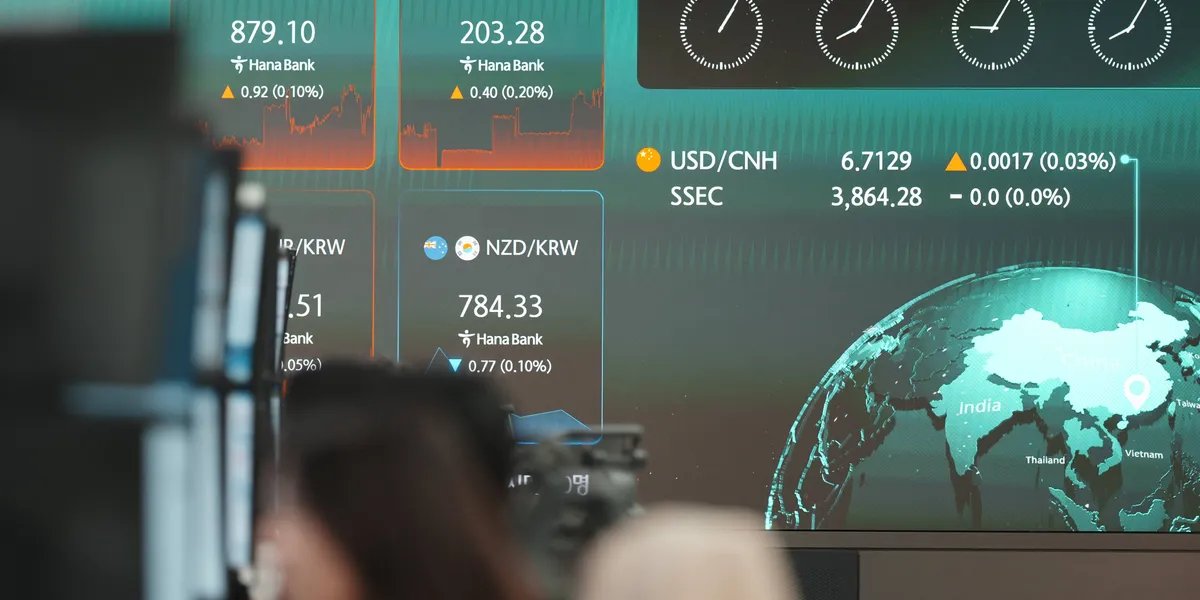
Asian markets mostly brushed off an overnight slump on Wall Street Wednesday, climbing higher as investors positioned themselves for a pivotal Federal Reserve decision. While global economic sentiment remains fragile due to inflationary pressures and geopolitical instability, major Asian indices showed resilience ahead of a widely anticipated interest rate hike—the first such move by the U.S. central bank in three years.
Tech Sector Volatility Amid AI Debate
The technology sector continues to be a focal point for global traders, particularly as the debate surrounding the future of artificial intelligence intensifies. Recent calls from prominent U.S. AI industry leaders to pause development in favor of stricter safety regulations have introduced a layer of unpredictability into market valuations. This caution is reflected in the performance of major industry players, creating a choppy trading environment.
SoftBank Group, a significant backer of OpenAI, retreated 1% on Wednesday, reversing some of its substantial 7.5% gain from the previous session. Memory chip manufacturers experienced a mixed morning: while Japan’s Kioxia Holdings saw a 2.9% decline, South Korean giants SK Hynix and Samsung Electronics posted gains of 2.9% and 1.9%, respectively. In Taiwan, the world’s leading AI chip foundry, TSMC, saw a modest 0.2% uptick, underscoring the ongoing demand for hardware to support the next generation of AI-driven products. Despite the calls for safety-focused development, the infrastructure layer of the tech economy—specifically chip manufacturers—remains a critical point of interest for investors tracking long-term growth.
Federal Reserve Decisions and Global Economic Pressure
All eyes are on the Federal Reserve as it attempts to grapple with persistent U.S. inflation that continues to hover above official targets. The prospect of a rate hike has been a primary driver of market behavior, contributing to a spike in U.S. Treasury yields. The 10-year Treasury note recently flirted with 5.04%, its highest level in years, signaling that investors are bracing for a more expensive borrowing environment.
This inflationary pressure is compounded by the volatility in the energy market. With geopolitical tensions in the Middle East still simmering and a critical Saudi oil pipeline remaining shuttered, Brent crude prices remain significantly elevated compared to pre-war levels. Although oil saw a minor cooling-off during Wednesday’s session, the supply-side risks continue to cast a shadow over equity markets. Despite this backdrop, regional indices in Asia maintained momentum: Japan’s Nikkei 225 rose 0.4%, South Korea’s Kospi gained 1.3%, and the Shanghai Composite climbed 0.6%.
Currency Markets and Economic Headwinds
Beyond the stock market, the currency landscape is shifting in response to current fiscal realities. The U.S. dollar gained ground against the Japanese yen, rising to 155.36 as the interest rate differential between the two nations keeps the yen under pressure. Meanwhile, the Euro remained largely flat, hovering near $1.15.
The economic reality in Japan also presents a complex picture; the country recently logged its fourth consecutive month of trade deficits. Despite these structural challenges, Japan’s market sentiment remains tethered to global macro factors rather than purely domestic trade data. As the world awaits the final verdict from the Fed later today, the market is signaling a “wait-and-see” approach. Whether the central bank’s upcoming decision provides the clarity needed to stabilize the tech-heavy Nasdaq or triggers further volatility will likely define the direction of global indices for the remainder of the week. For now, the resilience of Asian markets offers a brief counter-narrative to the prevailing anxiety emanating from the United States.
Disclaimer: This content is auto-generated for informational purposes only.
Source: Read Original News