







Asian markets began the week on a cautious note as investors grappled with heightening volatility in the technology sector and a sharp decline in global oil prices. While major indices across the region showed mixed results, the prevailing mood remained one of skepticism regarding the sustainability of the artificial intelligence boom that has driven market valuations for much of the year.
## Tech Volatility and the “AI Bubble” Debate
The technology sector, which has been the primary engine of growth for global stock markets, is currently facing a period of significant turbulence. The latest wave of market anxiety was triggered by recent earnings reports from industry giants like Alphabet and Amazon. These disclosures prompted fresh investor scrutiny, with many questioning whether the massive capital expenditure currently being poured into AI infrastructure will result in profitable returns as quickly as Wall Street demands.
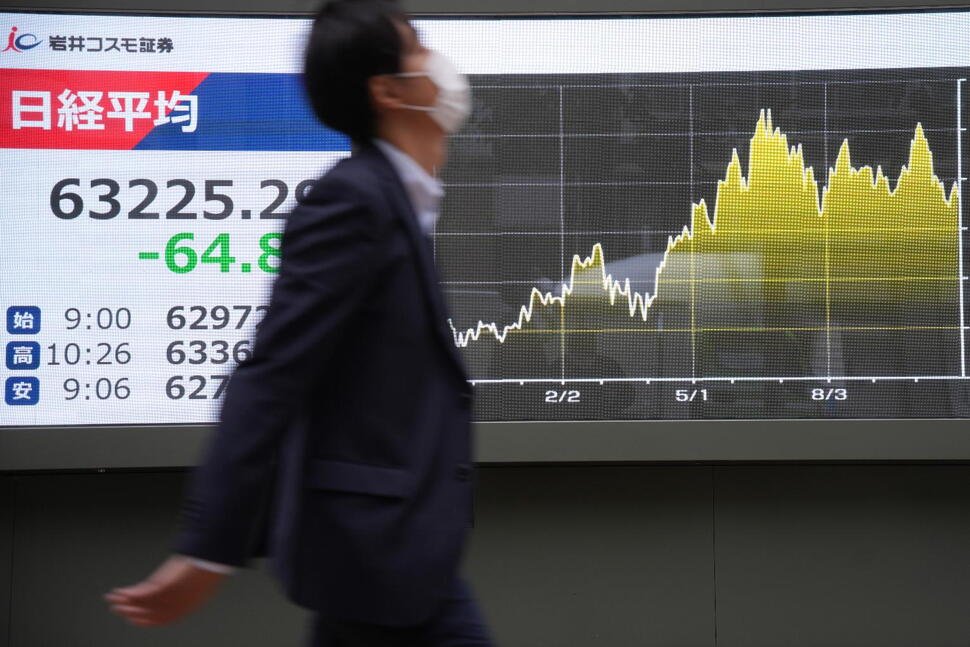
In Asia, the fallout was visible across major exchanges. Japan’s Nikkei 225 index faltered, shedding early gains to finish lower as tech-related stocks dragged on performance. SoftBank Group, a high-profile investor in the AI space, saw its shares dip 1.8%, while Kioxia Holdings plummeted roughly 14% after issuing earnings forecasts that failed to meet analyst expectations.
Conversely, some markets showed resilience. South Korea’s Kospi index bucked the trend with a 2.3% gain, bolstered by strong performances from semiconductor giants Samsung Electronics and SK Hynix, which saw shares climb 4.2%. Despite these bright spots, the broader tech landscape remains fragile, with the Nikkei 225 and Kospi having declined significantly over the past month.
## Economic Headwinds and Regional Shifts
Outside of the tech sphere, economic data from China added another layer of complexity to the trading day. Although the Shanghai Composite managed a 1.2% gain, sentiment remains tempered by the news that Chinese factory activity retreated back into contraction territory during October. This cooling trend suggests that the world’s second-largest economy continues to struggle with slow growth, prompting reports that Beijing’s central bank and securities regulators are planning emergency meetings with financial institutions to discuss strategies for propping up capital markets.
Elsewhere, the regional picture was equally fractured. Taiwan’s Taiex saw minor losses, with chip manufacturing powerhouse TSMC down 1.5%, while Australia’s S&P/ASX 200 lost 0.6%. Meanwhile, India’s Sensex managed to buck the regional pressure, posting a 1.1% gain.
## Global Context: Oil Prices and Geopolitical Tensions
Compounding the market jitters was a notable sell-off in energy commodities. Brent crude and U.S. benchmark oil both fell by more than 3% in early Monday trading. This retreat in energy costs followed reports of potential diplomatic movement in the Middle East. According to Iranian officials, discussions are underway in Qatar regarding a proposal to reopen the Strait of Hormuz—a vital global shipping artery—if specific conditions are met by the United States.
As traders monitor these developments, they are also positioning themselves ahead of Tuesday’s U.S. midterm elections. The intersection of political uncertainty, persistent inflation concerns, and the ongoing debate over the economic utility of AI data centers has created a complex environment for institutional investors. With Apple’s earnings report looming, the market is bracing for further signals on whether the “AI bubble” will continue to expand or if the tech sector is headed for a necessary, albeit painful, correction. As of Monday, the U.S. dollar showed modest strength against the yen, reflecting a flight toward relative stability amidst the regional economic uncertainty.
Disclaimer: This content is auto-generated for informational purposes only.
Source: Read Original News