







Climate Change Emerges as Major Public Health Emergency in India: Lancet Report
The latest ’10th Lancet Countdown on Health and Climate Change Report’ has issued a stark warning for India, highlighting that the nation is facing a burgeoning health crisis fueled by a rapidly warming planet. The report reveals that the health impacts of climate change have accelerated significantly over the last decade, particularly in the years following the 2016 Paris Agreement, as global mitigation efforts struggle to keep pace with rising temperatures.
Rising Heat Stress and Sleep Loss
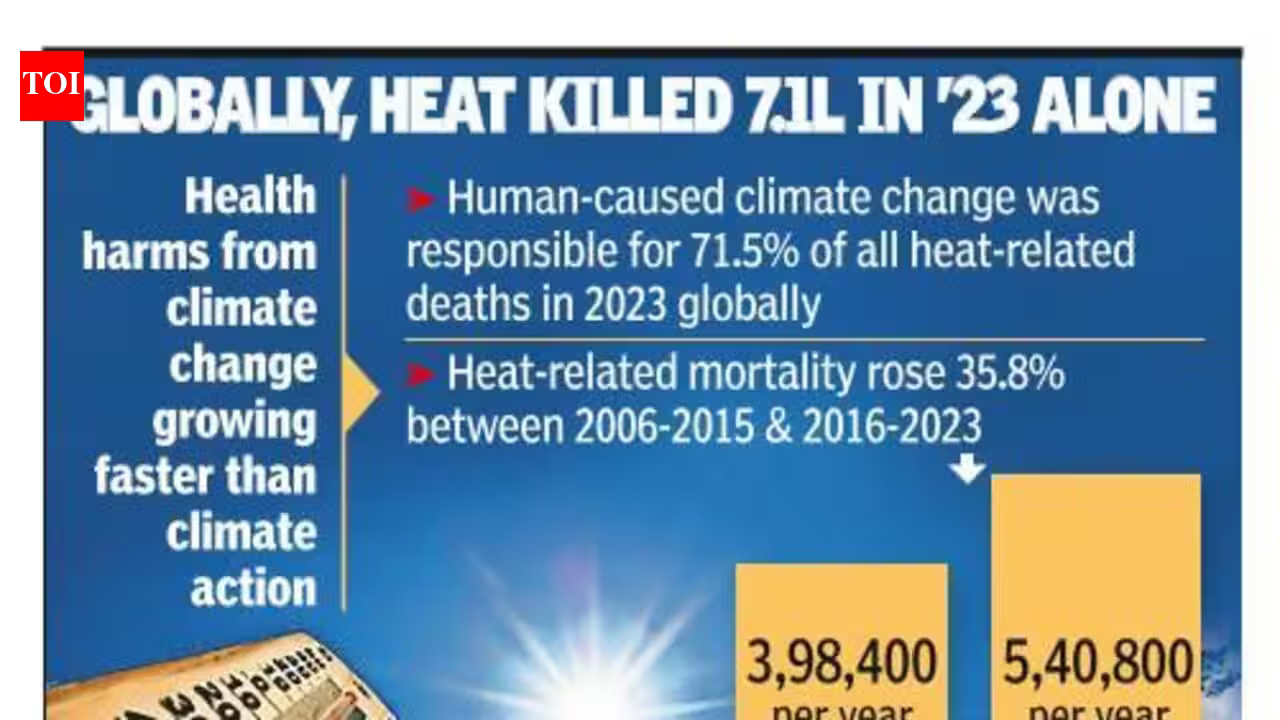
The data paints a concerning picture of life in India under the influence of global warming. Between 2016 and 2025, nearly 50% of the heatwave days experienced by the Indian population are directly attributable to climate change. The physical toll is evident in the increased duration of dangerous outdoor conditions; on average, Indians now face over 2,600 hours annually where temperatures reach “moderate” or “higher” risks for heat stress during physical activities—a sharp rise of 200 hours compared to the 1990s.
Beyond the immediate threat of heatstroke, the warming climate is eroding the basic quality of life. High night-time temperatures are disrupting sleep patterns across the country. Between 2021 and 2025, Indians lost an estimated 64 hours of sleep annually compared to the 1986–2005 baseline, a trend that experts warn has significant long-term implications for public health and cognitive function.
Expansion of Disease Transmission
The report indicates that a warmer climate is creating the perfect breeding ground for vector-borne and water-borne diseases. Mosquito species such as Aedes albopictus and Aedes aegypti, which act as primary vectors for dengue, have seen their transmission potential surge. Similarly, the environmental conditions suitable for malaria-causing parasites like Plasmodium falciparum and Plasmodium vivax have expanded by nearly 19% compared to the 1980s.
Coastal regions are not spared, as the warming of India’s seas has made approximately 2,740km of the coastline increasingly hospitable to Vibrio bacteria. This surge, a 27% increase over historical data, raises the risk of gastroenteritis and severe wound infections among coastal populations.
Beyond Agriculture: A Human Health Crisis
Environmental experts emphasize that the conversation regarding climate change must shift from agricultural output to immediate human health impacts. Bhagwan Kesbhat of the Waatavaran Climate Environment & Sustainability Foundation notes that the consequences are becoming alarmingly intimate. Reports from grassroots levels, such as those in the Marathwada region, suggest a rise in adverse reproductive outcomes, including miscarriages, linked to extreme heat.
“We are long past the stage of simply discussing climate change; we are witnessing ‘climate boiling,'” Kesbhat remarked, urging policymakers to treat the situation as a global health emergency.
The Global Standoff
While the report acknowledges some positive developments—such as a record $2.1 trillion investment in clean energy in 2025 and a decline in air pollution deaths in 77 nations—it warns that these gains are being overshadowed by a persistent reliance on fossil fuels, which still account for over 80% of global energy consumption. As the world struggles to transition, the Lancet report serves as a definitive reminder that for India, the climate crisis is no longer a future threat; it is a current, mounting public health emergency that requires immediate and radical intervention.
Disclaimer: This content is auto-generated for informational purposes only.
Source: Read Original News