









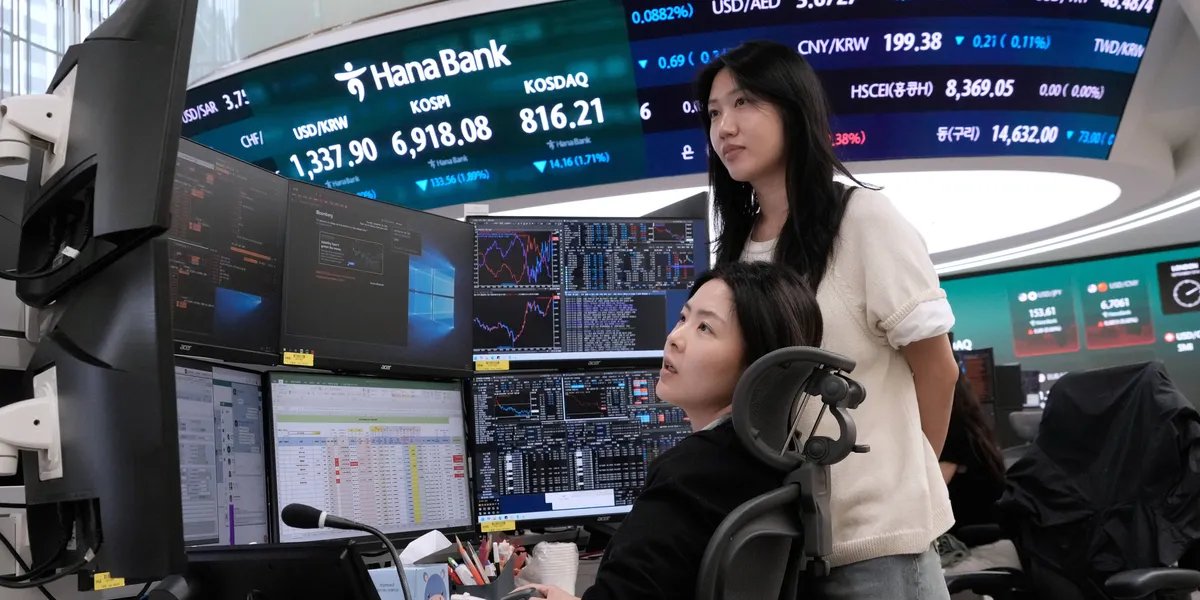
Asian markets tumbled on Thursday as the global economy grapples with the fallout of intensifying geopolitical conflict in the Middle East. With crude oil prices surging back above $100 a barrel, investors are shedding equities, fearing that the sustained disruption in the Strait of Hormuz will further exacerbate inflation and tighten the screws on household budgets worldwide.
The market slump followed a lackluster session on Wall Street, where the S&P 500, Dow Jones, and Nasdaq all finished in the red. As regional indices in Tokyo, Hong Kong, and Australia saw significant declines, the broader sentiment remains heavily tethered to the volatility in energy markets and the looming threat of prolonged inflationary pressure.
## Energy Crisis Fuels Market Volatility
The catalyst for the current market downturn is undoubtedly the escalating conflict between the United States and Iran. With five Iranian tankers reportedly destroyed in recent operations, the critical transit corridor of the Strait of Hormuz—a bottleneck through which roughly 20% of the world’s oil previously flowed—has been effectively paralyzed.
This disruption has sent shockwaves through energy markets, pushing Brent crude past the $100 mark for the first time since July. For consumers, the impact is becoming increasingly visceral. U.S. gasoline prices have jumped 32% over the last year, while diesel prices reached record-breaking levels this week. Because diesel is the lifeblood of the global supply chain, these costs are compounding the existing economic strain, making it harder for businesses to maintain margins and for households to absorb the rising price of goods.
## Tech Gains Amidst Market Turbulence
While the energy sector saw gains—with Exxon Mobil and Chevron rising as oil prices climbed—the tech sector bore the brunt of the market’s defensive shift. Heavy hitters like Amazon, Starbucks, and Home Depot all saw share prices retreat as investors braced for the impact of lower consumer spending power.
However, the tech industry provided a rare bright spot amidst the red ink. Meta Platforms, the parent company of Facebook and Instagram, saw a notable 6.6% surge in its stock price. The rally was driven by the debut of “Muse,” an advanced artificial intelligence agent designed to act as a personal assistant for users aged 18 and older. As the company leans deeper into the agentic AI race, Muse aims to simplify daily life by assisting with complex scheduling and online shopping tasks. This move underscores a broader industry pivot, with tech giants aggressively pushing into the AI-agent space to provide utility beyond traditional social media engagement.
## The Inflation Outlook and Bond Market Pressures
Looking ahead, the focus of the global financial community has shifted to upcoming economic data. Analysts are waiting for the release of the Producer Price Index and the Consumer Price Index (CPI) to gauge just how deeply the energy crisis is bleeding into the wider economy. Current projections suggest inflation will hold above 3%, well over the Federal Reserve’s long-term goal of 2%.
Adding to the complexity is the bond market. The U.S. Treasury Department’s recent move to buy back $6 billion in long-term debt has inadvertently kept upward pressure on yields. For the average investor, these higher yields make borrowing more expensive for corporations and less attractive to hold stocks, contributing to the “risk-off” mood permeating the markets. As central banks and governments struggle to balance these macro-level challenges, investors are bracing for a volatile end to the trading week, keeping a close watch on both the geopolitical situation and the incoming inflation reports.
Disclaimer: This content is auto-generated for informational purposes only.
Source: Read Original News