



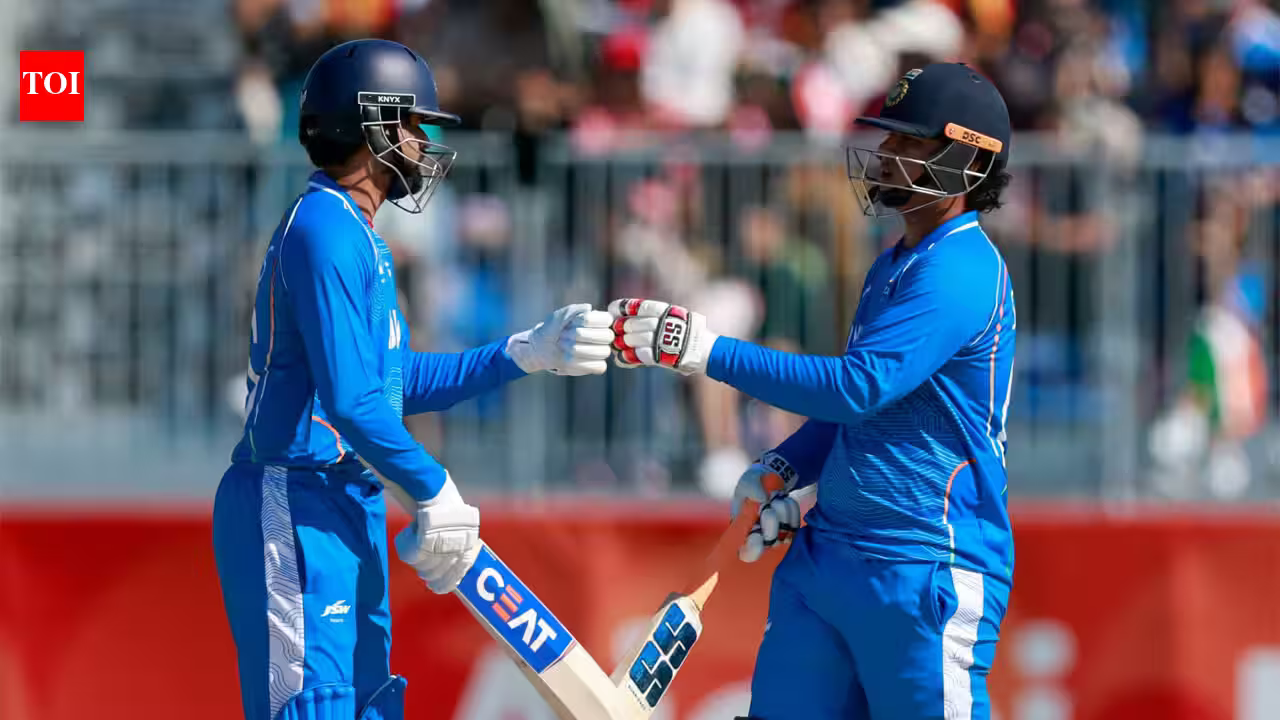



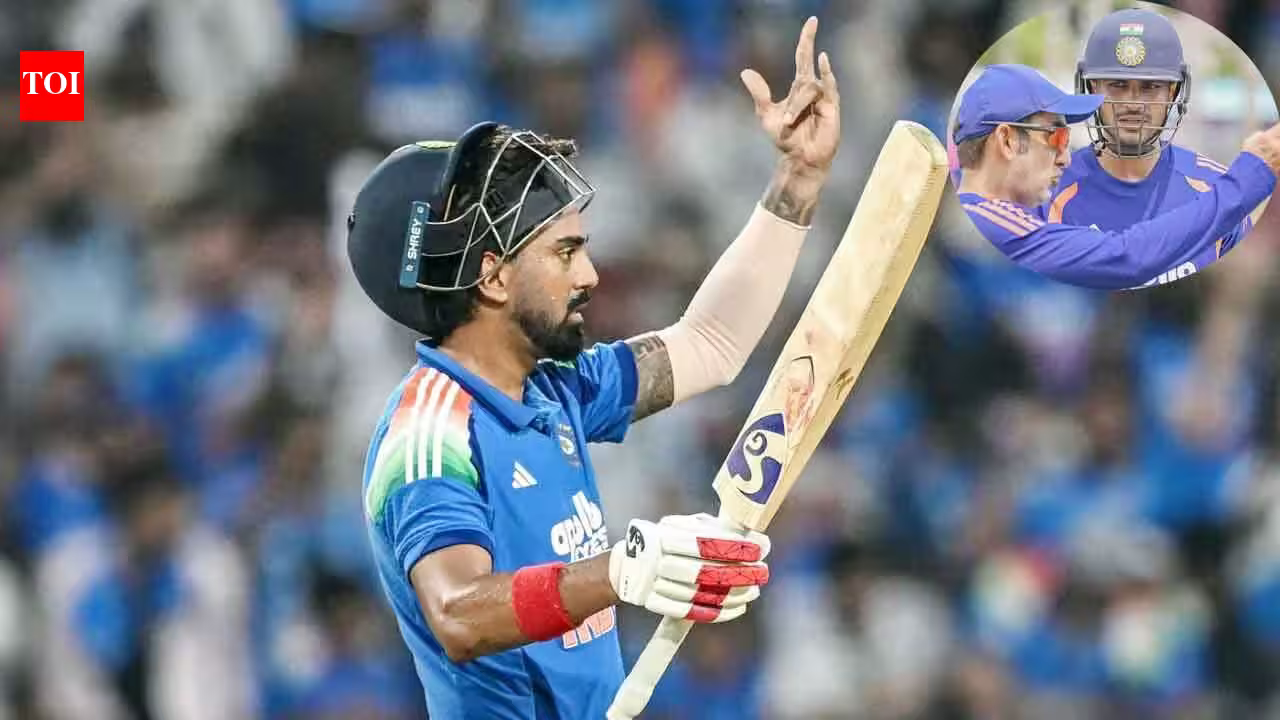
NEW DELHI: In the high-octane theater of modern ODI cricket, where 350-run totals are increasingly viewed as merely “par” scores, India’s middle-order lynchpin KL Rahul has identified a critical area for personal and tactical evolution. Fresh off a blistering 129 off 87 balls against the West Indies, Rahul is not resting on his laurels; instead, he is obsessively refining his technique to combat the oldest, most difficult phase of the innings.
While India successfully clinched the series against the West Indies, the third ODI served as a stark reminder of the changing landscape of 50-over cricket. Despite India posting a commanding 351, the Caribbean side chased it down with nearly two overs to spare. This result has catalyzed a shift in internal strategy for the Men in Blue, with Rahul at the forefront of the quest for aggressive innovation.
The “Old Ball” Conundrum
For a batter of Rahul’s technical pedigree, the primary challenge in the death overs isn’t just power hitting—it is managing the physics of the cricket ball. As the ball loses its shine and its structural integrity, it begins to reverse swing, a phenomenon that has long stifled batting teams in the final ten overs.
“It’s not been easy to get 80-90 in the last 10 overs,” Rahul candidly admitted in an interview with JioStar. “The ball’s been getting reverse swing, and even in this game, once the ball got old and soft, and started to reverse swing, as a batter you don’t feel confident enough to take on the long-on and deep mid-wicket fielder if it’s a big boundary on that side.”
Rahul, who admits to a natural affinity for the “hard, new ball” that skids onto the bat, is now dedicating significant practice hours to mastering the softer, older sphere. His objective is clear: to maintain a high strike rate even when the ball isn’t behaving predictably. “I like the hard ball coming onto me; I can use the pace. So that’s something I’ve been working on—trying to play with softer, older balls and being able to hit sixes with that,” he explained.
Chasing the 380 Threshold
The tactical conversation within the Indian dressing room has shifted dramatically. With teams now comfortable chasing down totals in excess of 350—highlighted by India’s own record-breaking chase of 406 against the West Indies earlier in the series—the “safe” zone has moved.
Rahul notes that the current leadership group, led by the coach and captain, is pushing the team to aim higher. The mandate for the middle order is to move beyond the 330-340 mark and consistently set targets in the 370-380 range, with an eye on the 400-run ceiling.
“The goal so far has been about can we score 330-340 while batting first, but we’re seeing that 340s and 350s get chased down very easily in one-day cricket,” Rahul noted. “So how can batters, once set, keep pressing on and get 370s and 380s, or push for 400 on a given day? The minute we as middle-order batters go in, the aim is to ensure that we do not take too much time to get going and start rotating the strike and keep hitting a boundary every six or seven balls.”
A Longer Rope to the World Cup
With the 2027 ODI World Cup looming on the horizon, the Indian team management is adopting a long-term approach to player selection. Stability, according to Rahul, is the key ingredient to success on the global stage. He revealed that the team hierarchy has identified a core group of players to whom they intend to show faith, regardless of the occasional ebb in form.
“The coach and captain have been very clear on the personnel they want to bring in. They want to give a longer rope to certain players who we feel might be important for the World Cup,” Rahul explained. This “longer rope” is a strategic departure from the more reactive selection policies of the past, signaling a desire to build a battle-hardened squad that is prepared for the specific pressures of tournament cricket.
Crucial Time in the Middle
For Rahul, his century in the third ODI was about more than just the runs on the scoreboard. It was a vital stress test for his recent technical adjustments. Having spent most of the year batting at the No. 5 or No. 6 positions, opportunities to construct long innings have been sparse.
“I wanted to spend more time with the bat out there in the middle,” he said. “The last time I really got to bat for a long duration in ODI cricket in the middle-order was in early January. Since then, I haven’t really got a lot of time to play a long innings.”
As he looks toward the upcoming World Cup cycle, Rahul is treating every game as a laboratory. “Next year is a big one… it’s important for me to get valuable batting time because off the field I’m trying a few things and I want to test that in the game. Only then will you know whether the work that you’re putting behind the scenes is working or not, or what I need to do differently.”
With the veteran batter blending deep tactical awareness with a clear-eyed view of the team’s global aspirations, India’s middle order looks primed to adopt a more aggressive, fearless brand of cricket. The numbers may change, but for KL Rahul, the mission remains the same: mastery over the elements and an unrelenting push for excellence.
Disclaimer: This content is auto-generated for informational purposes only.
Source: Read Original News