






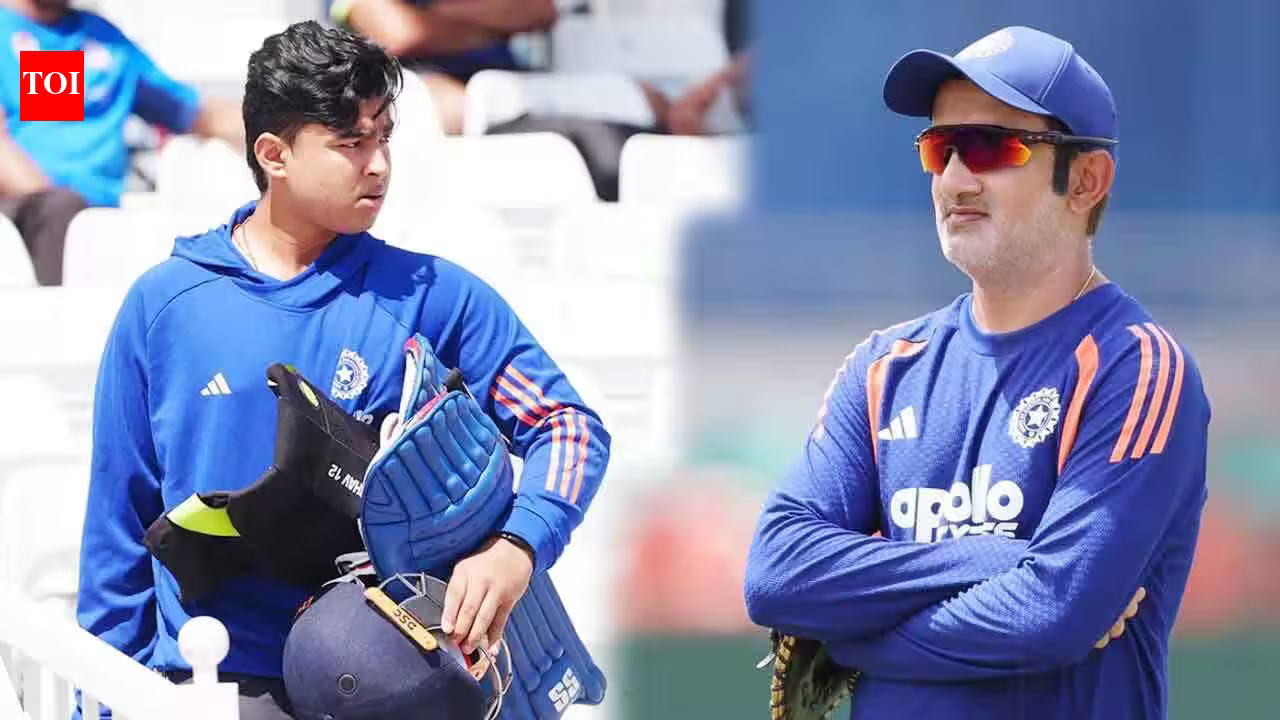
NAVIGATING THE pressures of international cricket at just 15 years old is a challenge few athletes ever face, let alone master. Yet, Vaibhav Sooryavanshi has made headlines not just for his precocious talent, but for the poise with which he has handled his integration into the high-stakes environment of the Indian national team. Under the watchful eye of head coach Gautam Gambhir, the teenage sensation is learning that in the world of elite sports, talent is only one piece of a much larger tactical puzzle.
The young batter’s ascent has been nothing short of meteoric. Earlier this year, Sooryavanshi etched his name into the history books by becoming the youngest Indian to feature in international cricket, debuting against England at the tender age of 15 years and 99 days—a record previously held by the legendary Sachin Tendulkar. He didn’t stop there. Shortly after his debut, he solidified his status as a prodigy by becoming the youngest player to register a half-century in men’s international cricket, achieving the feat against Zimbabwe at 15 years and 118 days.
However, for all his early accolades, the road to a permanent spot in the starting XI has been defined by patience. Despite being in spectacular form, Sooryavanshi found himself sidelined for the entirety of the Afghanistan series and the one-off T20I against Japan. It was a period of forced waiting that left fans and pundits speculating, but for Gautam Gambhir, the decision was rooted in the fundamental necessity of team stability.
Gambhir’s Philosophy: The Art of Waiting
In a candid discussion on JioStar, Gambhir addressed the public curiosity surrounding the youngster’s benching. The head coach made it clear that while form is an important metric, it cannot supersede the structural needs of a team that relies on the consistency of established stars.
“It was a new experience for me as well,” Gambhir admitted. “Yes, he was in good form, but I made him understand that sometimes, because of the players who have done well for a long time, he will have to wait for his opportunity. And there’s one more thing: social media or outside noise doesn’t decide the playing eleven.”
For Gambhir, the captain and the coaching staff operate with a singular objective: selecting the most balanced unit capable of securing a win. He emphasized that the “outside noise”—the clamor from fans demanding the inclusion of rising stars—cannot dictate selection policy, as it risks undermining the team’s long-term vision.
Protecting the Dressing Room Culture
The core of Gambhir’s argument centers on “dressing room security.” In high-performance environments, the psychological safety of players—knowing their spot is not jeopardized by a momentary dip in form—is paramount. By persisting with an established core, the management fosters a sense of trust and longevity.
“If Vaibhav plays today, then it’s going to be a tough conversation between me and whoever we leave out, whether it’s Abhishek or Sanju,” Gambhir explained. “So, we can’t suddenly ignore a combination that has created such an impact over the last one and a half or two years, and after three or four failures, drop them and play a young player who is very talented. We want to create that security in that dressing room.”
This approach underscores Gambhir’s mandate: winning is the priority, but building a team that trusts its management is equally vital for future success. Sooryavanshi’s wait was not a reflection of his perceived lack of talent, but rather a lesson in the professional standards required to sustain a career at the highest level.
A Historic Gold Medal Finish
When his opportunity finally arrived, Sooryavanshi proved exactly why he is viewed as a generational talent. Recalled to the India XI for the Asian Games semifinal against Sri Lanka, the teenager looked completely at home, contributing a blistering 38 off just 21 deliveries.
His momentum carried into the final, where he played a pivotal role in India’s successful title defense. Scoring a quick-fire 15 off nine balls, he helped India overcome Pakistan by 19 runs to clinch the gold medal. In doing so, he shattered another record: at 15 years, six months, and six days, he became the youngest Indian to win an Asian Games gold medal, surpassing the mark set by shooter Saurabh Chaudhary, who achieved the feat at the 2018 Jakarta Games at the age of 16.
For Sooryavanshi, these early months in the international circuit have been a masterclass in professional development. He has learned that while talent can get you into the squad, it is patience, team dynamics, and the tactical backing of the leadership group that keep you there. As he continues to grow, it is clear that under the mentorship of a disciplinarian and tactician like Gambhir, the young batter is being groomed not just for a brilliant career, but for a sustainable one.
The cricket world remains fixed on his trajectory. And while the wait for his next big opportunity may continue to be tested by the high standards set by his seniors, one thing is certain: Vaibhav Sooryavanshi is not just making history; he is learning how to endure it.
Disclaimer: This content is auto-generated for informational purposes only.
Source: Read Original News