









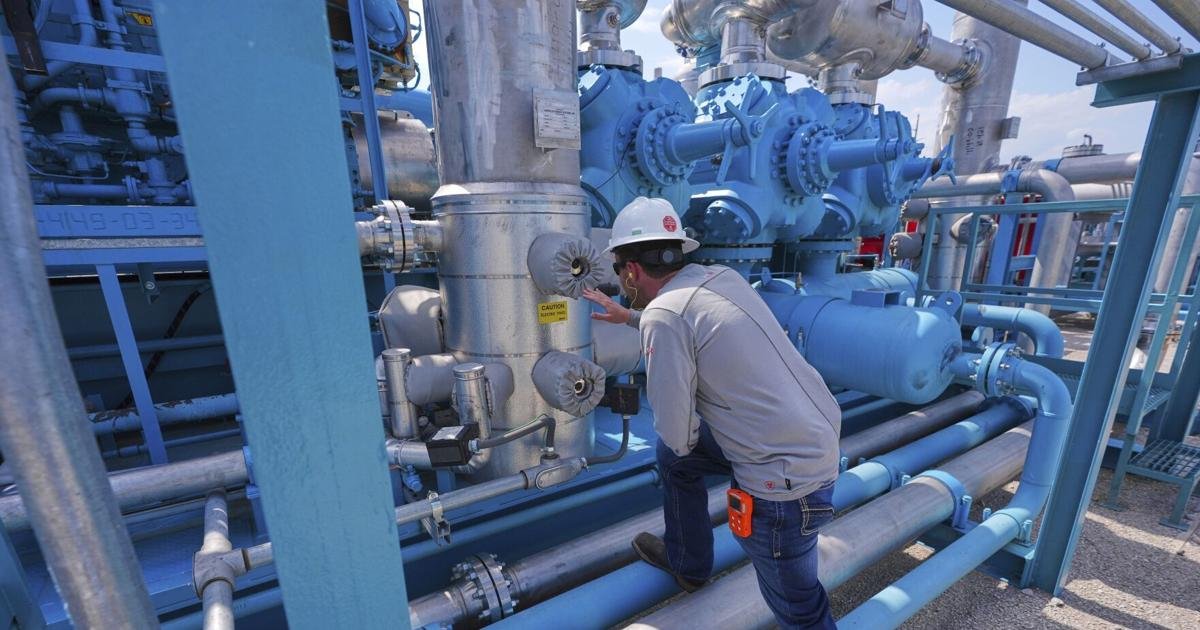
ExxonMobil is aggressively scaling up its carbon capture and storage (CCS) infrastructure along the Gulf Coast, yet the company faces a complex geopolitical and environmental landscape that is forcing it to transport captured emissions across state lines. While Louisiana was once viewed as the premier hub for this technology, intense local opposition has stalled many domestic storage projects, leading the oil giant to redirect its captured carbon to Texas and Mississippi for now.
### Navigating Regulatory Hurdles and Public Backlash
The push for carbon capture is driven largely by global market pressures. As international entities, including the European Union, implement strict import fees on high-carbon goods like fertilizer and steel, Louisiana-based industrial plants are turning to CCS to maintain their competitive edge. ExxonMobil has actively partnered with major emitters—including Nucor Steel, CF Industries, and the NG3 gas plant—to facilitate this transition. Together, these partnerships are currently capturing approximately 4 million tons of CO2 annually.
However, the technology remains highly contentious. In Louisiana, a diverse coalition of rural landowners and environmental activists has successfully lobbied against the development of permanent underground storage sites. This pressure prompted Governor Jeff Landry to impose a moratorium on new injection permit applications, citing a need to establish clearer regulatory safeguards for local communities. Consequently, ExxonMobil has been forced to utilize the extensive interstate pipeline network it acquired from Denbury to move its captured CO2 into Texas and Mississippi, where it is often injected into mature oil fields to boost production.
### The Shift Toward Texas-Based Storage
ExxonMobil is now on the verge of a significant breakthrough in Texas that could reshape the regional industry. The company is nearing final approval for the “Rose project” near Beaumont, which would serve as its first permanent underground storage site under updated federal regulations. If finalized, the facility would represent a major milestone in the firm’s broader decarbonization strategy.
Despite the pending approval, the project has faced familiar resistance. Residents in the rural Texas community of Cheek have expressed concerns over potential groundwater contamination and the long-term integrity of the underground sequestration plumes. While the Texas Railroad Commission recently voted 2-1 to move the project forward, the decision has drawn criticism from officials who argue that ExxonMobil’s communication with local stakeholders has been insufficient. Opponents are already preparing to challenge the decision, highlighting the ongoing tension between industrial growth and public concern.
### The Balancing Act of Global Standards
While the United States’ domestic stance on climate regulation faces uncertainty, the global market continues to move toward stricter oversight. Technology companies and industrial leaders are increasingly relying on sophisticated data modeling and seismic monitoring to reassure both regulators and the public that geologic storage is safe. ExxonMobil maintains that its extensive monitoring plans—which include tracking CO2 plumes through advanced sensor technology and maintaining thick, protective geological seals—provide the necessary security to prevent leaks.
For now, the situation reflects a growing disconnect in the energy sector: industrial plants feel the urgent need to “decarbonize” to avoid international trade penalties, yet the infrastructure required to do so is struggling to find a home. As ExxonMobil continues to seek additional permits in both Texas and Louisiana, the company’s ability to prove the long-term safety of its operations will be the deciding factor in whether carbon capture becomes the standard for the Gulf Coast or remains a logistical, cross-border endeavor.
Disclaimer: This content is auto-generated for informational purposes only.
Source: Read Original News