





AICHI-NAGOYA — The 2026 Asian Games, hosted in the vibrant Japanese region of Aichi-Nagoya, have officially drawn to a close, leaving behind a legacy of record-breaking performances, cross-generational triumph, and a significant shift in the sporting hierarchy of the continent. From September 19 to October 4, athletes representing 46 nations descended upon Japan to test their mettle, but it was the Indian contingent that arguably provided the most compelling narrative arc, concluding their campaign in fourth place on the overall medal table with an impressive haul of 85 medals—21 gold, 27 silver, and 37 bronze.
The Games served as a showcase for India’s dominance in traditional team sports. In a spectacular display of athletic depth, the nation secured gold in cricket, kabaddi, and hockey, with the latter achievement marking a historic milestone: the first time in the nation’s history that both the men’s and women’s hockey teams stood atop the podium at the same Asian Games.
A New Generation of Record-Breakers
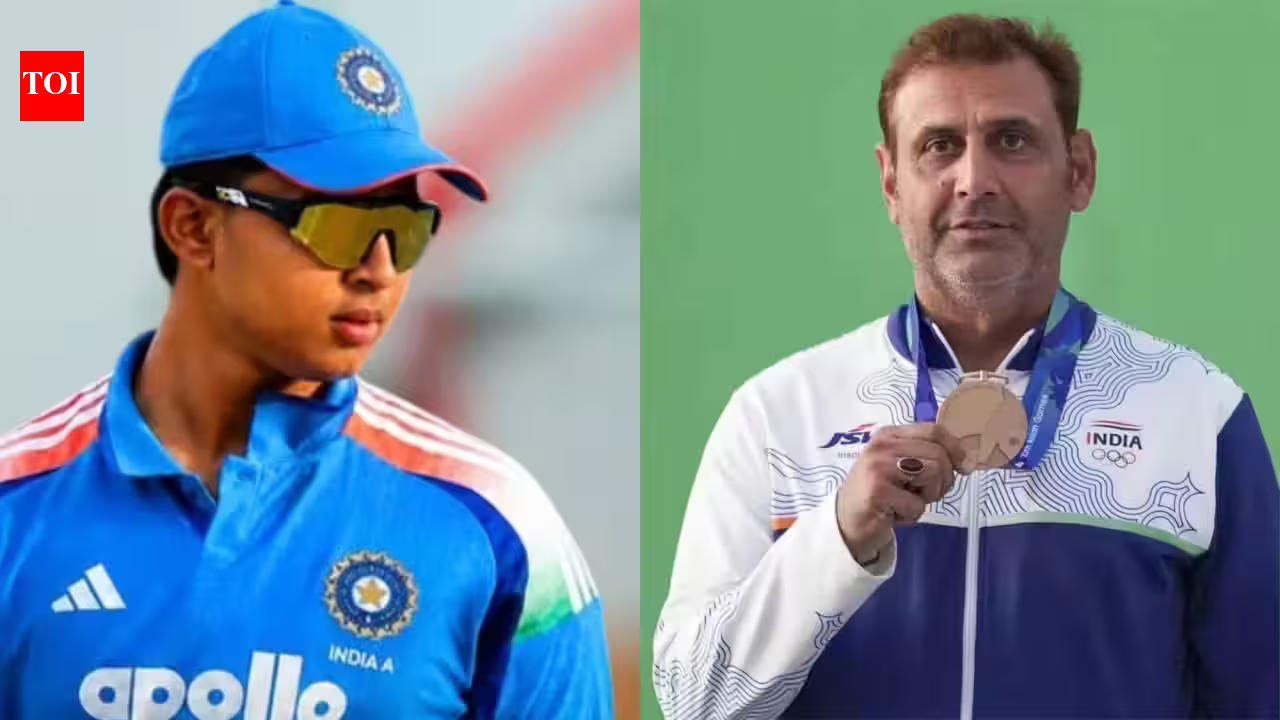
The headlines in the Indian camp were dominated by the stark contrast between the youngest and oldest members of the squad, epitomizing the diverse pathways to elite success. At the vanguard of this new era was 15-year-old batting sensation Vaibhav Sooryavanshi. By securing a gold medal as part of the men’s cricket squad, Sooryavanshi etched his name into the history books as India’s youngest-ever Asian Games medallist.
In a high-stakes final against arch-rivals Pakistan, Sooryavanshi wasted no time in making his presence felt. Despite a brief stay at the crease—where he managed a rapid 15 runs off nine deliveries, punctuated by two explosive consecutive sixes—his contribution set the tone for an eventual 19-run victory. His fearlessness at such a tender age suggests that the future of Indian cricket remains in exceptionally capable hands.
While Sooryavanshi provided the youthful spark, the Indian women’s contingent delivered a series of “firsts” that will be studied for years to come. Archer Kumkum Mohod emerged as the star of the Games, securing two gold medals and one silver. Her victory in the individual recurve event marked a historic first for an Indian woman, confirming her status as one of the most formidable archers in the world. Joining her in the history books were Pranavi Urs, who claimed India’s first-ever individual golf gold, and Neeru Dhanda, who delivered a masterclass in focus to become the country’s inaugural women’s trap shooting gold medallist.
Experience Prevails: The Mairaj Ahmad Khan Story
If Vaibhav Sooryavanshi represented the promise of the future, Mairaj Ahmad Khan stood as the testament to enduring excellence. At 50 years old, the two-time Olympian became India’s oldest medallist at the 2026 Games. A veteran of the international shooting circuit with over two decades of competition under his belt, Khan finally added an elusive Asian Games medal to his trophy cabinet.
Competing in the men’s skeet shooting team alongside Anantjeet Singh Naruka and Bhavtegh Singh Gill, Khan played a pivotal role in securing bronze for his country. For a man who has already achieved three ISSF World Cup gold medals, this podium finish was not merely a participation milestone; it was a vindication of a lifelong commitment to the sport, proving that in disciplines like shooting, experience and precision often bridge the gap that physical longevity cannot.
A Continental Stage of Contrast
The 2026 Asian Games were defined by a spectrum of age that transcended national borders. While India celebrated the extremes of its own team, the broader Games saw history rewritten by the very young and the remarkably seasoned. Japan’s 11-year-old eSports prodigy, Yuki Kurihara, captured the world’s imagination by claiming gold in the Puyo Puyo Champions title, becoming the youngest gold medallist in the history of the Asian Games.
At the other end of the demographic scale, 63-year-old Kuwaiti shooter Abdullah Al-Rashidi maintained the spirit of seasoned competition by securing a silver medal in the men’s skeet. Al-Rashidi’s performance served as a poignant reminder that the Asian Games remain a unique sanctuary where the next generation of digital-age athletes compete alongside veterans who have refined their craft over decades.
Reflecting on a Successful Campaign
As the lights dimmed in Aichi-Nagoya, the Indian contingent departed with their heads held high. The blend of seasoned veterans like Mairaj Ahmad Khan and teenage phenoms like Vaibhav Sooryavanshi created a balanced team dynamic that clearly paid dividends. With a total of 85 medals, the Indian sports apparatus appears to be firing on all cylinders, signaling a burgeoning readiness for the global stage.
The 2026 Asian Games will be remembered as the tournament where records fell, barriers were broken, and the definition of a “prime” athlete was successfully expanded. Whether through the rapid-fire cricket of a 15-year-old or the steady hand of a 50-year-old sharpshooter, India proved that success in sport knows no age—only the relentless pursuit of excellence.
Disclaimer: This content is auto-generated for informational purposes only.
Source: Read Original News