




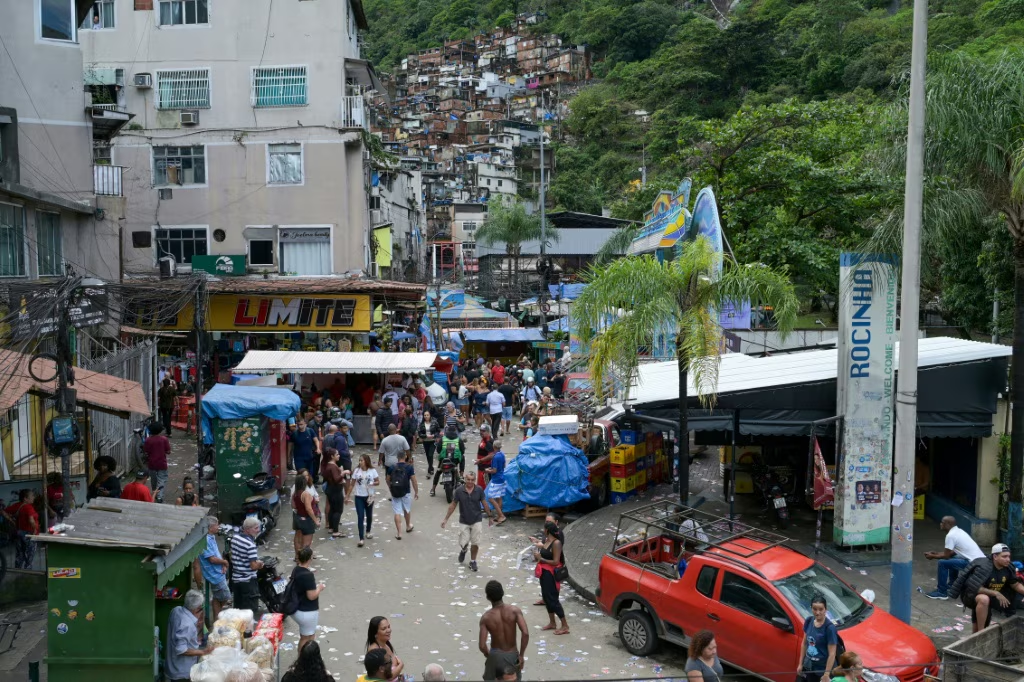
RIO DE JANEIRO — Queues snaked through the steep, narrow alleys of Rocinha on Sunday as residents of Rio’s largest favela cast their ballots in a high-stakes election, though the atmosphere was heavy with exhaustion rather than optimism. In a community of 100,000 where brick homes cling to the mountainside, the choice between candidates felt less like a path toward progress and more like a gamble on survival.
For many in the neighborhood, the election is a backdrop to a daily reality defined by the relentless crossfire between drug gangs and heavily armed police.
“You’re not safe on the street. You’re not even safe inside your own home,” said 70-year-old Antonio Machado, standing near a polling station. “You’re inside your house when a stray bullet comes flying in.” For Machado, the recurring cycle of political promises has become a source of bitterness. “It is shameful, the state of this country. Politicians only seek you out during election season. Afterward, they don’t even know you exist.”
The race centers on a sharp divide between leftist incumbent Luiz Inacio Lula da Silva and right-wing senator Flavio Bolsonaro. The security crisis has become the defining issue of the campaign, with both candidates proposing vastly different approaches to the favelas.
Bolsonaro has campaigned on a hardline security platform, pledging to label dominant criminal syndicates like the Comando Vermelho as terrorist organizations. Inspired by the tactics of El Salvador’s Nayib Bukele, he proposes a surge in maximum-security prison construction and a “suffocation” of criminal groups.
Conversely, Lula has vowed to “reclaim the territory” through a mix of social intervention and state presence, leaning on the legacy of welfare programs that defined his early career.
However, the residents of Rocinha remain deeply skeptical of both strategies. Fabricia de Melo, a 27-year-old biomedical scientist, expressed a common sentiment: deep distrust of law enforcement. “As a Black person, I don’t trust the police,” she said, noting that recent years have seen police killings reach staggering levels across Brazil. For De Melo, choosing Lula is merely picking “the lesser of two evils.”
The economic crisis is equally pervasive. As the cost of living climbs, residents described the mounting impossibility of basic sustenance. While some, like 36-year-old tech worker Joao Batista, believe a right-wing shift is necessary to combat the “horrible” expense of goods, others maintain faith in Lula’s social safety net, even if their patience is fraying.
“We suffer from many problems regarding basic sanitation and education,” said 22-year-old bricklayer Maicon Santana. “I’m not very pleased with this administration. It hasn’t done anything.”
As the sun sets over the Atlantic, casting long shadows over the hillside, the people of Rocinha remain caught between political promises and a cycle of violence that has outlasted decades of leadership. For now, the ballot box is their only tool, yet many walk away from the polls wondering if anyone in the halls of power can truly hear them.
Disclaimer: This content is auto-generated for informational purposes only.
Source: Read Original News