








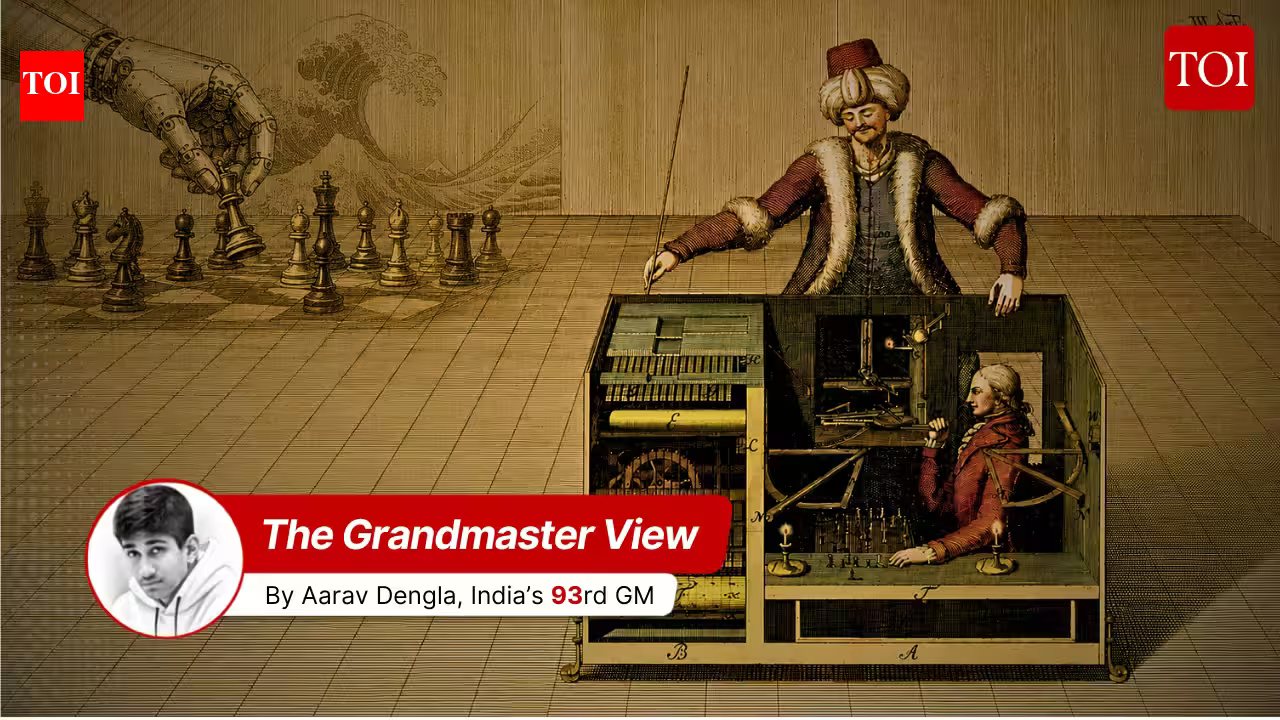
The Original ‘AI’: How the 18th-Century Mechanical Turk Deceived the World
Long before the modern lexicon was dominated by terms like "generative AI" and "neural networks," a 18th-century contraption captivated the world by masquerading as a thinking machine. The "Mechanical Turk," a chess-playing automaton that baffled everyone from Benjamin Franklin to Napoleon Bonaparte, remains one of history’s most audacious examples of technological deception.
Today, the legacy of this invention lives on in an unexpected place: the digital economy. Amazon’s crowdsourcing marketplace, aptly named Mechanical Turk, was built on the premise of "artificial artificial intelligence"—work that appears automated to the end-user but is, in reality, performed by hidden human labor.
The Illusion of Autonomy
The saga began in 1770 when inventor Wolfgang von Kempelen presented his contraption to the Habsburg court of Empress Maria Theresa. The machine featured a life-sized wooden mannequin dressed in Ottoman robes, seated behind a heavy cabinet topped with a chessboard. Kempelen touted it as a revolutionary machine capable of rational thought.
For over 80 years, the Turk toured Europe and the Americas, defeating elite opponents and sparking intense debates about the potential for machines to possess intelligence. However, the "intelligence" was entirely human. Tucked inside the cramped, dark cabinet, a master-level chess player operated the mannequin using a sophisticated system of levers and magnetic pieces. To maintain the charade, Kempelen would periodically open the cabinet doors to reveal intricate gears and clockwork, conveniently hiding the human operator behind a series of sliding panels.
Life Inside the Cabinet
Operating the Turk was a physically grueling and claustrophobic endeavor. The operators were often skilled chess professionals who struggled to make a consistent living through traditional matches or coaching. Despite the secrecy and the physical toll, the gig provided a reliable and generous income.
Historical figures like Johann Baptist Allgaier, Jacques François Mouret, and William Schlumberger were among the many masters who risked their reputations to serve as the "brain" of the machine. The identity of the operator, however, remained a closely guarded secret, fueling the mystery that kept the Turk’s lucrative exhibitions going for decades.
A Lesson for the AI Era
The Turk thrived during an age of rapid industrialization, a time when society was first beginning to grapple with the possibility of machines replacing human labor. Even then, critics were suspicious. In 1836, Edgar Allan Poe published an essay noting that the machine’s irregular timing was inconsistent with true automation, correctly deducing that a human was involved—though he could never quite prove the mechanism.
It was not until 1857, nearly three years after the original Turk was destroyed in a fire, that a truly reliable account of the secret mechanism was published by Silas Weir Mitchell.
As we navigate today’s rapid breakthroughs in artificial intelligence, the Mechanical Turk serves as a poignant reminder of our long-standing fascination with synthetic intelligence. It highlights the tendency for new technologies to present a polished, autonomous front while potentially concealing layers of invisible human effort. Whether through 18th-century clockwork or 21st-century micro-tasks, the line between "machine thought" and "human labor" remains a blurred—and deeply human—story.