









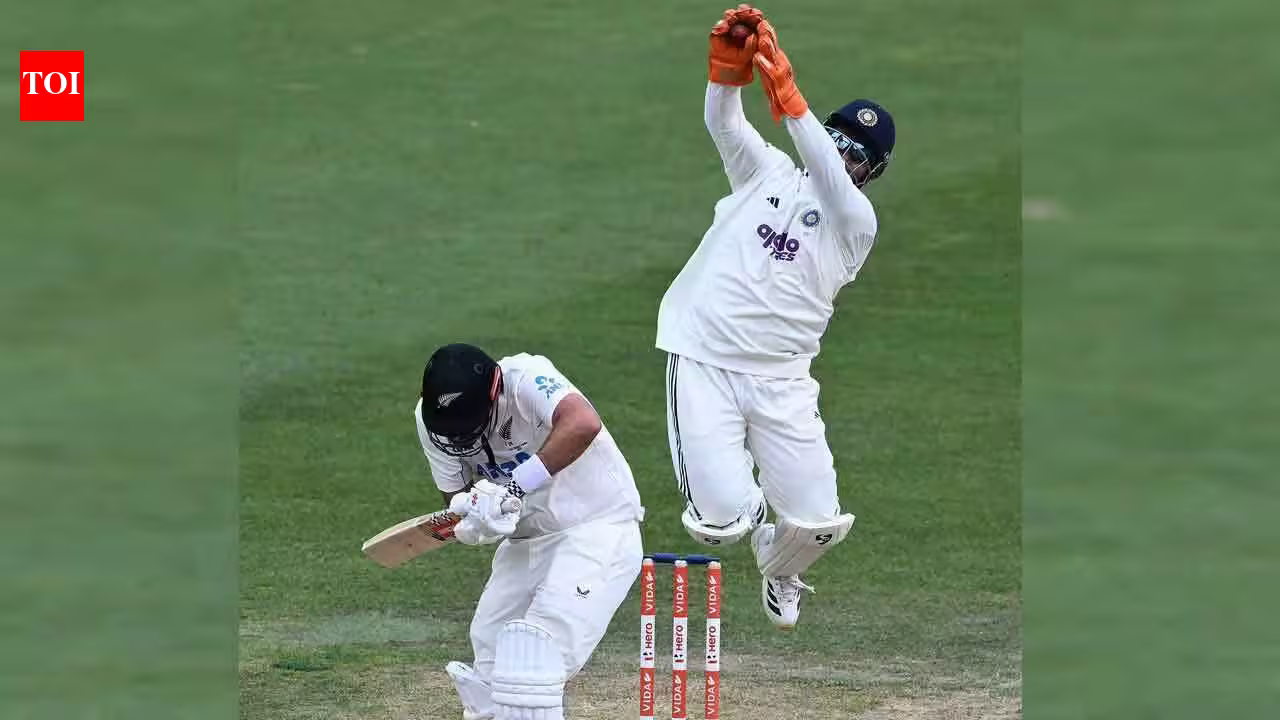
Standing mere yards behind the stumps, the modern wicketkeeper is no longer just a custodian of the crease; they are becoming a tactical disruptor. As the boundaries between formats blur and the aggression of Test cricket reaches new heights, the sight of a keeper crouching just behind the wickets to a 140kph delivery has transformed from a rare curiosity into a sophisticated weapon of war.
From Alex Carey’s defiance against Scott Boland in the Ashes to Tom Blundell’s persistent pressure on England at the Basin Reserve, and Rishabh Pant’s daring gambles in the recent series against New Zealand, the game’s best are increasingly “stealing” the batter’s space. What was once considered the exclusive territory of the spinner is now the frontline of pace bowling tactics.
The Evolution of the Aggressive Stance
For decades, the convention of standing back to pace was absolute. The speed of the modern game, however, has forced a recalibration. Former India wicketkeeper and renowned coach Chandrakant Pandit believes this shift is a direct byproduct of the T20 era’s influence on Test batting.
“Today’s batters, even in Tests, have the courage to step out against pace,” Pandit explained from Mohali. “There is no fear about coming out of the crease to counter movement. So, the keeper standing up is basically an attempt to counter that and prevent the batter from advancing.”
By eliminating the space a batter uses to dance down the track or shuffle out of their crease, the keeper forces the batsman to remain anchored. This creates a psychological barrier; the batter, fearing a lightning-fast stumping, is often forced to play from within the safety of their crease, effectively negating the very footwork they intended to use to neutralize the movement.
Data vs. Tradition: The Debate
The efficacy of the ploy is supported by compelling numbers. During New Zealand’s 2026 series in England, the statistical divergence was stark: England’s batting average against pace plummeted from 25.36 when Blundell was positioned in the traditional deep stance to a mere 15.26 when he moved forward.
At the Basin Reserve, Matt Henry leaned heavily on this tactic, recognizing that the pitch lacked the carry to make a deep-lying keeper a constant threat to the edges. Instead, he forced the batter to defend the stumps, with Blundell remaining tight behind the timber for the majority of his 24-over spell. The result was a five-wicket haul, all secured while the keeper stood in the “danger zone.”
However, not everyone is sold on the aesthetic or the tactical philosophy. India’s bowling coach, Morne Morkel, remains firmly rooted in the old-school school of thought. “I’m old school,” Morkel admitted. “I like a bit of pace and bounce, balls carrying through to second and third slip, and getting your dismissals that way.”
Tactical Hesitation: The Silent Dismissal
The true genius of the up-to-the-stumps tactic often lies in the dismissals that don’t involve the wicketkeeper’s gloves. Pandit notes that when a keeper moves closer, it forces the bowler to alter their length to maintain a catchable trajectory. This change in length often compromises the swing, but it also sows a “seed of doubt” in the batter’s mind.
“It puts the batter in two minds,” Pandit said. “He may want to play a delivery on the front foot, but with the keeper standing up, he might instead play it off the back foot.” That split-second of hesitation is all it takes to bring the bowled and lbw dismissals into play.
The Courage to Stand Still
While modern protective equipment—specifically the integration of helmets for keepers—has lowered the physical barrier to entry, it hasn’t removed the need for nerves of steel. Standing up to a 140kph delivery requires a unique cocktail of reflexes and absolute belief.
“The wicketkeeper has to have a lot of courage to stand up at this sort of pace,” says Pandit. “It means he believes in his skills and is fearless.”
Pandit fondly recalls his own history with the tactic, noting that legends like Sunil Gavaskar would occasionally demand it—sometimes as a way to send a message to a pace bowler that their lack of speed was, in his estimation, “too slow.” It remains a high-stakes trade-off; conceding byes is a constant risk, but the potential to disturb a batter’s rhythm is a reward modern teams are increasingly willing to chase.
Drilling the Reflex
Becoming an effective “up-to-the-stumps” keeper against high pace isn’t just about bravery; it requires scientific repetition. Pandit advocates for a systematic approach to training: starting with a tennis ball from close range to sharpen reflexes, progressing to high-velocity throws, and eventually utilizing bowling machines to simulate the sustained pressure of a live Test match.
As teams continue to hunt for marginal gains in an era of ultra-aggressive batting, the “thief of space” behind the stumps is likely to become a permanent fixture. It is a testament to the fact that in the tactical chess match of modern cricket, sometimes the most aggressive move is to simply stand your ground.
Disclaimer: This content is auto-generated for informational purposes only.
Source: Read Original News