









In a significant development for international law, the Republic of Colombia has formally proposed the recognition of “Environmental Destruction” as a new enumerated crime against humanity. Submitted to the United Nations in April 2026, the proposal seeks to modernize the long-standing international legal framework by including the “widespread, prolonged or severe destruction of the environment—including biodiversity, natural resources, agricultural production or the landscape—as a means of harming any civilian population.”
This initiative marks a pivotal milestone in the global effort to codify the protection of the environment within the context of international criminal law. The proposal, which is currently part of ongoing UN negotiations, draws on expertise from the IUCN World Commission on Environmental Law (WCEL) and the ABILA Study Group on Crimes Against Humanity. It reflects a growing international consensus that intentional, large-scale ecological damage is not merely an incidental byproduct of conflict but a weaponized strategy used to undermine, displace, and harm vulnerable civilian populations.
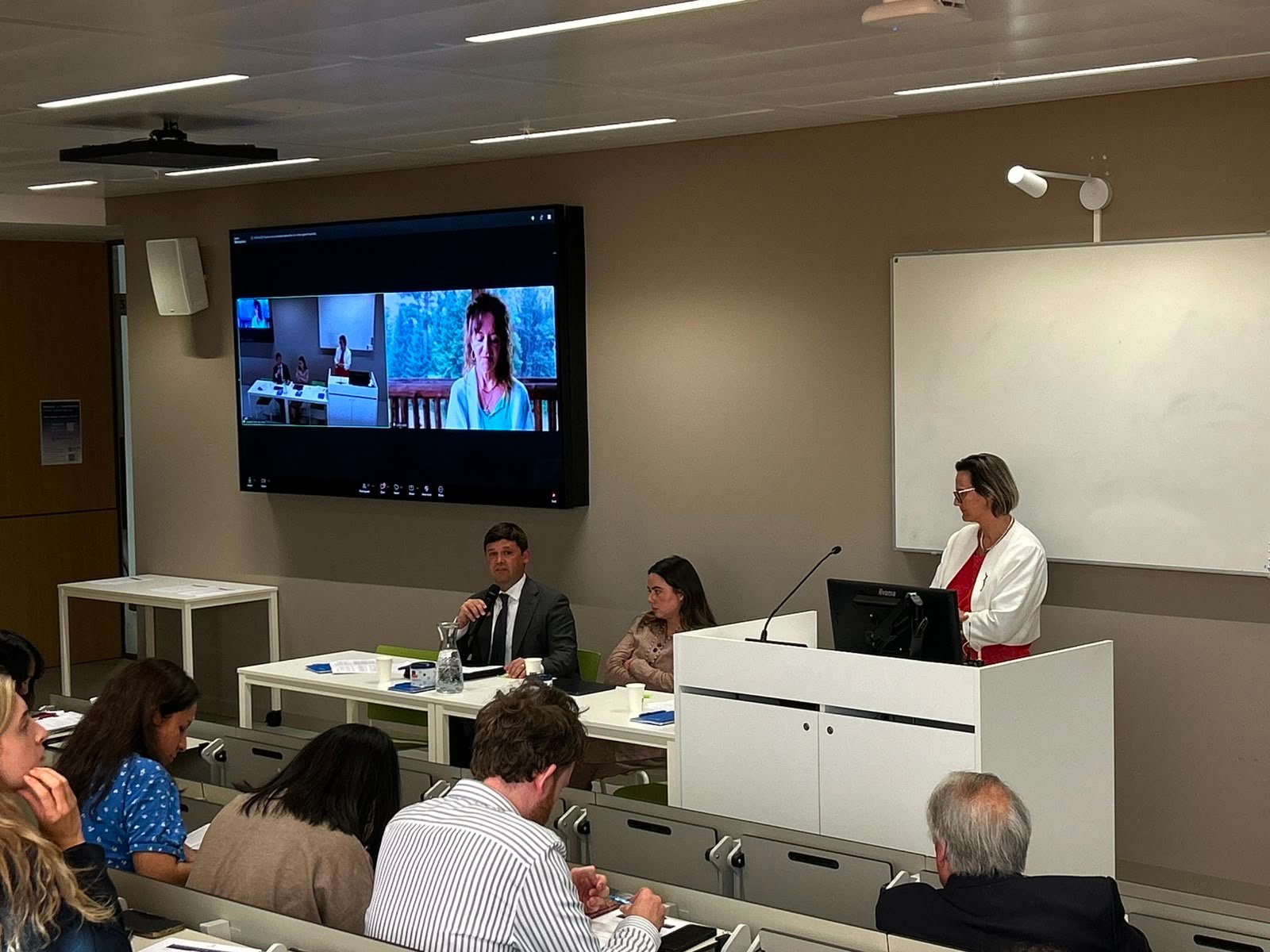
The move has been met with strong support from legal scholars and human rights advocates, who argue that the current legal instruments are outdated. On July 28, 2026, the Embassy of Colombia in the Netherlands, in partnership with the IUCN WCEL and the Grotius Centre for International Legal Studies at Leiden University, hosted an expert event in The Hague to discuss the implications of this proposal.
Professor Daniëlla Dam-de Jong, Director of the Grotius Centre, emphasized that the event’s primary purpose was to build political momentum, urging other UN member states to follow Colombia’s lead. H.E. Carolina Olarte Bácares, Ambassador of the Republic of Colombia to the Netherlands, underscored that the proposal is rooted in Colombia’s own lived experience. The country’s Special Jurisdiction for Peace has frequently highlighted how environmental degradation disproportionately impacts indigenous, Afro-descendant, and rural communities. By bringing this experience to the international stage, Colombia aims to ensure that the “differential impact” on vulnerable groups—including children and women—is formally acknowledged in international statutes.
Rosario Gutiérrez Bernal, Head of the Treaty Office in Colombia’s Directorate of International Legal Affairs, noted that this proposal is a logical extension of domestic progress. Having already incorporated ecocide and natural resource damage into its own criminal code, Colombia views the UN proposal as a necessary step toward holding perpetrators accountable for crimes that threaten the survival of future generations. “There’s a real momentum right now behind recognizing Environmental Destruction,” Gutiérrez Bernal stated. “We’re asking the Convention to make room for a harm we understand well: the destruction of the environment when it is used against people.”
Legal experts point out that the window to act is narrowing. Professor Leila Nadya Sadat of the Washington University School of Law, an expert on the Crimes Against Humanity Initiative, highlighted that environmental protections were nearly included in the original 1991 draft code that preceded the Rome Statute of the International Criminal Court. She noted that objections from three decades ago have largely evaporated as the global reality of climate change and environmental insecurity has become undeniable.
The practical necessity of the proposal was further detailed by Christopher Lentz, an IUCN delegate to the UN Preparatory Committee. He cited instances such as the deliberate destruction of farmland in Iraq, which hampered the return of the Yazidi community and exacerbated regional instability. According to Lentz, perpetrators often “weaponize the natural environment” by poisoning water sources, razing forests, or destroying livestock to maximize human suffering.
As negotiations continue, the IUCN WCEL remains at the forefront of the advocacy effort, having provided the initial technical framework for the proposal. For many states and international observers, the inclusion of environmental destruction as a crime against humanity represents a vital, “once-in-a-lifetime” opportunity to ensure that international law evolves to address the most urgent existential threats facing humanity today.
Disclaimer: This content is auto-generated for informational purposes only.
Source: Read Original News