






‘Lathi Can Stop a Crowd, But Not a Question’: Rahul Gandhi Lashes Out Over CEC Protests
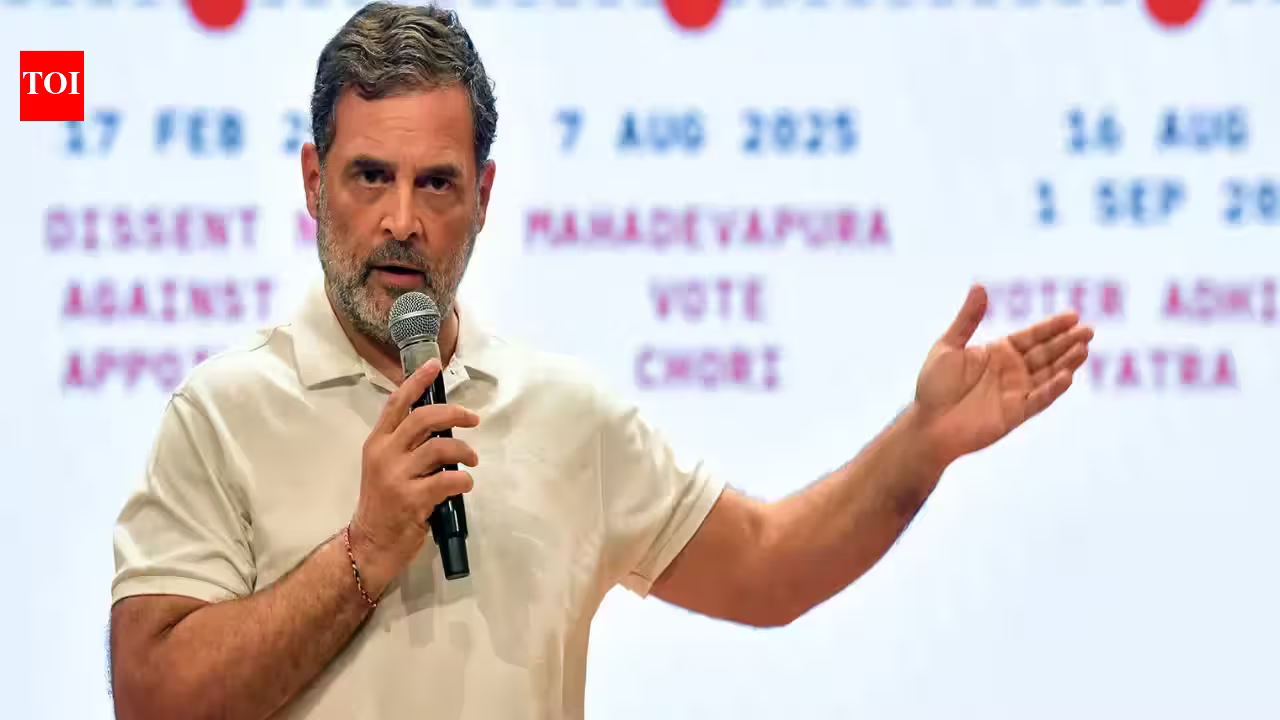
NEW DELHI: Leader of the Opposition Rahul Gandhi launched a scathing attack on the Union government on Friday, condemning the police crackdown on demonstrators protesting against Chief Election Commissioner (CEC) Gyanesh Kumar. The protests, which coincided with the observation of Gandhi Jayanti, were met with swift police intervention, drawing sharp criticism from the Congress leader.
Taking to social media platform X, the Rae Bareli MP asserted that the agitation surrounding the CEC’s position and broader concerns regarding electoral integrity represents a growing movement that cannot be silenced by force.
A Challenge to the Status Quo
Addressing the confrontation between the state machinery and the protesters, Gandhi declared that the current Chief Election Commissioner would eventually be forced to step down, along with the very administrative system that facilitated his appointment.
“He will go,” Gandhi wrote. “Because a lathi can stop a crowd, but not a question.”
The remarks come in the wake of widespread unrest, where thousands of young people gathered to express their grievances. The demonstrators have been vocal about what they term “vote chori” (theft of votes) and have demanded the resignation of Gyanesh Kumar, framing their movement as an essential battle to preserve the sanctity of India’s democratic institutions.
Government Tactics Under Fire
Rahul Gandhi accused the Narendra Modi-Amit Shah administration of adopting a heavy-handed approach toward peaceful dissent. He alleged that instead of engaging with the legitimate concerns raised by the youth, the government responded by forcibly dragging young men and women through the streets and placing them under arrest.
The Congress leader drew a parallel between the current political atmosphere and the teachings of Mahatma Gandhi. Highlighting that the protests occurred on Gandhi Jayanti, he noted that the movement’s adherence to non-violent resistance mirrors the values championed by the Father of the Nation.
“That is what Bapu taught us—speak the truth and fight peacefully,” Gandhi stated. “And that is what scares the government the most.”
Democracy and Dissent
The incident has reignited the national debate over the autonomy of constitutional bodies and the space for public protest in the capital. For the opposition, the police action serves as a symbol of the shrinking democratic space in the country. Conversely, the government has maintained that the administration of public order is a priority, particularly in the national capital.
As the protests continue to draw attention, Gandhi’s framing of the situation as a moral struggle suggests that the Congress party intends to keep the heat on the government regarding the integrity of the Election Commission. By invoking the legacy of Mahatma Gandhi, the opposition is attempting to ground its political narrative in the country’s history of civil disobedience, positioning the current confrontation as a broader fight for the future of India’s electoral process.
With political tensions rising, the discourse surrounding the CEC’s tenure and the government’s response to dissent is expected to remain a focal point in the upcoming parliamentary sessions, as the opposition vows to keep raising questions that they believe no amount of force can suppress.
Disclaimer: This content is auto-generated for informational purposes only.
Source: Read Original News